The Scale of Kew
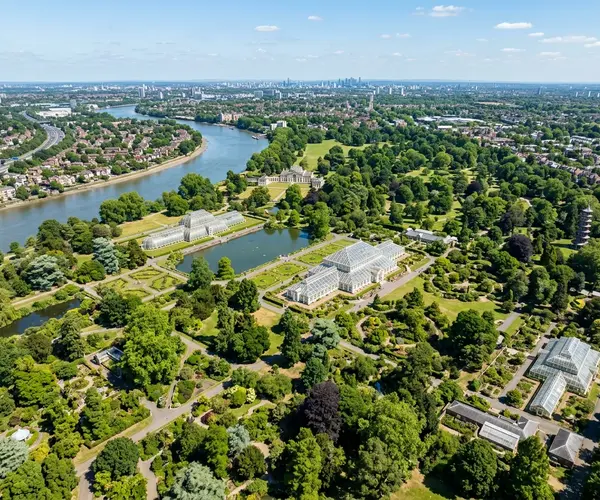
Kew Gardens stretches across 300 acres in southwest London, bordered by the Thames to the west and the residential streets of Kew and Richmond to the east and south. To put that in perspective, it is roughly the same size as Hyde Park and about twice the size of the Vatican City. Walking from one end to the other takes around 30 minutes at a brisk pace, but that assumes you walk in a straight line and ignore everything along the way.
The gardens hold over 50,000 living plants drawn from every continent and climate zone. The combined collection represents around 16,900 species, which makes Kew the most diverse assemblage of living plants anywhere on Earth. Beyond what grows in the soil and glasshouses, Kew's herbarium stores over 7 million dried plant specimens, and its seed bank at Wakehurst in Sussex holds seeds from more than 40,000 species.
Key Areas
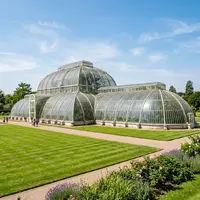
The gardens are broadly divided into several zones, each with its own character. The central area around the Palm House and Temperate House is the most visited, with manicured lawns, formal beds and the two iconic Victorian glasshouses. The Palm House alone covers 628 square metres and contains plants from every tropical rainforest on Earth.
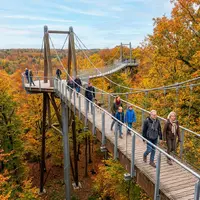
To the south, the Arboretum occupies a large part of the site and contains over 14,000 trees, including some of the oldest and rarest specimens in the country. The Treetop Walkway lifts visitors 18 metres into the canopy here. This area feels more like parkland than a formal garden, and it is where you find the quietest corners even on busy days.
The western edge runs along the Thames and includes the Syon Vista, a long avenue that frames a view across the river to Syon House. The northern section is home to the Rock Garden, the Alpine House and the Princess of Wales Conservatory, which packs ten different climate zones into a single building.
The Glasshouses
Kew's glasshouses are significant structures in their own right. The Temperate House, reopened after a five-year restoration in 2018, is the world's largest surviving Victorian glass structure. It covers 4,880 square metres and holds plants from temperate regions worldwide, including the world's rarest palm tree.
The Palm House, built between 1844 and 1848, covers a smaller footprint but is arguably the more famous building. Its curved iron and glass design was revolutionary at the time and has influenced glasshouse architecture ever since. Inside, the tropical atmosphere is maintained at a constant temperature and high humidity, supporting plants from tropical rainforests.
The Waterlily House, the smallest of the main glasshouses, is open only during summer months when its giant Amazonian waterlilies are in leaf. The lily pads can grow to over two metres across.
UNESCO World Heritage Status
Kew was inscribed as a UNESCO World Heritage Site in 2003 in recognition of its historic landscape, its landmark buildings and its ongoing contribution to the study of plant diversity and economic botany. The designation covers the entire 300-acre site, including the gardens, glasshouses, pagoda, galleries and the Kew Palace complex.
The site has been a centre for botanical research since 1759, when Princess Augusta established a nine-acre botanical garden on the grounds. That original plot has expanded over the centuries through royal patronage, government investment and the work of successive directors into the vast scientific and horticultural institution that exists today.
How Long to Allow
Most visitors spend between three and four hours at Kew and cover the central areas around the glasshouses, the Treetop Walkway and the lake. To explore the full 300 acres properly, including the Arboretum, the Conservation Area and the outlying gardens, you would need a full day or ideally two separate visits.