Hampstead Heath
790 acres of ancient heathland, swimming ponds and hilltop views across London from Parliament Hill
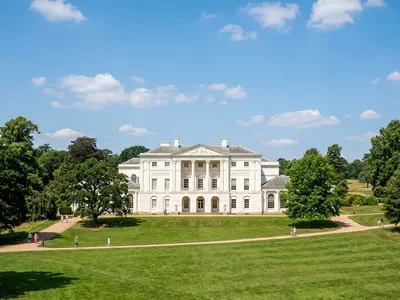
790 acres of ancient heathland, swimming ponds and hilltop views across London from Parliament Hill
Hampstead Heath is 790 acres of rolling hills, tangled woodland and open meadow on the northern heights of London. Unlike the tidy geometry of the Royal Parks, the Heath feels genuinely wild, with footpaths worn into grassland that has remained unenclosed common land since at least the 17th century.
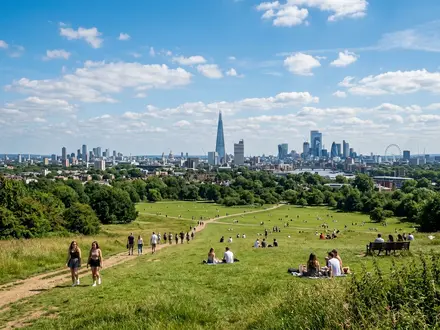
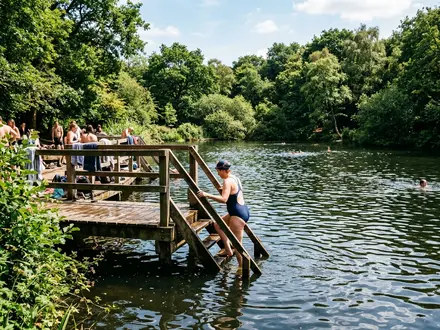
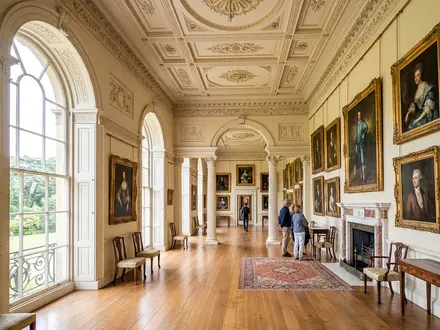
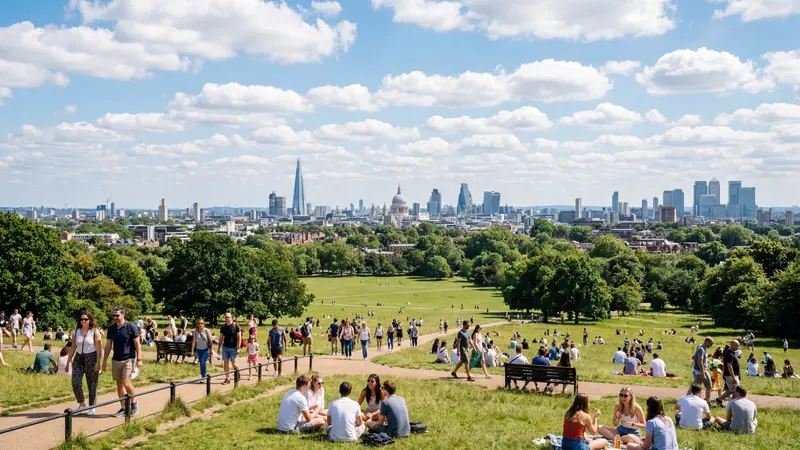
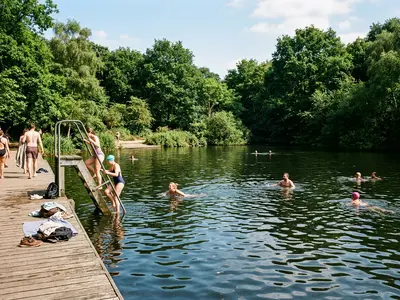
Parliament Hill, at the southern edge, offers one of the broadest skyline panoramas in the city. Three freshwater swimming ponds draw open-water swimmers year-round, and Kenwood House at the northern boundary holds a world-class art collection that is free to enter.
Hampstead Heath has been common land since at least the Domesday survey, when it formed part of the Manor of Hampstead. In the early 19th century, the lord of the manor attempted to develop the land for housing, provoking fierce public opposition. An Act of Parliament in 1871 preserved the core 240 acres as open space, and successive purchases through the late 1800s expanded the protected area to its current 790 acres, including Parliament Hill Fields, Golders Hill Park and the Kenwood estate.
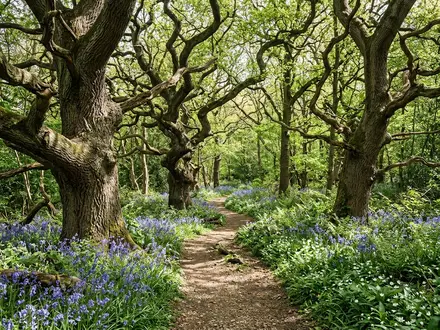
The City of London Corporation took over management in 1989 and maintains the Heath as semi-wild landscape rather than a manicured park. Ancient hedgerows, veteran trees and uncut meadows are deliberately preserved, making the Heath one of the most biodiverse green spaces in London. Over 300 bird species have been recorded here, and the woodland supports bats, foxes, grass snakes and a large population of stag beetles.
The three bathing ponds are among the last open-water swimming sites in the city. The men's pond near Highgate has been in use since the 1890s, the ladies' pond since 1925, and the mixed pond since the 1860s. Water quality is tested daily and lifeguards are on duty during opening hours. The separate Parliament Hill Lido, a 60-metre heated outdoor pool built in 1938, sits at the southern edge and operates year-round.
Kenwood House sits on a rise at the northern boundary, remodelled by Robert Adam in the 1760s for the Earl of Mansfield. Brewing magnate Lord Iveagh purchased the estate in 1925 and bequeathed it to the nation with a collection of paintings including Vermeer's The Guitar Player and Rembrandt's Self-Portrait with Two Circles. Entry is free. Summer concerts on the lakeside lawn behind the house have been a tradition since the 1950s.
A walk from the Parliament Hill entrance to Kenwood and back takes roughly 90 minutes, crossing open heath, dense woodland and the formal gardens of Golders Hill Park. The terrain is hilly and varied, with muddy paths after rain. Good routes include the Viaduct Pond walk through the ancient woodland and the ridge path past the Whitestone Pond, which at 134 metres is the highest natural point in London.
Hampstead village borders the Heath to the west, with independent shops, pubs and restaurants along the High Street and Flask Walk. Highgate village sits to the northeast and offers Highgate Cemetery as a possible extension to the day. The Holly Bush pub on Holly Mount, a gas-lit Georgian coaching inn, is a favourite post-walk stop.
The Heath is free to enter at all times. Swimming pond tickets can be purchased at each pond entrance and do not require advance booking outside of peak summer weekends.
Enter from the Gospel Oak or Highgate Road entrance and climb Parliament Hill first. The panorama is clearest on cold mornings, and you will have the hilltop largely to yourself before 9am.
The swimming ponds are busiest on summer afternoons. Arrive when they open for the calmest water and the shortest queue at the entrance. Bring your own towel, as there are no hire facilities.
The Brew House cafe at Kenwood serves good food with views over the landscaped grounds. Combine it with the free art collection inside the house for a worthwhile half-day excursion.
The Heath is not paved like the Royal Parks. Paths are muddy after rain and the terrain is uneven in the wooded sections. Walking boots or trail shoes make a significant difference.
Highgate Cemetery is a 15-minute walk from the northeastern corner of the Heath. The West Cemetery requires a guided tour, while the East Cemetery (where Karl Marx is buried) is open for independent visits.

London Travel Writer · 12+ years covering UK attractions and tourism
Last reviewed: March 10, 2026