A Hidden Treasure
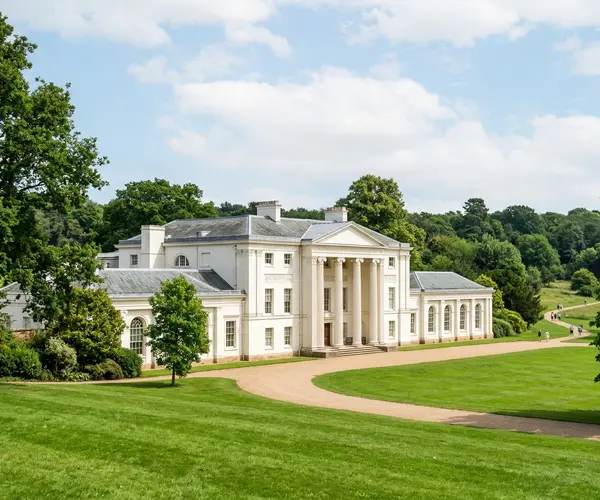
Hampstead Heath holds many surprises, but none is quite as remarkable as Kenwood House. Sitting on the northern edge of the Heath, this elegant white-painted villa houses one of the finest small art collections in London, set within interiors designed by one of Britain's greatest architects. That it is completely free to enter makes it one of the city's best-kept secrets.
The house was remodelled between 1764 and 1779 by Robert Adam for the 1st Earl of Mansfield. Adam transformed what had been a modest seventeenth-century brick house into a showcase for his distinctive neoclassical style. The result is a building that feels both grand and intimate, with rooms that balance elegant proportions with warmth and light.
The Art Collection
The paintings at Kenwood were bequeathed to the nation by Edward Cecil Guinness, 1st Earl of Iveagh, along with the house and grounds, in 1927. The collection is relatively small but extraordinarily high in quality. Two paintings in particular draw visitors from around the world.
Vermeer's The Guitar Player is one of only 34 surviving paintings by the Dutch master. It shows a young woman playing a guitar, captured in Vermeer's characteristic soft light. Seeing a Vermeer in a domestic setting rather than a crowded gallery room adds to the pleasure of the encounter.
The Rembrandt self-portrait, painted around 1665 when the artist was approaching 60, is one of the most searching and honest self-portraits in Western art. Rembrandt looks directly at the viewer with an expression that combines weariness, defiance, and something close to humour. The painting hangs in a room where you can stand close enough to see the texture of the brushwork.
Beyond these two stars, the collection includes works by Gainsborough, Reynolds, Turner, and other British and European masters. The paintings are displayed in rooms that were designed for living rather than exhibition, which gives the experience a quality that larger galleries cannot match.
Robert Adam's Interiors
The Library is the architectural highlight of the house and one of Robert Adam's masterpieces. It is a double-height room with an apsidal end, decorated in Adam's signature palette of pinks, blues, and greens. The ceiling is a complex arrangement of painted panels and gilded mouldings that manages to feel delicate rather than heavy. The room was designed to house Lord Mansfield's book collection and to serve as a space for entertaining.
Other rooms show Adam's ability to create variety within a unified style. The entrance hall has a restrained elegance, while the dining room is warmer and more intimate. Throughout the house, Adam's attention to detail is evident in the door handles, fireplaces, and decorative plasterwork.
The Grounds
The grounds of Kenwood were landscaped by Humphry Repton in the early nineteenth century. They include formal gardens near the house, a gently sloping lawn leading down to a lake, and areas of woodland that merge into the wider Heath. The overall effect is of a country estate that happens to be in London.
The lakeside area hosts outdoor concerts in summer, with a temporary stage set against the backdrop of the house and its grounds. These events have become a popular fixture of the London summer calendar, with audiences picnicking on the grass as music carries across the water.
Visiting Kenwood
Kenwood House is open throughout the year, though hours vary by season. The house itself takes about an hour to explore at a comfortable pace. The grounds deserve at least another hour, particularly if you walk down to the lake and through the woodland paths that connect to the wider 790 acres of the Heath.
There is a cafe in the old service wing that serves good coffee and cakes, with outdoor seating overlooking the grounds. A small shop sells prints, books, and gifts related to the collection. Both are entirely optional but pleasant additions to the visit.