Wallace Collection
Museum of 18th-century French art, Old Masters, arms and armour in a magnificent Marylebone townhouse
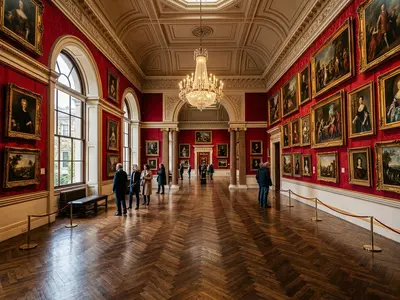
Museum of 18th-century French art, Old Masters, arms and armour in a magnificent Marylebone townhouse
The Wallace Collection is one of London's great hidden treasures — a world-class museum in Hertford House, an elegant townhouse on a quiet Marylebone square. Inside is one of the finest gatherings of 18th-century French art, arms and armour, and Old Masters anywhere.
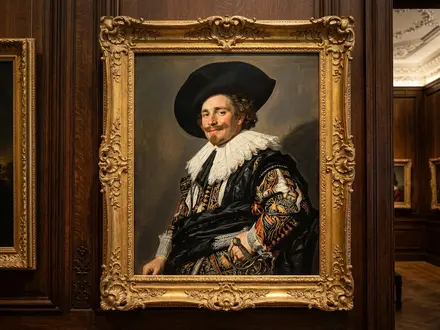
Bequeathed to the nation in 1897, every piece remains where its last owner placed it. Frans Hals' Laughing Cavalier hangs above a fireplace, Sevres porcelain fills gilded vitrines, and suits of armour line galleries hung with Fragonard and Boucher.
The story of the Wallace Collection is the story of four Marquesses of Hertford and one illegitimate son — Sir Richard Wallace — who spent a century assembling one of Europe's greatest private art collections. The first Marquess began buying in the 1780s; the fourth, a reclusive anglophobe living in Paris, acquired most of the French paintings and furniture that define the collection today.
Sir Richard Wallace inherited it in 1870, added the medieval and Renaissance arms and armour, and moved everything to Hertford House in London. On his widow's death in 1897, the collection was bequeathed to the nation on one extraordinary condition: nothing could ever be added or removed. Every object remains exactly as Wallace intended.
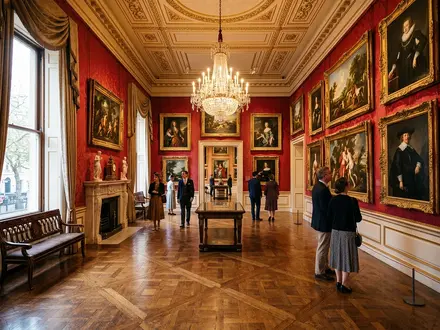
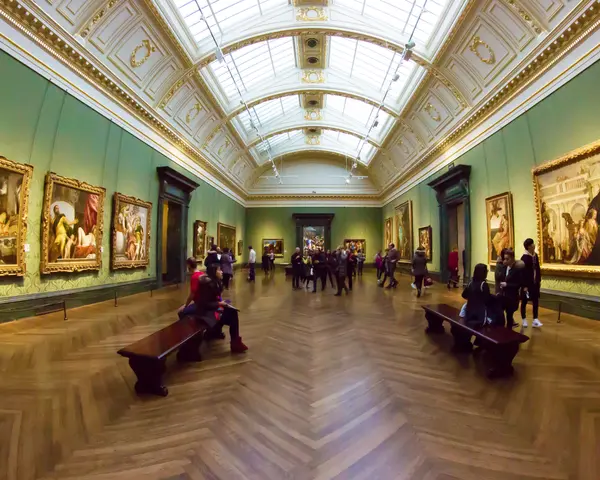
The Great Gallery on the first floor is the centrepiece — a sumptuous room hung with red damask and packed with masterpieces by Titian, Velazquez, Rembrandt, Rubens, Poussin, Van Dyck and Gainsborough. Frans Hals' Laughing Cavalier commands the room from above the fireplace.
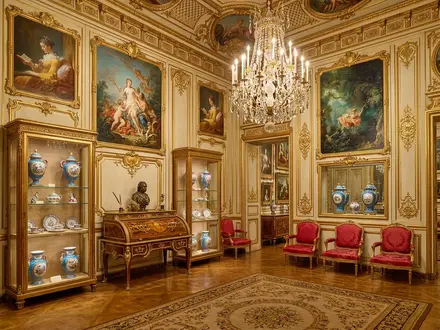
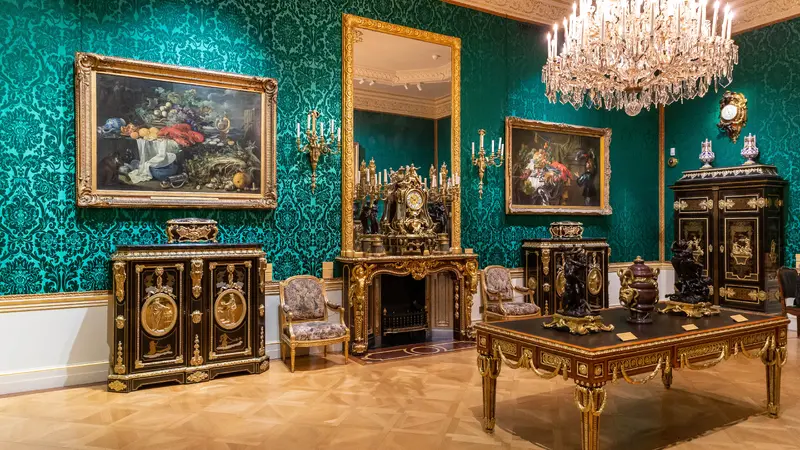
The interconnected French rooms are equally remarkable. Boucher, Fragonard and Watteau fill the walls, while cabinets overflow with Sevres porcelain, gold snuffboxes and furniture made for Versailles. A writing desk attributed to the workshop of Andre-Charles Boulle is one of the finest examples of its kind. These rooms evoke pre-Revolutionary France more vividly than almost anywhere outside Paris.
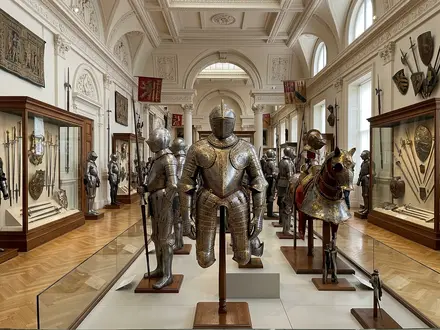
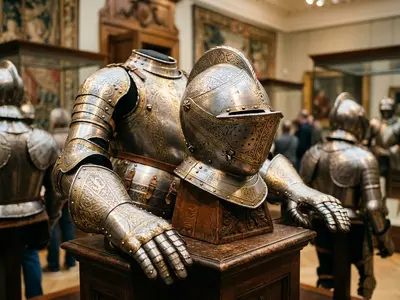
The ground floor houses one of the best arms and armour collections in Britain. Five galleries display over 2,000 objects, from medieval swords and jousting helms to ornate Indian daggers and Persian shields. The craftsmanship is extraordinary — many pieces were made for royalty and were never intended for battle.
At the centre of the building, the glass-roofed courtyard has been converted into a restaurant and cafe, with the Minton fountain as its centrepiece. It is one of the most atmospheric lunch spots in central London — surrounded by art on every side, bathed in natural light, and remarkably quiet given its location just off Oxford Street.
Permanent galleries are free — occasional special exhibitions and events have a separate charge
The Wallace Collection rarely feels crowded, but weekday mornings are the quietest. You may have entire galleries to yourself — a rare luxury in central London.
Head upstairs to the first floor and begin with the Great Gallery. The Laughing Cavalier, Titian and Rembrandt are all here, and the room itself is one of the most beautiful in London.
The ground-floor arms and armour galleries are superb and often overlooked by visitors heading straight for the paintings. The craftsmanship of the parade armour and decorated swords is stunning.
The glass-roofed courtyard with its Minton fountain is a wonderful spot for lunch or afternoon tea. Book ahead at weekends — it fills up by midday.
Marylebone High Street is a five-minute walk north, with independent shops, bookstores and some of London's best cafes. The neighbourhood pairs perfectly with a morning at the Wallace.

London Travel Writer · 12+ years covering UK attractions and tourism
Last reviewed: March 5, 2026