River & Rowing Museum
David Chipperfield's award-winning museum on the Thames — celebrating the river, the sport of rowing and Henley's heritage

David Chipperfield's award-winning museum on the Thames — celebrating the river, the sport of rowing and Henley's heritage
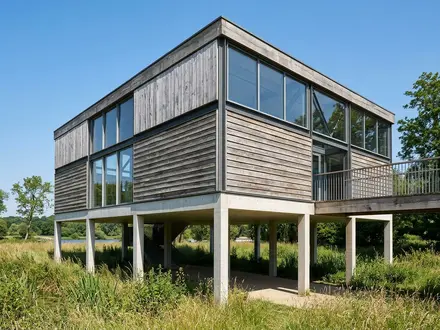
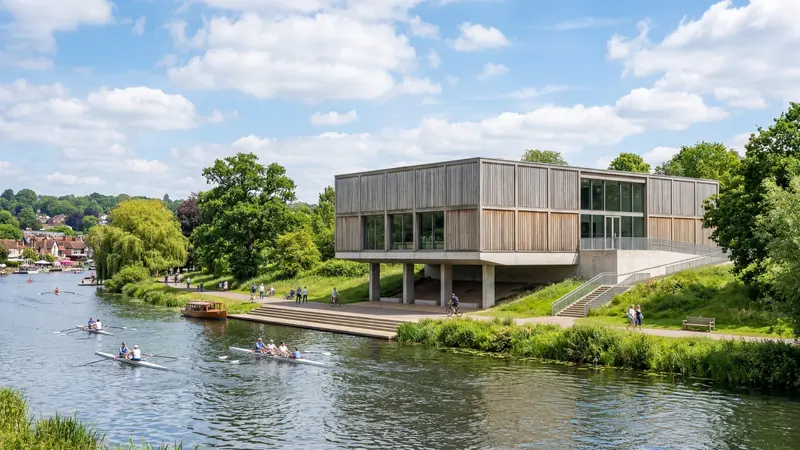
Designed by Sir David Chipperfield and opened by Queen Elizabeth II in 1998, the River & Rowing Museum sits on the banks of the Thames in Henley's Mill Meadows. Its oak-clad structure, raised on concrete stilts above the floodplain, won the Royal Fine Art Commission Building of the Year award and remains one of Chipperfield's most celebrated British works.
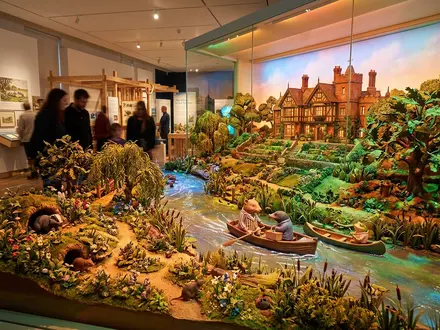
Four permanent galleries explore the River Thames from source to sea, the international sport of rowing, the history of Henley-on-Thames, and Kenneth Grahame's The Wind in the Willows through immersive three-dimensional recreations of E.H. Shepard's original illustrations.
The River & Rowing Museum opened in November 1998, the culmination of a campaign led by local residents to create a permanent home for Henley's rowing heritage and the story of the Thames. The trustees chose David Chipperfield to design the building — a bold decision given that his practice had yet to complete a project in Britain. The result, a striking composition of oak, glass and steel inspired by Oxfordshire barns and Thames boathouses, won immediate recognition. The Royal Fine Art Commission named it Building of the Year in 1999, and it became a landmark of 1990s British architecture.
Chipperfield raised the entire structure on concrete stilts to protect it from the periodic flooding of Mill Meadows. The exterior is clad in untreated green oak that has silvered naturally over the decades, softening the modernist forms against the riverside landscape. Inside, the generous galleries are arranged around a double-height central hall flooded with natural light from clerestory windows.
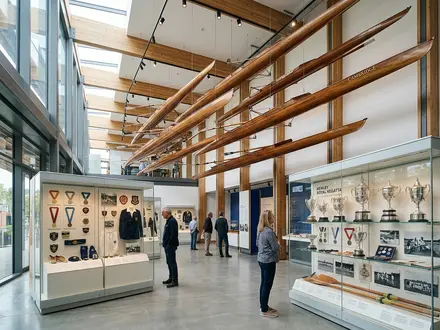
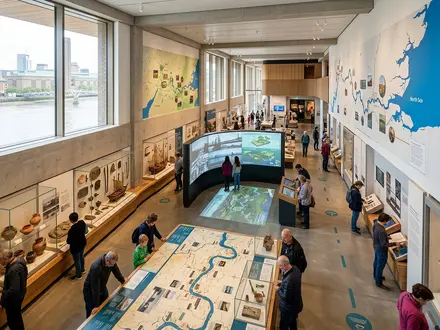
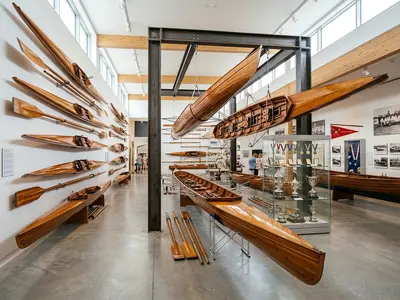
Four permanent galleries anchor the museum's collection. The River Thames gallery traces the waterway from its source in a Gloucestershire field to the Thames Barrier, exploring centuries of commerce, ecology and community along its 215-mile course. The rowing gallery houses an internationally significant collection of racing boats, trophies and Olympic memorabilia, with Henley Royal Regatta — staged annually since 1839 — forming its centrepiece.
The Henley gallery documents the market town's history from Saxon settlement to prosperous coaching stop and modern regatta destination. A fourth gallery, added in 2004, brought Kenneth Grahame's The Wind in the Willows to life through immersive recreations of E.H. Shepard's illustrations. Shepard himself explored the meadows and willow-fringed banks near Pangbourne, downstream from Henley, when sketching settings for the 1931 edition. Temporary exhibitions throughout the year have covered subjects from contemporary art to river conservation.
Mill Meadows provides an attractive setting for a pre- or post-visit walk. The riverside path leads north to Henley Bridge and the town centre in five minutes, passing the regatta course along the way. During July, the Royal Regatta transforms this stretch of the Thames into one of the most colourful events in the British sporting calendar.
Henley itself offers independent shops, pubs and restaurants along Hart Street and the market square. The 15th-century Chantry House and the medieval St Mary's Church are worth a look. Further afield, Greys Court (National Trust) is a short drive into the Chiltern Hills, and the Chilterns themselves provide excellent walking with routes starting directly from the town.
Children under 4 enter free — prices include a voluntary Gift Aid donation
Henley Royal Regatta runs in early July and the town gets extremely busy. Visit the museum first thing in the morning to avoid the crowds flooding in after the racing.
The five-minute walk from Henley station follows the Thames past the regatta course. Turn right out of the station and head south along the river to reach the museum entrance.
Mill Meadows is a lovely green space beside the museum with riverside paths and picnic areas. Bring a blanket in summer and enjoy the setting after your museum visit.
The museum has its own 100-space car park with cashless number plate recognition. It is easier and closer than trying to find parking in the town centre.
The museum regularly stages temporary exhibitions alongside its permanent galleries. Check the website before visiting to see what is currently showing and plan your time accordingly.

London Travel Writer · 12+ years covering UK attractions and tourism
Last reviewed: June 2, 2026