Royal Air Force Museum London
Over 100 historic aircraft spanning a century of flight — from First World War biplanes to Cold War jets, with free entry
Over 100 historic aircraft spanning a century of flight — from First World War biplanes to Cold War jets, with free entry
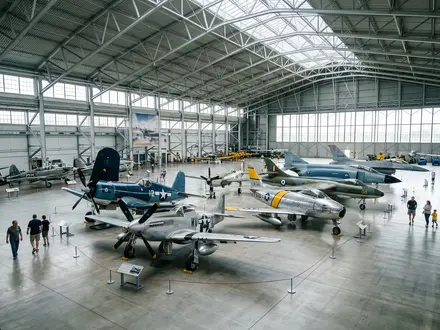
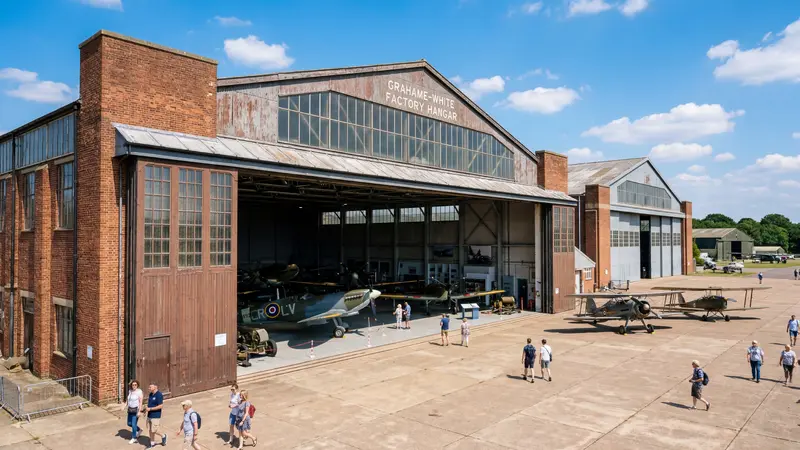
Spread across historic hangars on the site of the former Hendon Aerodrome, the Royal Air Force Museum houses more than 100 aircraft dating from 1910 to the present day. Entry is entirely free, making it one of London's best-value days out for aviation enthusiasts and families alike.
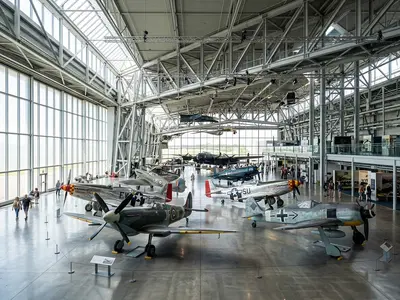
Six exhibition halls chart the story of flight from canvas-and-wire biplanes through Spitfires and Lancasters to modern Typhoon jets. Interactive simulators, a 4D theatre and hands-on cockpit experiences bring the history to life beyond the static displays.
Hendon's connection to aviation dates back to 1910, when the grass airfield became one of Britain's earliest flying grounds. During the First World War it served as an aircraft acceptance park and training station, and by the 1920s it was a fully operational RAF base. The famous Hendon Air Pageants — spectacular public flying displays held annually from 1920 to 1937 — drew enormous crowds and helped establish Hendon as a household name in British aviation.
After the base closed in 1968, the site was chosen to house a new national museum of aviation. Queen Elizabeth II opened the Royal Air Force Museum on 15 November 1972, with 36 aircraft on display in the original hangars. Since then the collection has expanded dramatically, and a major redevelopment completed in 2018 to mark the RAF's centenary added two new exhibition halls and modernised the visitor experience throughout.
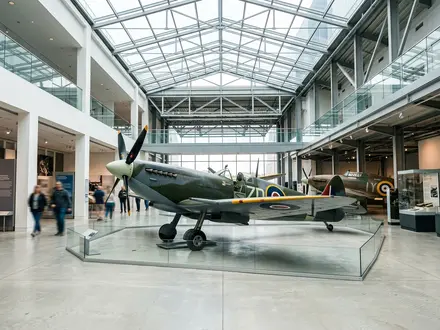
The museum's six hangars are arranged around a central courtyard and are best explored in roughly chronological order. The First World War gallery charts the birth of aerial warfare with original biplanes and personal artefacts from early pilots. The Battle of Britain hall is the emotional centrepiece — a purpose-built exhibition space where Spitfires and Hurricanes hang alongside a captured Messerschmitt, with an immersive sound-and-light show that recreates the intensity of 1940.
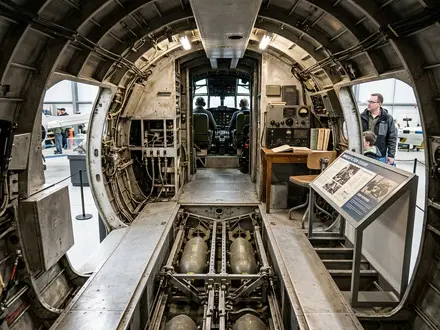
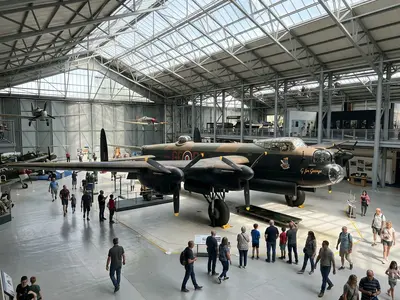
Bomber Command is anchored by the Lancaster S-Sugar, its fuselage still bearing mission tallies from 137 wartime sorties. Beyond the Second World War galleries, the Cold War and modern aviation halls display a Vulcan bomber, a Harrier GR9 and a Eurofighter Typhoon. For hands-on engagement, the 4D theatre experience lets visitors fly with the Red Arrows, and motion simulators recreate the cockpit of a Typhoon jet.
The museum is particularly well suited to families. Children can climb into real cockpit seats, operate interactive radar screens and build model aircraft in the hands-on zone. The outdoor playground and picnic area provide a break between hangars, and a cafe serves hot meals and snacks throughout the day. Entry and parking are both free, which makes it easy to visit for a couple of hours without committing to a full day.
The museum shop stocks a solid range of aviation books, model kits and RAF merchandise. For those wanting to extend the visit, Colindale's other attraction — the nearby Newspaper Library site — and the green spaces of Montrose Park are within walking distance.
General admission and parking are completely free. Simulator experiences and the 4D theatre carry a small charge. Donations are welcomed to support the museum's conservation work
The 4D theatre and Typhoon simulator are popular with families and can develop queues at weekends. Head to them early in your visit to avoid the longest waits.
Working chronologically through the hangars gives the collection a natural narrative arc. Begin with the early biplanes and finish with the modern jets for the most rewarding visit.
Although entry is free, the museum asks visitors to pre-book timed tickets through its website. This helps manage capacity and guarantees your entry on busy days.
Parking is free and the museum is easy to reach by car. Colindale Tube station involves a 15-minute walk, which can feel long with young children in tow.
The museum occasionally closes for private events or learning days. Check the website calendar before travelling to avoid a wasted journey.

London Travel Writer · 12+ years covering UK attractions and tourism
Last reviewed: March 9, 2026