Queen's House Greenwich
England's first classical building — a Palladian masterpiece by Inigo Jones housing the Armada Portrait and Tulip Stairs
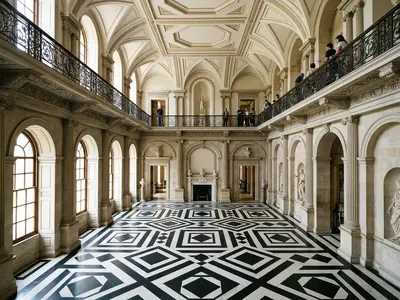
England's first classical building — a Palladian masterpiece by Inigo Jones housing the Armada Portrait and Tulip Stairs
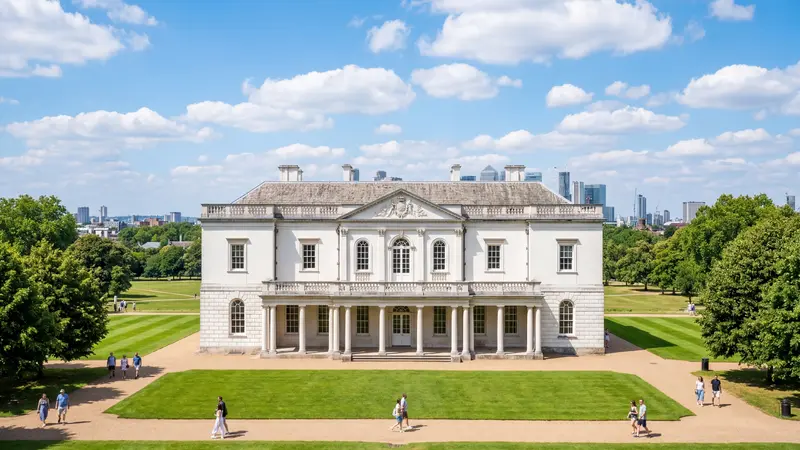
Completed in 1635 for Henrietta Maria, the Queen's House was the first purely classical building in England. Designed by Inigo Jones after studying Palladio's villas in Italy, its clean white facade and perfect proportions caused a sensation in a country that had never seen anything like it.
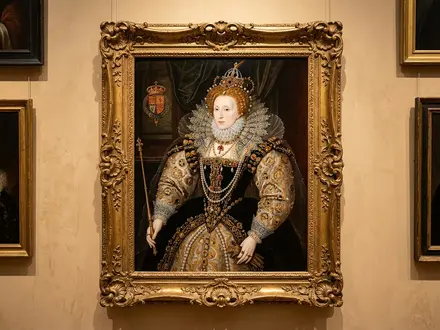
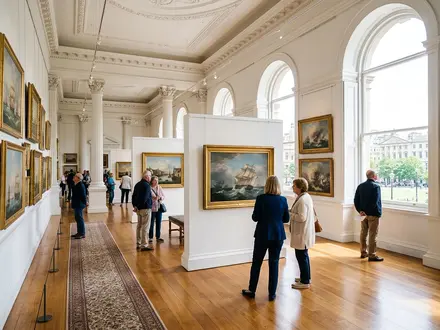
Today the house operates as an art gallery within Royal Museums Greenwich, displaying over 450 works including the Armada Portrait of Elizabeth I, Turner's vast Battle of Trafalgar and paintings by Canaletto and Gainsborough. The Tulip Stairs alone are worth the visit.
When Inigo Jones returned from Italy in the early 1600s, he brought with him a vision of architecture that England had never seen. Commissioned in 1616 by Anne of Denmark, wife of James I, the Queen's House was designed as a royal retreat from the adjacent Palace of Greenwich. Jones drew directly on the work of Andrea Palladio, creating a building of classical symmetry with colonnades, loggias and mathematically precise proportions. Anne died in 1619 before the house was finished, and it sat incomplete for over a decade until Charles I revived the project for his wife Henrietta Maria, who finally moved in around 1635.
The building originally straddled the main Deptford-to-Woolwich road, with two separate blocks connected by a covered bridge at first-floor level. This remarkable arrangement gave the queen a private route between the palace grounds and Greenwich Park without crossing public traffic. The road was eventually closed and the two halves joined at ground level in the 1660s, creating the seamless rectangular villa visitors see today.
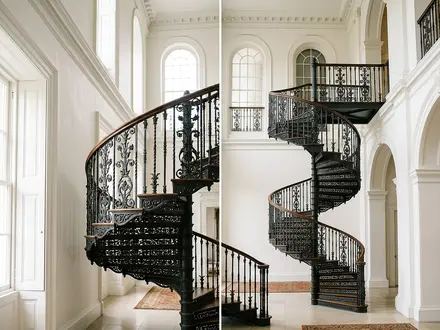
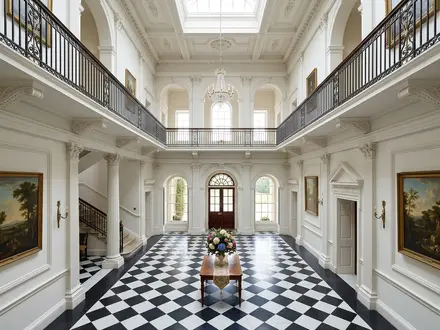
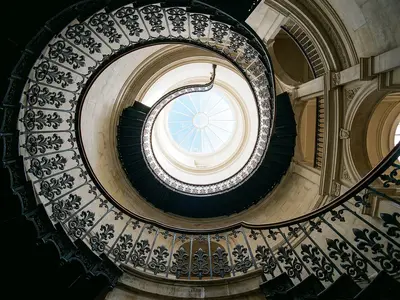
The Great Hall is the centrepiece — a perfect cube of space with a balcony gallery running around the upper level and a geometric marble floor that dates to the original 1635 layout. From here, the Tulip Stairs spiral upward in an elegant helix, their cantilevered stone treads and ornate iron balustrade drawing visitors and photographers in equal measure. The staircase was revolutionary in its day and remains one of the most admired architectural features in London.
The galleries display over 450 artworks from the Royal Museums Greenwich collection. The Armada Portrait of Elizabeth I is the star piece, its intricate symbolism repaying close study. Turner's enormous Battle of Trafalgar hangs nearby, alongside maritime paintings by the Van de Veldes, Canaletto's views of Greenwich and portraits by Gainsborough. Contemporary commissions sit comfortably alongside the historic works, and the collection rotates regularly, so repeat visits often reveal new pieces.
The Queen's House sits at the heart of the Maritime Greenwich UNESCO World Heritage Site, flanked by the National Maritime Museum to the north and Greenwich Park rising to the south. The Old Royal Naval College and its Painted Hall are a five-minute walk towards the river, and the Royal Observatory — home of the Prime Meridian — crowns the hill above. The Cutty Sark clipper ship stands near the DLR station, and Greenwich Market offers independent food stalls and craft shops just minutes away.
Combining the Queen's House with the National Maritime Museum makes a natural pairing, as both are free and sit side by side. Allow extra time if you plan to continue up the hill to the Observatory, which charges for entry. The Greenwich Foot Tunnel beneath the Thames provides a quirky route to the Isle of Dogs and Canary Wharf on the north bank.
Entry to the Queen's House and all permanent displays is completely free. Advance booking online is recommended to guarantee entry on busy days
Walk-ups are usually fine, but booking online guarantees entry on busy weekends and school holidays. It also means you receive email updates about any schedule changes.
The staircase is the most photographed feature in the house. Arrive when doors open at 10am to get clear shots without crowds blocking the spiral view from below.
The National Maritime Museum is directly next door and also free. Together they make a comfortable half-day visit without needing to cross any roads between them.
The gallery balcony above the Great Hall offers a different perspective on the marble floor pattern. The geometric design is best appreciated from the upper level.
Thames Clipper services stop at Greenwich Pier, a five-minute walk away. The river route from central London passes the Tower, Canary Wharf and the O2 — far more enjoyable than the Tube.

London Travel Writer · 12+ years covering UK attractions and tourism
Last reviewed: June 2, 2026