Orleans House Gallery
Free riverside gallery in Twickenham — built around a magnificent 1720 Baroque octagon designed by James Gibbs
Free riverside gallery in Twickenham — built around a magnificent 1720 Baroque octagon designed by James Gibbs
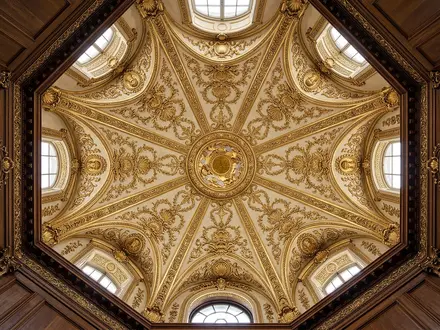
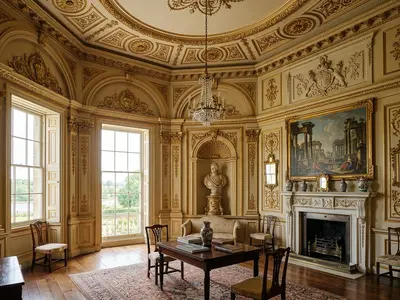
The Octagon Room at Orleans House Gallery is one of the finest surviving examples of early Georgian Baroque in London. Designed by James Gibbs in 1720 and decorated by the Swiss plasterers Artari and Bagutti, it was built to entertain royalty — George I and George II both dined beneath its gilded ceiling.
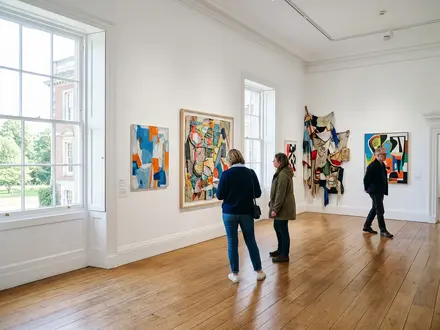
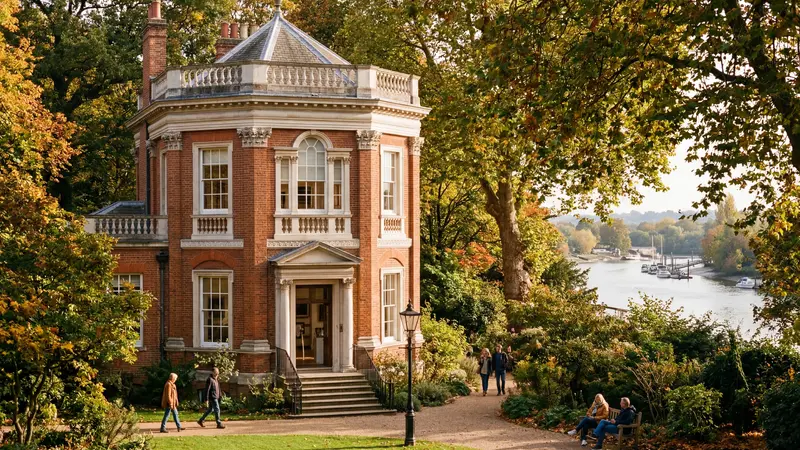
The gallery occupies the surviving wing of a riverside villa that once housed the exiled Duke of Orleans, who later became King of France. Free to visit, it stages a changing programme of contemporary art exhibitions alongside the Borough of Richmond's permanent collection in woodland gardens beside the Thames.
Orleans House began life in 1710 as a Palladian riverside villa designed by John James for James Johnston, Secretary of State for Scotland. James had previously worked under Sir Christopher Wren at Hampton Court and Greenwich, and his red-brick house with white stone detailing reflected that Wren-influenced style. In 1718, Johnston commissioned the architect James Gibbs to add the Octagon Room, a lavish entertaining space intended to impress visiting royalty. Completed in 1720, the room features ornate plasterwork by the Swiss stuccatori Artari and Bagutti, gilded busts of Hanoverian monarchs, and a painted capriccio of Roman ruins above the fireplace.
The gamble paid off. George I visited in 1724, and in 1729 Queen Caroline hosted a magnificent dinner in the Octagon, bringing her own cook and gold plate. The house passed through several owners before Louis Philippe, Duke of Orleans, took up residence during his English exile from 1815 to 1817. He praised the peaceful Twickenham setting — and later became King of France in 1830, giving the house the name it carries today.
The Octagon Room remains the centrepiece of any visit. Its Grade I listed interior is one of the finest examples of early Georgian Baroque decoration in the capital, with every surface worked in gilt, plaster and paint. Beyond the Octagon, the main gallery spaces host a rotating programme of free contemporary art exhibitions throughout the year, featuring emerging artists, community projects and works drawn from the Borough of Richmond's permanent collection.
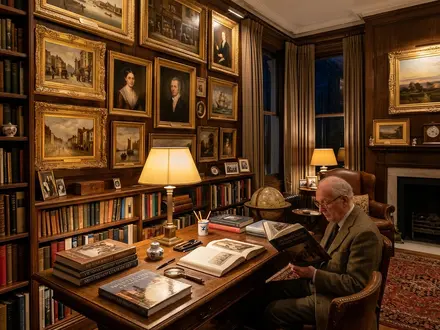
The Study Gallery displays highlights from that collection, which numbers over 3,500 paintings, prints and drawings bequeathed to the borough in 1962 by the art collector Nellie Ionides. Ionides had purchased the Octagon Room and surrounding wing in the 1920s to save them from demolition after the main house was pulled down in 1926. Her generosity preserved the building and formed the foundation of what became a public gallery when it opened in 1972.
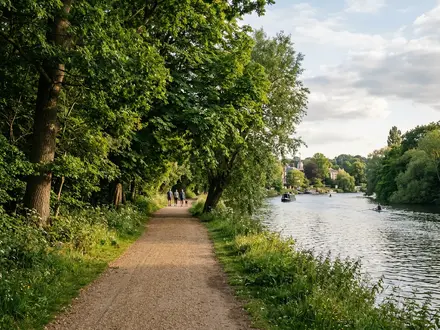
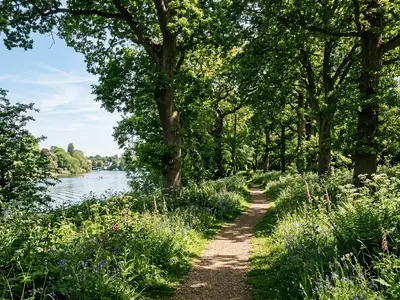
The gallery's woodland gardens are worth exploring in their own right. Mature trees, wildflower plantings and paths wind down to the Thames, connecting with the Thames Path for riverside walks in either direction. Neighbouring Marble Hill Park, with its own Palladian villa built for Henrietta Howard in the 1720s, is immediately adjacent and makes a natural extension to a visit.
Twickenham itself offers a good selection of independent shops, cafes and restaurants along Church Street and King Street. Ham House, the remarkably preserved Stuart mansion managed by the National Trust, lies a pleasant 30-minute walk south along the river. Richmond town centre, with its hilltop park and sweeping Thames views, is reachable by bus or a longer riverside walk.
Entry to all galleries and the Octagon Room is completely free — donations are welcome
Head straight to the Octagon Room when you arrive. The Baroque plasterwork and gilded details are best appreciated in natural light, which fills the room through its tall windows.
The neighbouring Marble Hill House and its parkland are free to enter and immediately adjacent. Together the two sites make a rewarding half-day outing along the Thames in Twickenham.
The riverside access road can flood during high tides at Richmond Bridge. Check Port of London Authority tide times before driving, especially in winter months.
The gallery connects directly to the Thames Path. Walk south to reach Ham House in around thirty minutes, or north towards Richmond Bridge for views across the river.
The gallery runs regular free workshops and creative activities for children during school holidays. Check the website before visiting to see what sessions are scheduled.

London Travel Writer · 12+ years covering UK attractions and tourism
Last reviewed: June 2, 2026