The Household Cavalry Museum
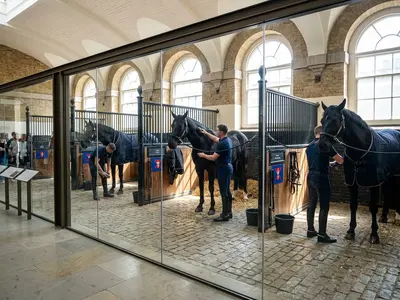
Living military museum inside Horse Guards — watch troopers prepare horses for the daily Queen's Life Guard ceremony through a glass screen
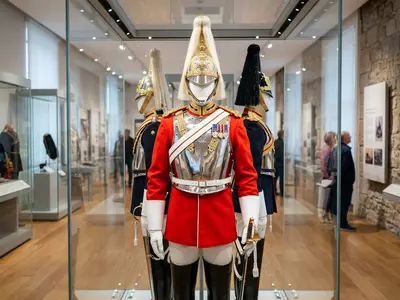
Living military museum inside Horse Guards — watch troopers prepare horses for the daily Queen's Life Guard ceremony through a glass screen
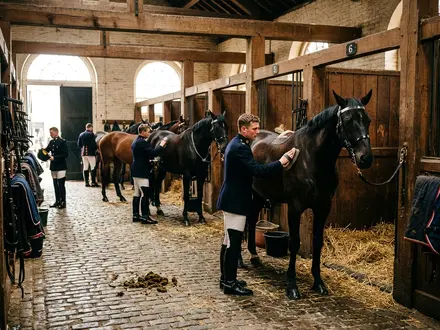
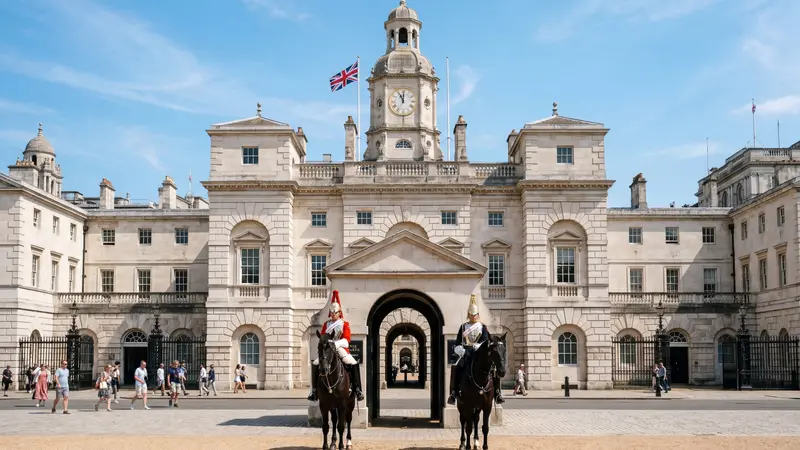
Built within the 18th-century Horse Guards building on Whitehall, the Household Cavalry Museum is the only place in London where you can watch real soldiers preparing their horses for ceremonial duty through a glass partition into the original working stables.
The museum traces over 360 years of service by the Life Guards and the Blues and Royals, from the English Civil War to modern peacekeeping operations. Uniforms, weapons, silver and interactive displays sit alongside the sights and sounds of troopers polishing breastplates and saddling chargers just metres away.
The Household Cavalry traces its origins to the English Civil War. When Charles II was restored to the throne in 1660, he formed a personal bodyguard from the loyal cavalrymen who had followed him into exile. The Life Guards were established in 1661, and the Royal Horse Guards — later merged to form the Blues and Royals — followed shortly after. Together they have served the sovereign continuously for over 360 years, making them the most senior regiments in the British Army.
The Horse Guards building itself was designed by the architect William Kent and completed in 1755, replacing an earlier Tudor guard house that had stood on the same site since the reign of Henry VIII. It served as the formal entrance to the royal palaces and the headquarters of the Commander-in-Chief of the British Army until the War Office moved to larger premises in 1904. The building remains the official headquarters of the Household Division to this day.
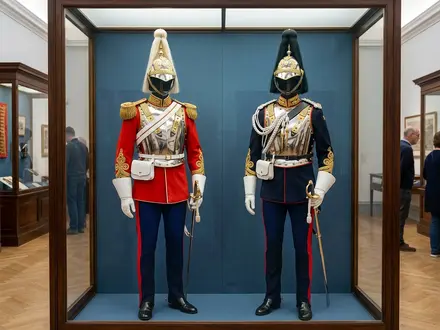
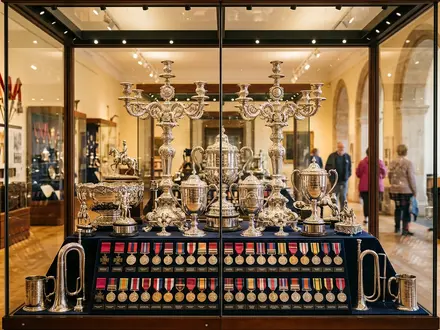
The museum occupies a series of rooms within Horse Guards, with displays arranged chronologically from the regiment's founding through to recent deployments in Iraq and Afghanistan. Ceremonial uniforms, weapons, paintings and silverware — including pieces by Faberge — chart the regiment's dual role as both a fighting force and a ceremonial guard.
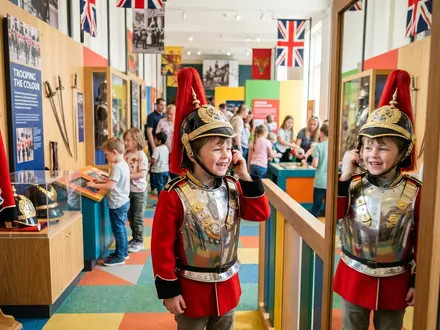
The standout feature is the glazed wall looking directly into the working stables. Visitors can watch troopers grooming their horses, polishing breastplates and preparing for the daily Queen's Life Guard ceremony that takes place just outside on Whitehall. Interactive stations let you try on replica helmets and breastplates, and an audio-visual guide — included with every ticket — provides personal testimonies from serving soldiers about their training and daily routines.
Horse Guards sits on Whitehall between Trafalgar Square and the Houses of Parliament, placing it at the heart of London's most concentrated stretch of landmarks. Banqueting House is directly opposite, Downing Street is a two-minute walk south, and the Churchill War Rooms are five minutes away in King Charles Street. The Changing of the Queen's Life Guard takes place daily at 11am on the parade ground directly outside — time your visit to catch it before heading into the museum.
The museum is compact and fully wheelchair accessible. Photography is permitted throughout but flash is not allowed. There is no cafe on site, but St James's Park is a short walk away with several kiosks, and the cafes around Trafalgar Square are close at hand.
Under 6s enter free. Audio-visual guide included with all tickets. Military veterans and serving personnel receive a 50% discount with valid ID
The Changing of the Queen's Life Guard happens daily at 11am on Horse Guards Parade. Arrive by 10:45am to watch from the parade ground, then head inside the museum afterwards.
The museum has replica helmets, breastplates and jackets you can wear for photographs. Children particularly enjoy this — no booking required, just queue up.
Two mounted troopers stand guard in the archway entrance on Whitehall from 10am to 4pm daily. You can stand beside them for photographs but do not touch the horses.
Banqueting House is directly across the road, the Churchill War Rooms are five minutes south, and Downing Street is a two-minute walk. Plan a half-day Whitehall circuit.
The included audio-visual guide has personal testimonies from serving troopers about training and daily life. It adds real depth to the displays and takes about an hour.

London Travel Writer · 12+ years covering UK attractions and tourism
Last reviewed: March 9, 2026