Farnborough Air Sciences Trust Museum
Aviation heritage museum on the historic RAE site — where Britain's first powered flight took place in 1908
Aviation heritage museum on the historic RAE site — where Britain's first powered flight took place in 1908
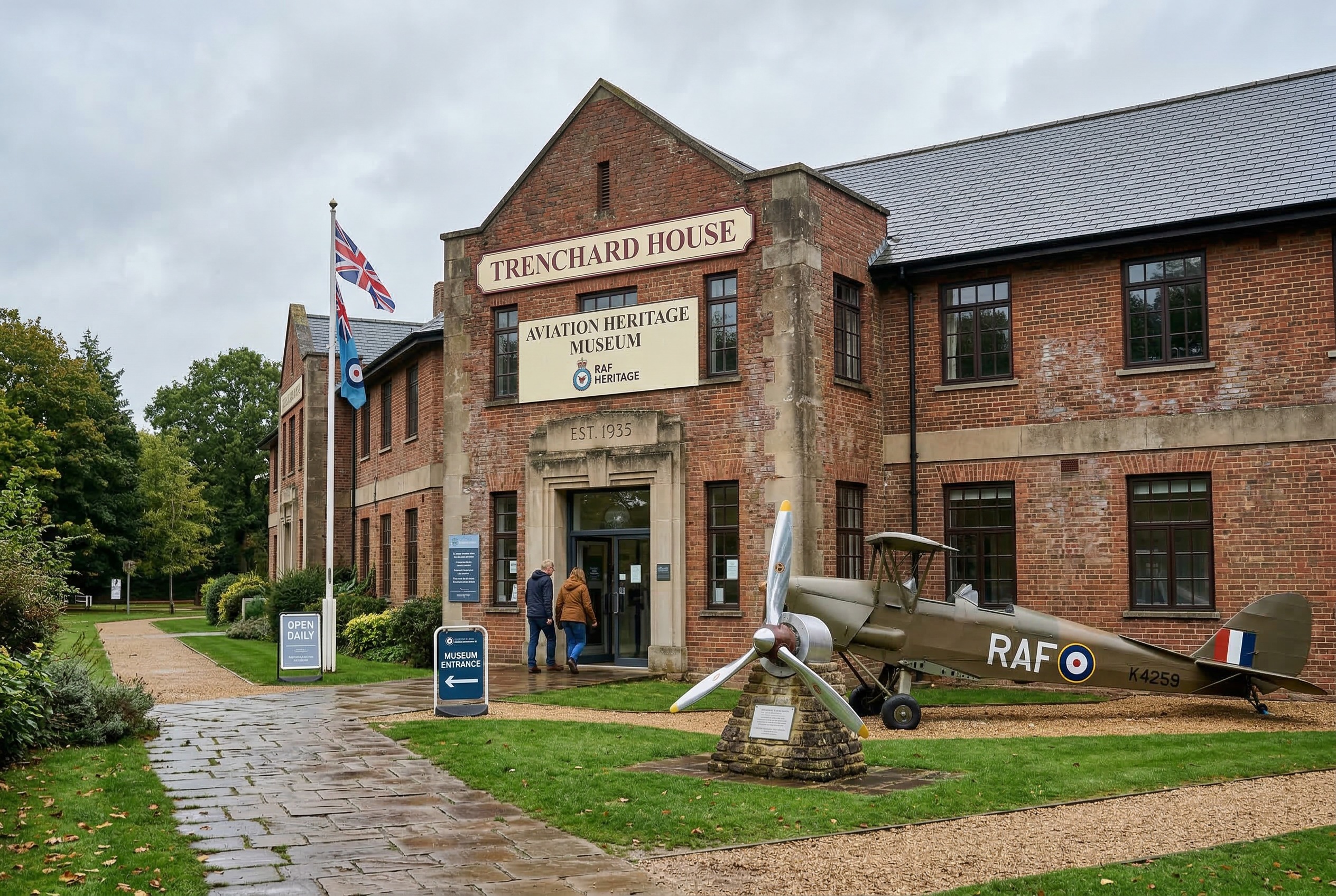
Farnborough is the birthplace of British aviation. In October 1908, the American-born showman Samuel Franklin Cody took off from this very site in British Army Aeroplane No.1, covering 1,390 feet in what became the first sustained powered flight in Britain. The FAST Museum stands on the grounds of the former Royal Aircraft Establishment, preserving that story and everything that followed.
Run entirely by volunteers, the museum houses two halls of exhibits spanning more than a century of aerospace research. From Cody's replica biplane and Frank Whittle's early jet engines to wind tunnel models and ejection seats, the collection traces how Farnborough shaped military and civil aviation worldwide.
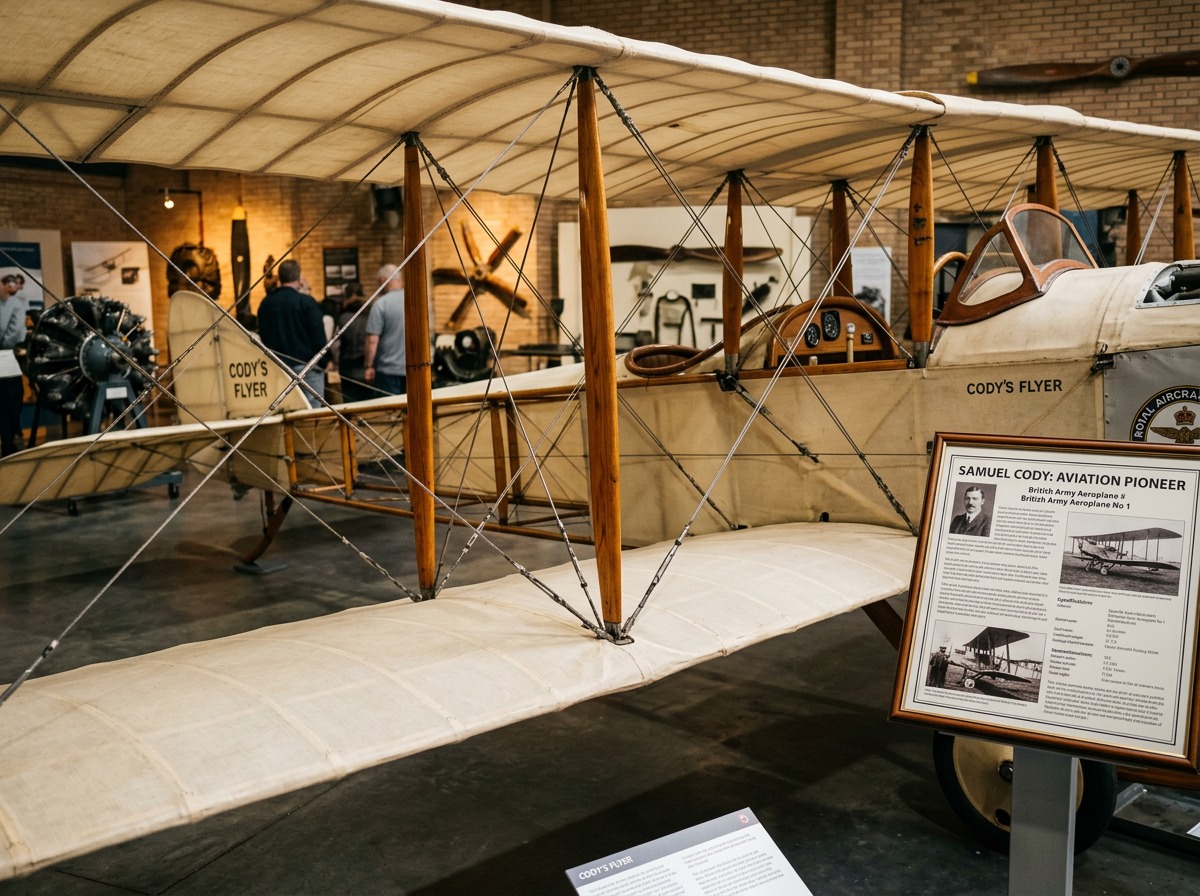
Farnborough's connection to flight began in 1904 when the British Army established a balloon factory on the site. Within four years, the focus had shifted to heavier-than-air machines. Samuel Franklin Cody, an American-born showman who had already designed man-lifting kites for the Army, was given use of the factory's workshops to build a powered aeroplane. On 16 October 1908, Cody took off from Laffan's Plain in British Army Aeroplane No.1, flying 1,390 feet before clipping a tree and coming down hard. It was ungainly, unplanned and epoch-making — the first sustained powered flight in the British Isles.
The site grew rapidly after that. Renamed the Royal Aircraft Factory, then the Royal Aircraft Establishment, Farnborough became the nerve centre of British aerospace research for most of the twentieth century. Every military aircraft type flown by the RAF was tested here, from First World War biplanes to Cold War jets. The establishment's scientists and engineers contributed to advances in aerodynamics, materials science, radar, ejection seats and flight data recording. When the RAE closed in 1991, a group of volunteers formed the Farnborough Air Sciences Trust to preserve what remained.
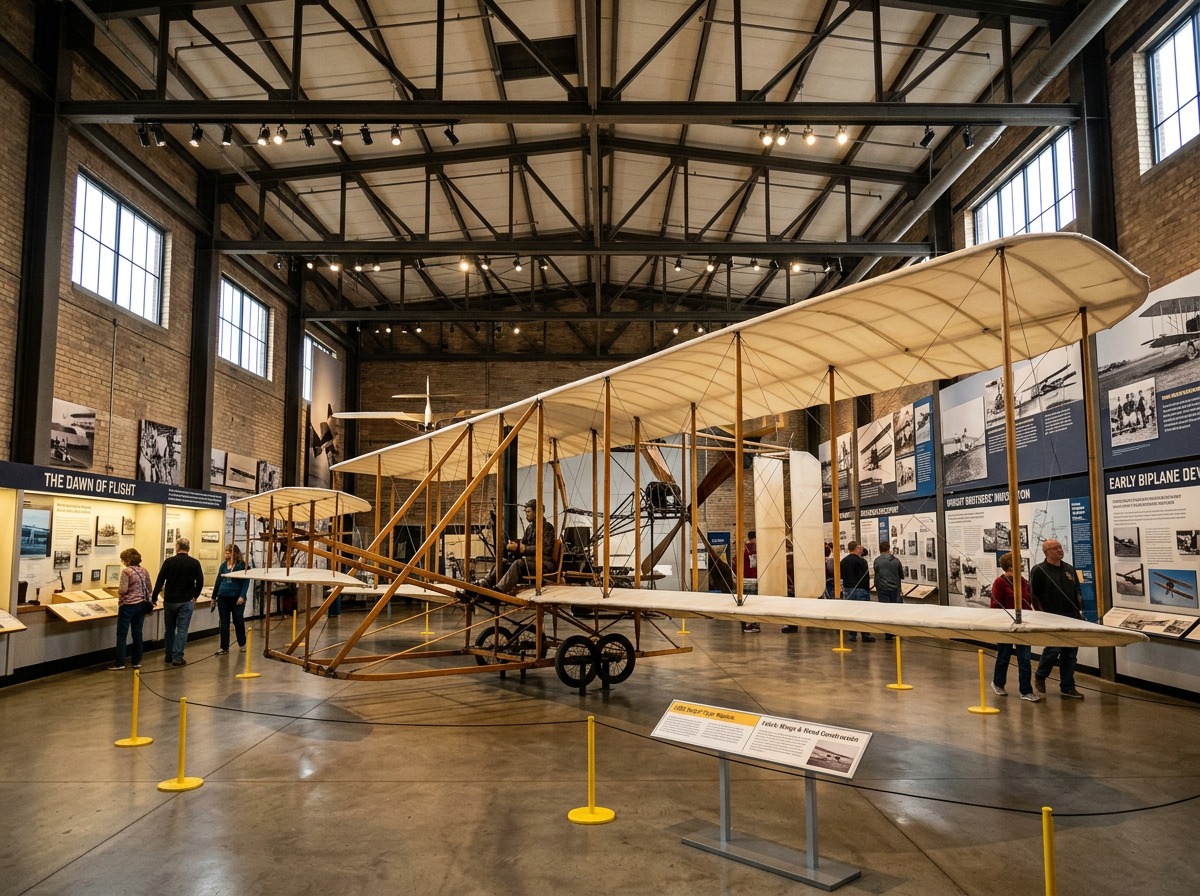
The museum is arranged across two main halls and the Cody Pavilion. The pavilion houses a full-size replica of Cody's British Army Aeroplane No.1A, painstakingly built using the same materials and construction methods as the original. With its 53-foot wingspan, the craft fills the space and gives an immediate sense of how improvised early aviation was.
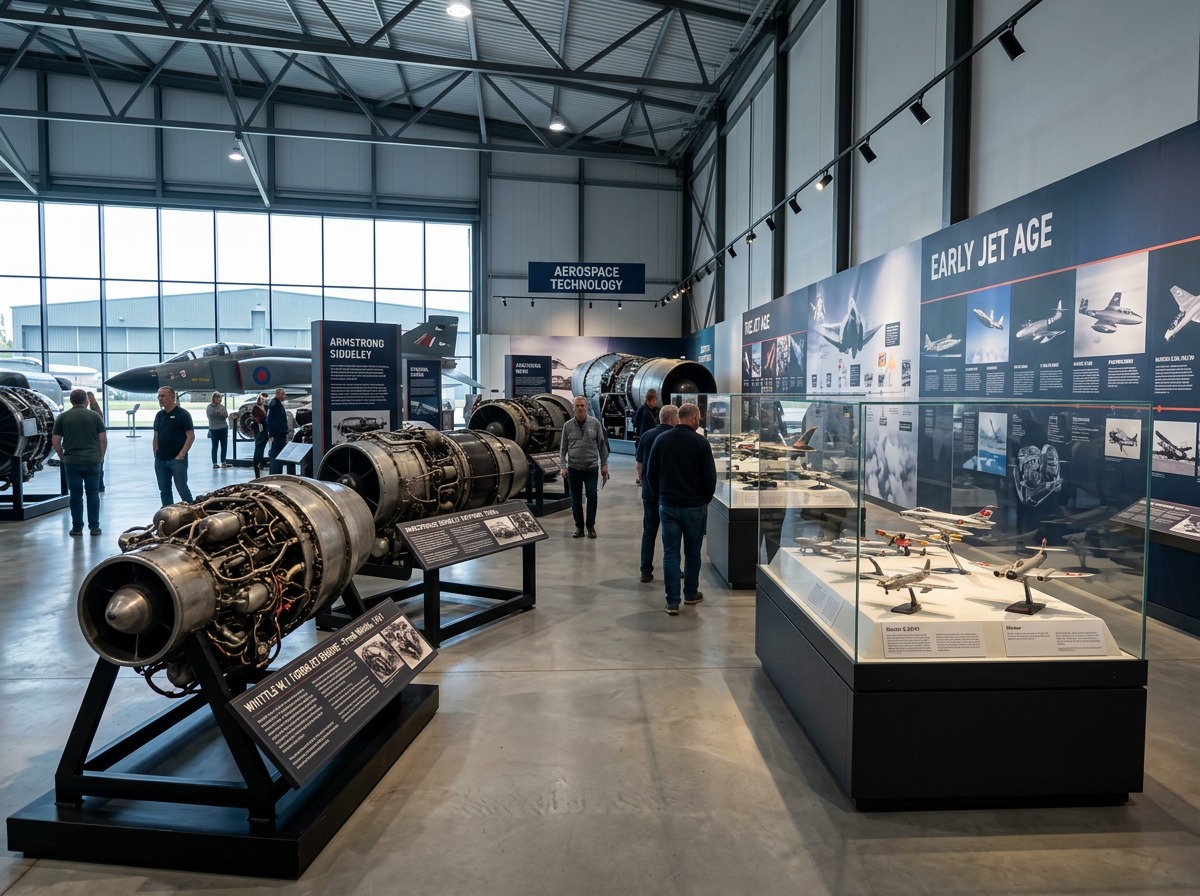
Hall 2 occupies the original 1908 Balloon School storage building and is divided into themed areas covering wind tunnel technology, jet propulsion, space research, sonobuoys and target drones. Key exhibits include Frank Whittle's 1943 W2/700 jet engine, a Metropolitan-Vickers F.2 engine tested on the Gloster Meteor, and scale models used in Concorde's development. A working Gottingen-type wind tunnel, recovered from Germany after the war, demonstrates the principles of aerodynamic testing with original models.
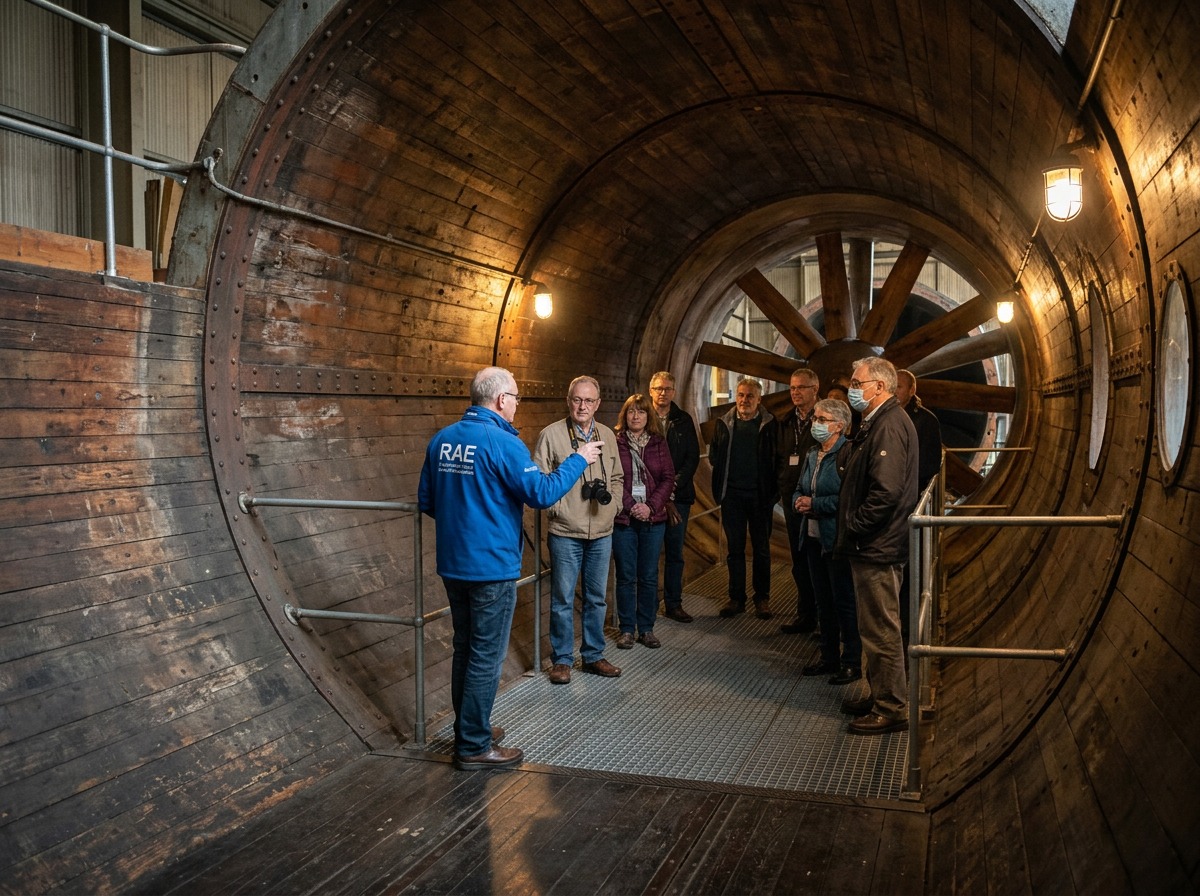
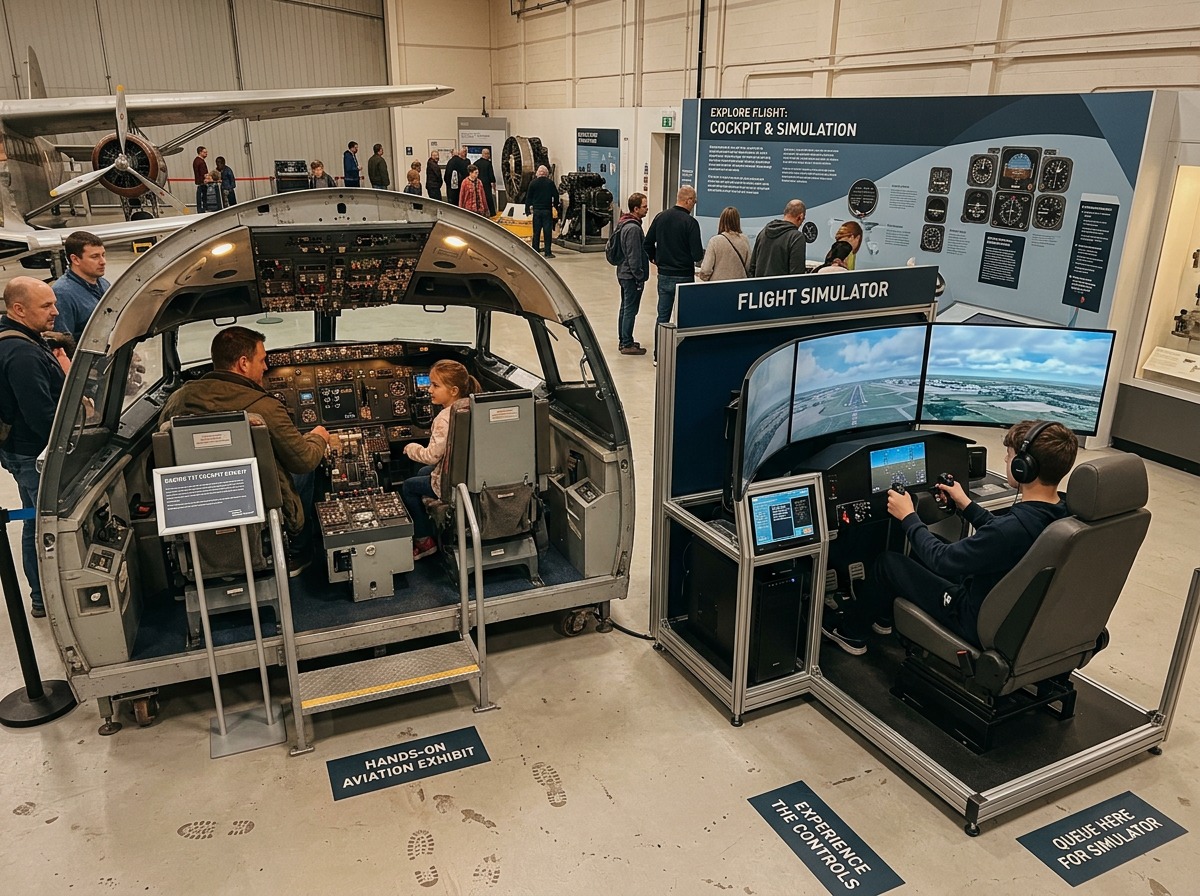
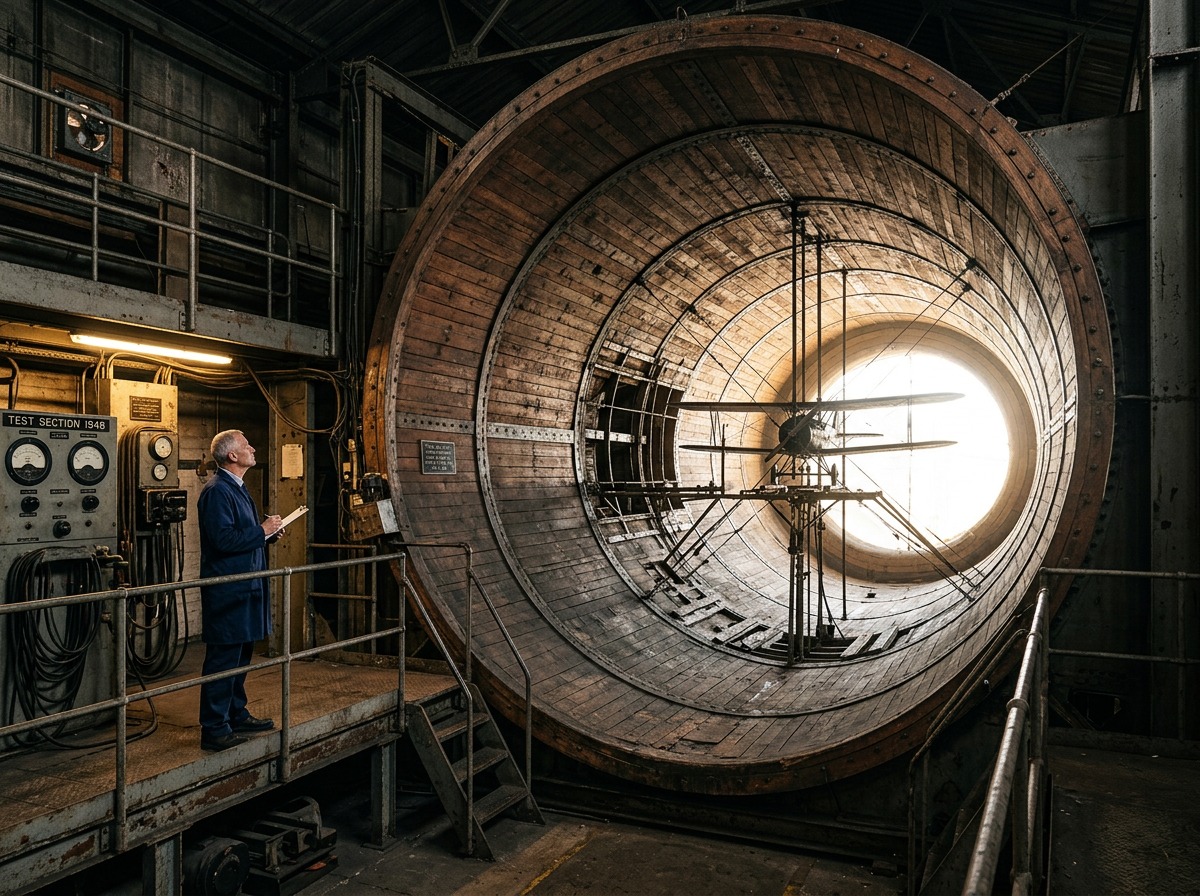
Between March and October, guided tours take visitors inside two of the site's historic wind tunnels, including a remarkable wooden low-turbulence tunnel built in 1946. Volunteer-operated flight simulators and open cockpits are available on most weekends, though their availability depends on volunteer staffing.
The FAST Museum is open every Saturday, Sunday and Bank Holiday Monday from 10am to 4pm. Admission to the museum is free, making it excellent value for a morning or afternoon visit. Wind tunnel tours cost £10 for adults and £5 for children and run during the season from March to October — booking in advance through the FAST website is essential as places are limited.
The museum is a 15-minute walk from Farnborough Main station, which has regular services from London Waterloo. If driving, free parking is available on site at weekends. There is no cafe on site, but Farnborough town centre is a short walk away with plenty of options. Allow 1.5 to 2 hours for the museum itself, or a full morning if you are combining it with a wind tunnel tour.
General museum admission is free. Wind tunnel tours run March to October and must be booked in advance via the FAST website. Group visits on Tuesdays and Thursdays carry a charge — contact the museum for details.
The guided wind tunnel tours are a highlight but places fill quickly, especially during summer. Book through the FAST website as soon as the season opens in March.
The flight simulators and open cockpits depend on volunteer availability. Check the FAST website or ring ahead to confirm they will be running on the day you plan to visit.
The museum is busiest on Sunday afternoons. Arriving when doors open at 10am gives you unhurried access to the Cody Pavilion and Hall 2 before other visitors.
There is no cafe at the museum. Farnborough town centre is a short walk north along Farnborough Road with cafes and restaurants, or bring a packed lunch.
The nearby Farnborough Centrifuge project is restoring a Cold War human centrifuge used for pilot training. Check their website for open days to make a full aviation heritage day out.

London Travel Writer · 12+ years covering UK attractions and tourism
Last reviewed: June 2, 2026