Didcot Railway Centre
A 21-acre living museum of Great Western Railway heritage — working steam locomotives, a rare coal stage and Brunel-era broad gauge replicas
A 21-acre living museum of Great Western Railway heritage — working steam locomotives, a rare coal stage and Brunel-era broad gauge replicas
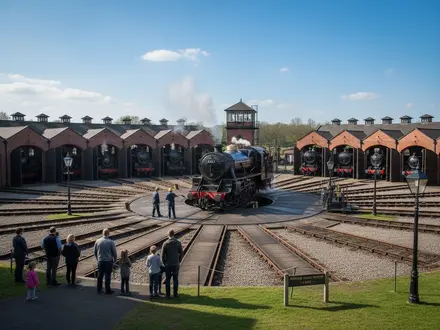
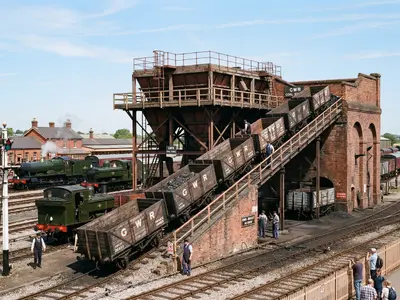
Didcot Railway Centre is home to the only surviving working coal stage of its kind in Britain — a red-brick structure where wagons were once propelled up an incline to fill locomotive bunkers below. Spread across 21 acres of a former Great Western Railway engine shed, it is one of the most complete heritage railway sites in the country.
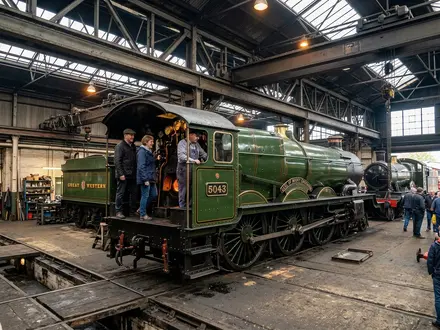
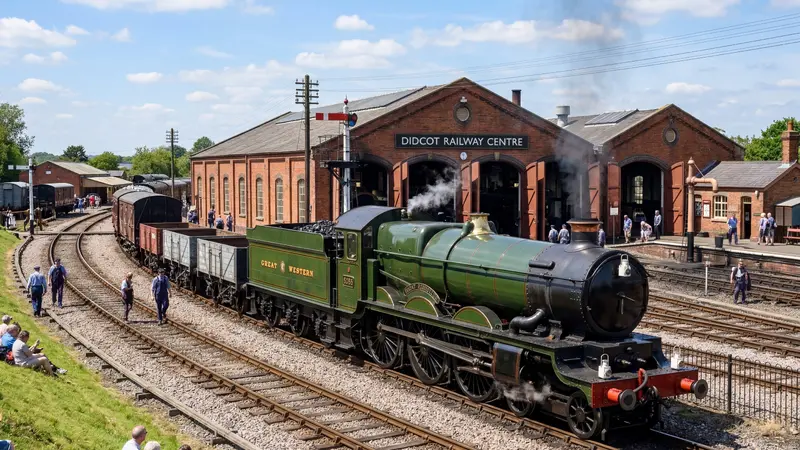
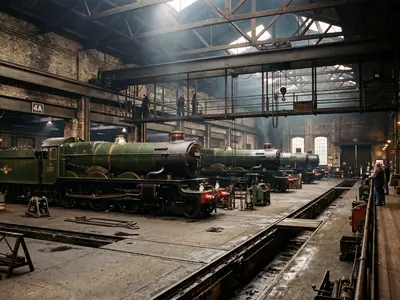
Visitors can ride behind working steam locomotives, explore a 1932 engine shed housing more than fifteen preserved engines, and examine full-size replicas of Brunel's broad gauge Fire Fly and Iron Duke. The centre is run entirely by the Great Western Society's 250-plus volunteers.
The Great Western Railway built its first line through Didcot in 1839 as part of Isambard Kingdom Brunel's route from London to Bristol. A locomotive depot followed, and by 1932 a steel-and-brick engine shed had been erected to service the fleet. When steam gave way to diesel under British Railways' Modernisation Plan, the shed was declared redundant and closed in June 1965.
Two years later the Great Western Society, founded in 1961 by a group of enthusiasts who had placed a letter in Railway Magazine, was offered the use of the disused depot. They moved in during 1967 and have been restoring, maintaining and expanding the site ever since. Today the centre covers 21 acres and retains many original GWR buildings, making it one of the most authentic heritage railway environments in Britain.
The engine shed is the natural starting point, with more than fifteen locomotives on display including Castle class No. 4079 Pendennis Castle and King class No. 6023 King Edward II. On Steam Days — roughly a hundred per year — several locomotives are in steam, and visitors can ride behind them on the centre's demonstration line. The coal stage, a red-brick structure with a hopper system for loading coal into locomotive bunkers, is the last working example of its type in the country.
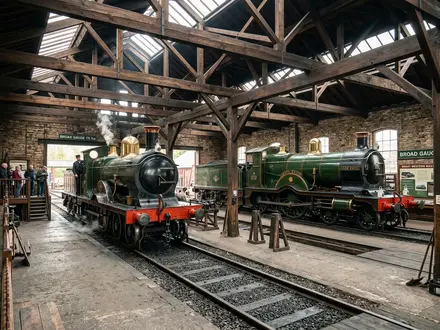
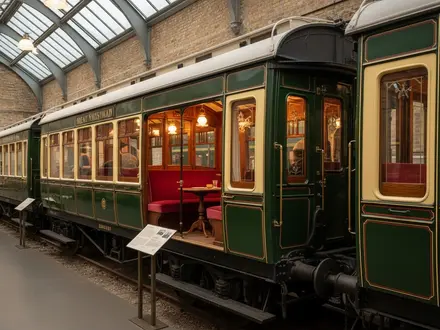
Beyond the shed lies the broad gauge collection, centred on the 1850s transfer shed where goods were once moved between Brunel's seven-foot gauge and standard gauge wagons. Full-size replicas of the Fire Fly and Iron Duke locomotives sit on broad gauge track, giving a vivid sense of the scale of Brunel's original railway. The museum building houses smaller artefacts including brass nameplates, period posters and a section of pipe from Brunel's experimental atmospheric railway.
Didcot Railway Centre is reached exclusively on foot from Didcot Parkway station — there is no road access to the site. The walk takes about five minutes through a subway originally built for enginemen. Didcot Parkway has frequent Great Western Railway services from London Paddington, Oxford and Bristol, making the centre one of the most accessible heritage railways in the country.
The on-site refreshment room serves hot drinks, snacks and light meals. A well-stocked gift shop includes railway books, models and souvenirs, plus an unusual 1905 Lamson cash-and-parcel railway originally installed in a Kansas City department store. Most of the site is accessible for wheelchair users, though some areas have uneven ground. Check the website for the current Steam Days calendar before visiting — Discovery Days offer shed access but no train rides.
Under 3s free. Gift Aid pricing available adds a small supplement — admission includes free train rides on operating days.
The centre opens mainly at weekends and not all open days include steam train rides. Check the website calendar to ensure you visit on a Steam Day for the full experience.
There is no road access to the centre. Park at Didcot Parkway station car parks and walk through the subway — allow ten to fifteen minutes from the car park.
Special event days such as steam galas and Thomas weekends draw large crowds. Arrive when gates open at ten thirty to avoid queues and get the best positions for photography.
The centre is entirely volunteer-run and many have deep engineering or railway knowledge. They are happy to explain how the locomotives work and share stories of the GWR era.
Didcot Parkway is just fifteen minutes by train from Oxford. A morning at the railway centre pairs well with an afternoon exploring the colleges and museums of Oxford.

London Travel Writer · 12+ years covering UK attractions and tourism
Last reviewed: March 9, 2026