Design Museum
The world's leading museum devoted to contemporary design — from architecture and fashion to graphics and digital innovation
The world's leading museum devoted to contemporary design — from architecture and fashion to graphics and digital innovation
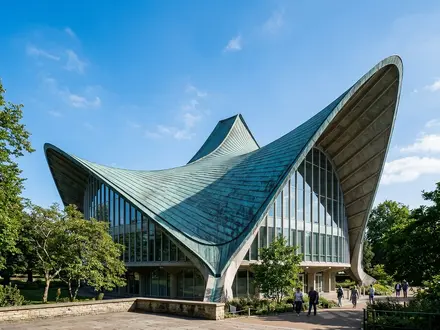
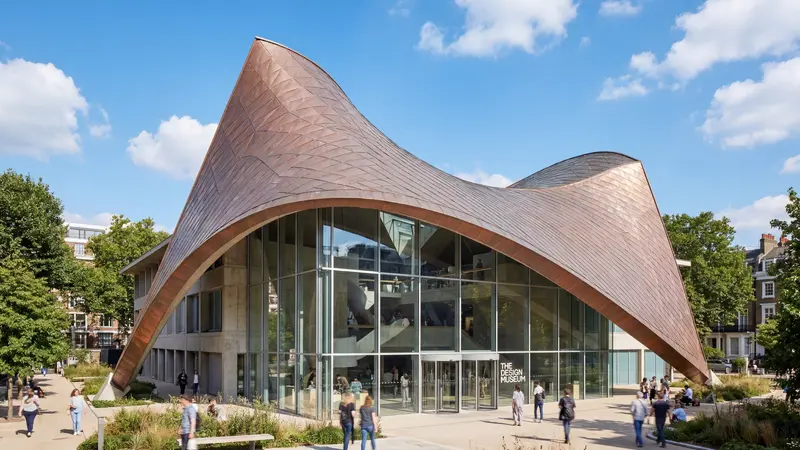
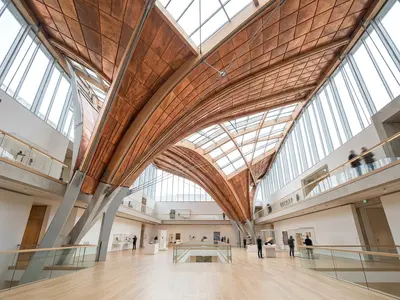
Sir Terence Conran poured £17.5 million of his own money into moving the Design Museum from a Bermondsey banana warehouse to the former Commonwealth Institute in Kensington. When it reopened in November 2016, the parabolic copper roof — a Grade II* listed landmark from the 1960s — sheltered three times more gallery space than before.
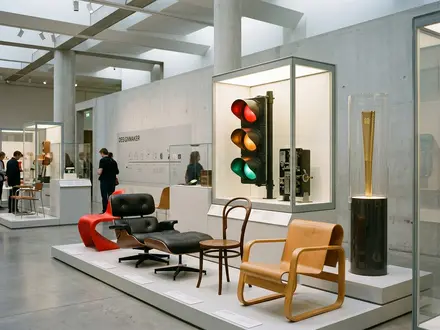
Inside, nearly 1,000 objects in the free permanent collection trace the story of modern design from bentwood cafe chairs to 3D-printed prosthetics. Ticketed exhibitions upstairs tackle everything from sneaker culture to artificial intelligence, and the top-floor restaurant looks out across Holland Park.
The Design Museum was founded by Sir Terence Conran and Stephen Bayley in 1989, initially as the Boilerhouse Project at the V&A before moving to a converted banana warehouse at Shad Thames near Tower Bridge. For 27 years the riverside building served the museum well, but growing visitor numbers and an expanding collection demanded more space. Conran's £17.5 million donation in 2011 set the relocation in motion.
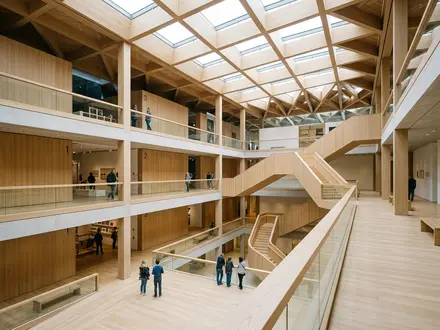
The new home was the former Commonwealth Institute on Kensington High Street, a 1960s landmark whose sweeping hyperbolic paraboloid roof had been Grade II* listed but whose interior had stood empty for over a decade. Architect John Pawson stripped the building back and rebuilt it from the inside, preserving the iconic copper roof while creating light-filled galleries with pale oak floors. The museum reopened in November 2016 with three times the exhibition space of Shad Thames.
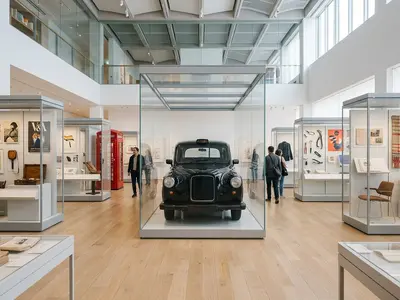
The permanent collection, Designer, Maker, User on Level 2, is free and tells the story of modern design through nearly 1,000 objects. The Designer section traces thinking from a single spoon to an entire city, the Maker section follows manufacturing from Thonet bentwood chairs to robotic arms, and the User section explores how people interact with designed objects and brands. Familiar items sit alongside rarities — a London black cab prototype next to David Mellor's traffic light, a 3D-printed dress beside Kinneir and Calvert's road signage.
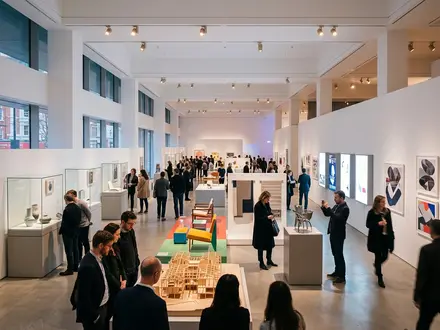
Upstairs, two galleries host major temporary exhibitions that change several times a year. Past shows have covered Stanley Kubrick's creative process, the story of Cartier, and the evolution of electronic music. These ticketed exhibitions regularly draw critical praise and long queues at weekends.
The museum sits at the western end of Kensington's cultural strip, a short walk from the Royal College of Art and Holland Park. The ground-floor shop stocks design books, homeware and gifts, and the top-floor restaurant, Parabola, offers views across the park and rooftops. A 202-seat auditorium hosts talks, film screenings and events throughout the year.
High Street Kensington station is seven minutes on foot, giving quick access via the Circle and District lines. Visitors heading east can combine a trip with the V&A, Science Museum and Natural History Museum, all within a twenty-minute walk along Kensington Road.
The permanent collection and ground-floor galleries are free — charges apply only to temporary exhibitions on the upper floors
Designer, Maker, User on Level 2 is free and gives a solid overview of the museum's scope. Save the ticketed exhibitions for afterwards so you know what interests you most.
Popular shows sell out at weekends. Booking a timed slot online avoids the queue and sometimes offers a small discount on the door price.
The museum stays open until 6pm on Fridays, Saturdays and Sundays, giving you an extra hour compared with weekdays. Friday afternoons tend to be quieter than weekends.
The top-floor restaurant overlooks Holland Park and the rooftops of Kensington. It is a good spot for lunch, but book ahead as tables fill up quickly.
The park is directly behind the museum. Walk through the Kyoto Garden — a Japanese-style garden with koi carp and peacocks — for a peaceful break between galleries.

London Travel Writer · 12+ years covering UK attractions and tourism
Last reviewed: June 2, 2026