Centre of the Cell
Interactive science centre inside a working biomedical research lab — hands-on cell biology for all ages

Interactive science centre inside a working biomedical research lab — hands-on cell biology for all ages
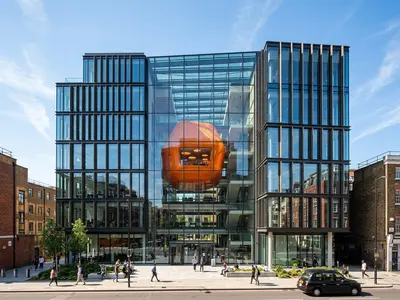
Suspended inside an orange pod above real laboratory benches, Centre of the Cell is the world's first science education centre built within a working biomedical research institute. Queen Mary University of London opened it in 2009 to bring cutting-edge cell biology to everyone — from primary-school children to curious adults.
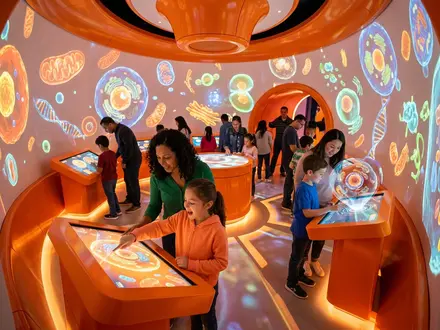
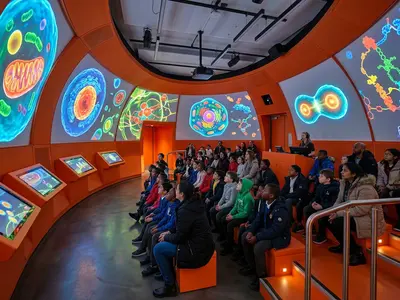
Each visit begins with a walk through the Blizard Institute's glass-walled atrium before you climb into the Pod itself. Inside, immersive films, digital games and sensory effects let you grow virtual skin, hunt disease genes and explore the inner workings of the human body. The programme changes regularly, so repeat visits always offer something new.
Centre of the Cell grew out of a bold decision by microbiologist Professor Mike Curtis. When Queen Mary University of London commissioned architect Will Alsop to design the Blizard Institute in the early 2000s, Curtis insisted that public engagement be part of the original brief rather than an afterthought. The result was a striking orange pod, visible from the street, suspended above a vast underground laboratory where hundreds of scientists carry out real biomedical research.
The centre opened its doors in September 2009 as the first science education space in the world to sit inside a working research building. Its location in Whitechapel — one of London's most diverse and historically underserved boroughs — was deliberate. The aim was to inspire local children and families who might otherwise have little contact with scientific research.
Since then more than 200,000 visitors have passed through the Pod. The programme has expanded from school visits to include family events, half-term workshops, teacher training and an extensive set of free online resources.
A visit typically lasts around 60 minutes and takes place entirely inside the Pod. After gathering in the Blizard Building's glass-walled atrium, visitors are led up a ramp and into the capsule. Once sealed inside, the show begins — a combination of projected films, surround sound, theatrical lighting and interactive digital games controlled from touch-screen panels around the Pod's curved walls.
Content is designed around the national curriculum but accessible to a general audience. You might explore how white blood cells fight infection, trace a cancer cell's journey through the body, or experiment with gene editing in a simplified simulation. The interactive elements mean no two sessions play out the same way.
Centre of the Cell operates by pre-booked session only — you cannot drop in. During term time most sessions are reserved for school groups, so families should aim for half-term and holiday events listed on the website. Arrive at the Blizard Institute reception at least ten minutes before your session. The building is fully wheelchair accessible and there is step-free access to the Pod.
Under 3s free. Tower Hamlets residents receive discounted rates with ID. Pre-booking essential.
Sessions sell out quickly, especially during school holidays. Check the website calendar and book as soon as dates are released.
Term-time sessions are mostly reserved for school groups. Family-friendly shows and workshops run during half terms and summer holidays.
You need to check in at the Blizard Institute reception before being escorted to the Pod. Latecomers may miss their session.
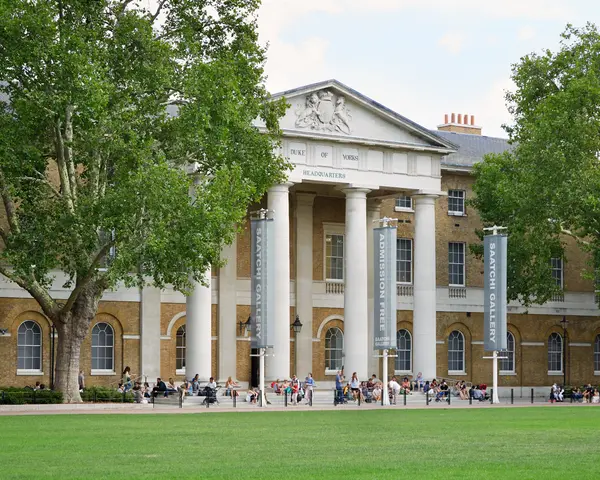
The free Whitechapel Gallery is a five-minute walk away — a good pairing for a half-day outing in the area.
Some shows are designed for younger children while others suit older pupils and adults. The website lists age ranges for each event.

London Travel Writer · 12+ years covering UK attractions and tourism
Last reviewed: March 10, 2026