Centre for Computing History
Hands-on museum in Cambridge housing over 40,000 items — from vintage computers and consoles to the world's largest microprocessor model
Hands-on museum in Cambridge housing over 40,000 items — from vintage computers and consoles to the world's largest microprocessor model
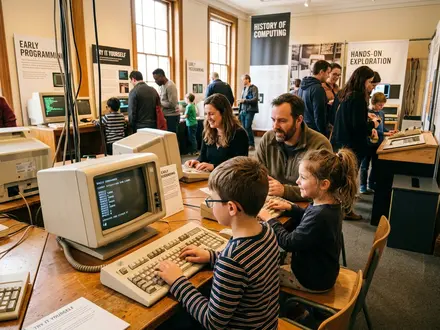
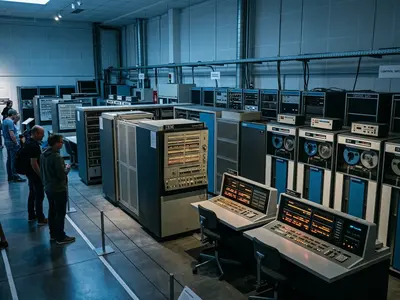
The Centre for Computing History in Cambridge holds more than 40,000 items spanning the entire history of computing, from wartime code-breaking machines to the home computers that launched the British tech industry. Most of the collection is switched on and waiting to be used, making this one of the most genuinely interactive museums in the country.
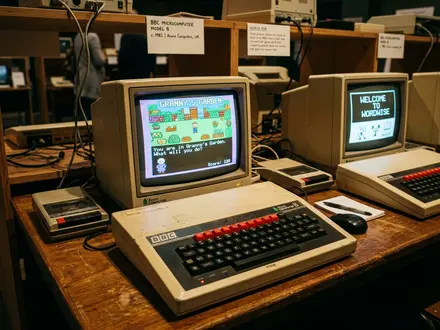
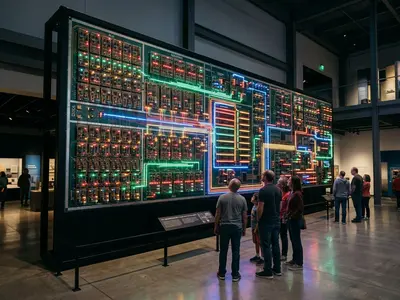
Visitors can type commands on a BBC Micro, play original arcade cabinets, and stand in front of the Megaprocessor — a room-sized working model of a microchip with 42,300 transistors and 10,000 LEDs that shows exactly how a computer thinks. It is a museum where touching the exhibits is not just allowed but actively encouraged.
Cambridge has shaped modern computing more than almost any other city in the world. In the early 1980s, Clive Sinclair developed the ZX Spectrum just a few miles from the museum's current home, while Acorn Computers — creators of the BBC Micro — operated from offices on Market Hill. The ARM processor, now inside virtually every smartphone on earth, was designed by a small team at Acorn's Cambridge laboratory. The Centre for Computing History sits at the heart of this story, preserving the machines, documents and personal accounts of the people who built the British computing industry from scratch.
The museum was founded in 2008, initially as a travelling exhibition before finding a permanent 10,500-square-foot home at Rene Court in 2013. Its mission is straightforward: to tell the story of the Information Age through objects people can actually use. Unlike most museums, where a rope or glass case separates visitor from artefact, the Centre for Computing History keeps its machines switched on and actively invites visitors to sit down and start typing.
The Megaprocessor dominates the main hall. Built by James Newman over three years, this 10-metre-long, 2-metre-tall construction uses 42,300 transistors and roughly 10,000 LEDs to replicate the function of a single microchip. Watching data pulse through its circuits in coloured light makes the abstract logic of computing genuinely visible — and yes, you can play Tetris on it.
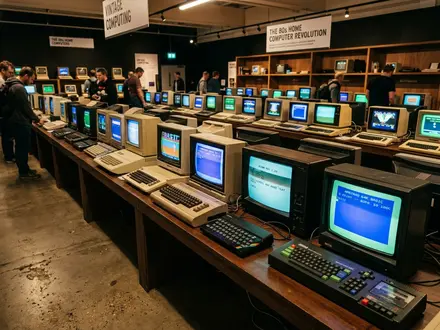
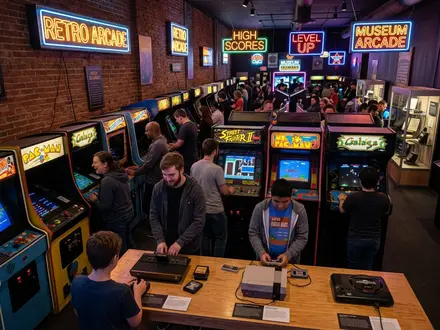
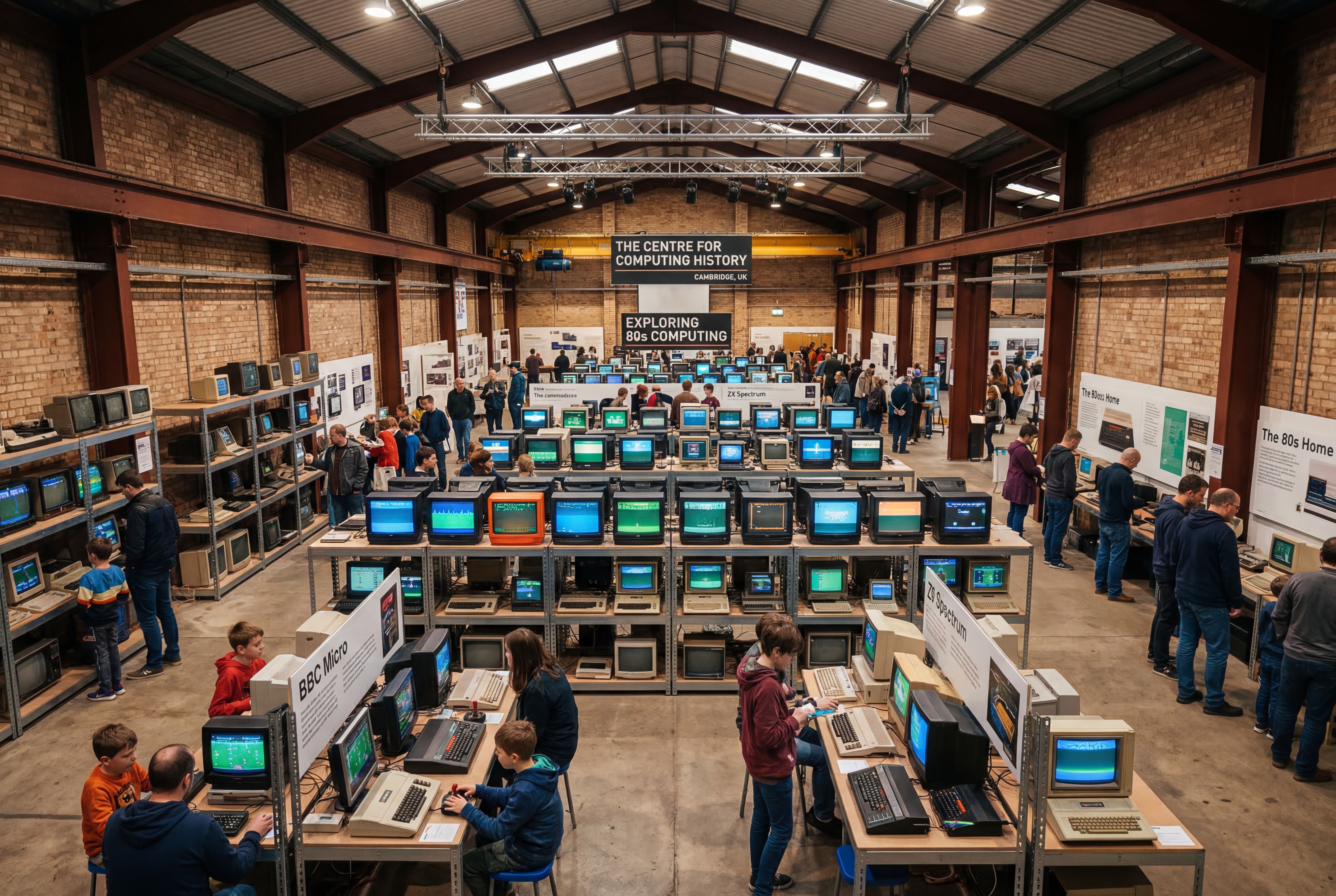
Beyond the Megaprocessor, the personal computer galleries hold one of the finest collections of British-made microcomputers anywhere. Rows of ZX Spectrums, BBC Micros, Commodore 64s, Amstrads and Acorn Electrons sit powered on and loaded with software. Visitors can type BASIC commands, load programmes from cassette tapes and experience the machines exactly as they were used in homes and schools during the 1980s. The gaming arcade adds another dimension, with playable classic cabinets and vintage consoles spanning five decades of interactive entertainment. The 1970s office recreation places visitors at a period-accurate desk with a genuine coding challenge, offering a window into the working life of early programmers.
The museum occupies a converted warehouse on Coldhams Road in east Cambridge, about 20 minutes on foot from the railway station or a short ride on the Citi 1 bus. Free parking is available on site, which is unusual for Cambridge. Last entry is at 4.15pm, so arrive by early afternoon to make the most of a visit — there is far more to see and do than first appearances suggest. The on-site cafe serves hot drinks and light refreshments.
Cambridge itself offers plenty to combine with a museum visit. The Fitzwilliam Museum, one of the finest free art collections outside London, is a 15-minute bus ride into the city centre. The university colleges, the Backs and the River Cam are all within easy reach. For families, the museum pairs well with a punt trip or a cycle ride along the guided busway path. Check the museum website before visiting, as special events, coding workshops and themed gaming days run regularly throughout the year.
Under 5s enter free — concessions available for blue badge holders and registered carers
The museum is busiest on Saturday afternoons especially during school holidays. Arriving at opening time gives you the best chance of uninterrupted access to the most popular hands-on machines.
Regular coding workshops and themed gaming events run throughout the year. Check the museum website before visiting as these sessions are popular and sometimes require advance booking.
The interactive nature of the exhibits means visits often run longer than planned. Budget at least two to three hours and do not be surprised if children want to stay even longer.
The museum is a 20-minute walk or short bus ride from the city centre. Visit the museum in the morning and spend the afternoon exploring the colleges, the Fitzwilliam Museum or punting on the Cam.
Free on-site parking at Rene Court is rare for Cambridge. If you are driving, this is one of the easier museums to reach without worrying about city centre parking charges.

London Travel Writer · 12+ years covering UK attractions and tourism
Last reviewed: March 10, 2026