What They Are
The Elgin Marbles, more formally known as the Parthenon sculptures, are a collection of marble carvings that once formed part of the Parthenon temple in Athens. The Parthenon was built between 447 and 432 BC during the leadership of Pericles and is considered one of the greatest architectural achievements of the ancient world. The sculptures were created under the direction of the sculptor Phidias.
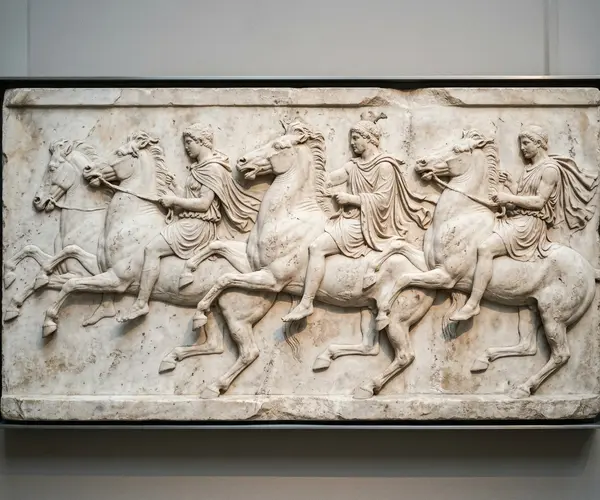
The collection in the British Museum includes about half of the surviving sculptural decoration from the building. This comprises sections of the frieze, which ran around the inner chamber of the temple and depicted a procession of riders, musicians, sacrificial animals and gods. It also includes figures from the pediments (the triangular gable ends of the building) and several of the metopes, square panels showing scenes of combat between Lapiths and Centaurs.
How They Came to London
Thomas Bruce, 7th Earl of Elgin, served as British Ambassador to the Ottoman Empire from 1799. At the time, Greece was under Ottoman control. Elgin obtained a permit, known as a firman, from the Ottoman authorities that he interpreted as allowing him to remove sculptures from the Parthenon. Between 1801 and 1812, his team detached and shipped a large quantity of marble sculpture to Britain.
Elgin ran into severe financial difficulties and eventually sold the collection to the British government in 1816 for 35,000 pounds, considerably less than his costs. The sculptures were placed in the British Museum, where they have remained since.
The Legality Question
The legality of Elgin's actions has been debated from the very beginning. Even in his own time, some British commentators, including Lord Byron, condemned the removal as cultural vandalism. The original Ottoman permit has never been found in Ottoman archives, and only an Italian translation of a copy survives. Greece argues that whatever permission was granted did not authorise the scale of removal that took place.
The Controversy
Greece has formally requested the return of the Parthenon sculptures since 1983, and the issue regularly features in diplomatic discussions. The Greek government built the Acropolis Museum in Athens, which opened in 2009 partly to demonstrate that Greece has a suitable facility to house the returned sculptures. The museum includes a gallery specifically designed to display the Parthenon frieze, with gaps left where the London pieces would fit.
The British Museum's position has traditionally been that the sculptures are legally held, that they are accessible to a global audience in London and that they form part of a universal collection that tells a connected story of world cultures. The museum has indicated willingness to discuss lending arrangements but has resisted any transfer of ownership.
Seeing Them in Room 18
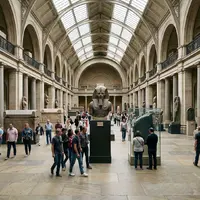
The Parthenon sculptures are displayed in Room 18, a large purpose-built gallery on the ground floor. The room was designed by the architect Sir Joseph Duveen and opened in 1962. The sculptures are arranged roughly as they would have appeared on the original building, with the frieze panels along the walls and the pediment figures displayed at each end.
The scale and quality of the carving is striking even after 2,500 years. The movement of draped fabric, the musculature of the figures and the energy of the combat scenes demonstrate a level of artistic skill that influenced Western art for centuries. Whatever your view on the ownership debate, the sculptures themselves are extraordinary works of art that reward close attention. Like all of the permanent collection, they are free to visit.