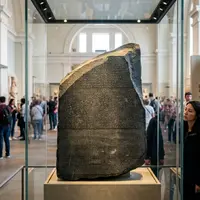
The Rosetta Stone
No visit to the British Museum is complete without seeing the Rosetta Stone in Room 4. This slab of granodiorite, inscribed in 196 BC with the same text in hieroglyphics, Demotic and Ancient Greek, was the key that unlocked the ancient Egyptian writing system. It is the most visited single object in the museum and usually draws a crowd.
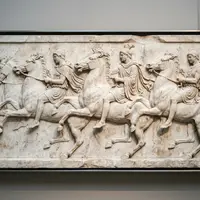
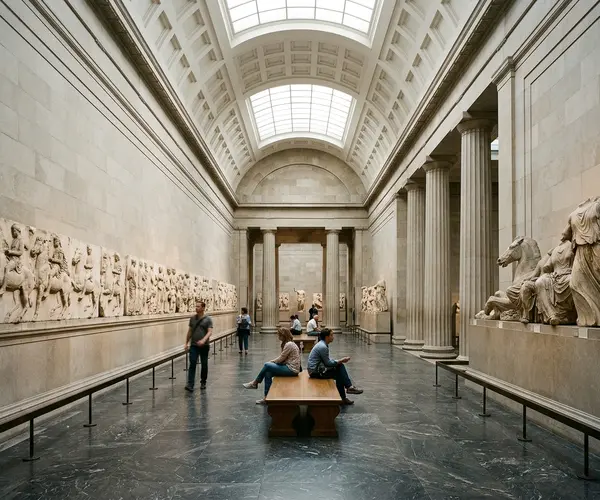
The Parthenon Sculptures
Room 18 houses the Parthenon sculptures, commonly known as the Elgin Marbles. These marble carvings originally decorated the Parthenon temple on the Acropolis in Athens and date from around 447 to 432 BC. The collection includes sections of the frieze showing a procession of riders, chariots and animals, along with large figures from the pediments. The quality of the carving is extraordinary and the scale of the gallery gives them real impact.
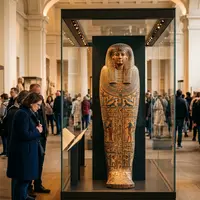
Egyptian Mummies
Rooms 62 and 63 on the upper floor contain the museum's famous collection of Egyptian mummies. Around 140 mummies and mummified remains are held in the collection, with many on permanent display. The galleries also include painted coffins, canopic jars and amulets. Modern CT scanning of the mummies has revealed details about diet, disease and cause of death that were previously unknown.
The Sutton Hoo Ship Burial
Room 41 displays the treasures from the Sutton Hoo ship burial, discovered in Suffolk in 1939. This Anglo-Saxon burial, dating from the early 7th century, is one of the most important archaeological finds ever made in Britain. The centrepiece is the iconic helmet, reconstructed from fragments found in the burial mound. The collection also includes gold and garnet jewellery, silverware from the Byzantine Empire and weapons that speak to the wealth and connections of the person buried there.
The Lewis Chessmen
In Room 40, the Lewis Chessmen are a perennial favourite. These 82 carved gaming pieces, made from walrus ivory and whale tooth in the 12th century, were found on the Isle of Lewis in Scotland in 1831. Their expressive faces, from the worried-looking kings to the wild-eyed berserkers biting their shields, give them a character that makes them immediately appealing.
The Assyrian Lion Hunt Reliefs
Room 10 contains the Assyrian lion hunt reliefs, carved around 645 BC for the palace of King Ashurbanipal in Nineveh (modern-day Iraq). These wall panels depict the king hunting lions from his chariot and on foot. The level of detail is remarkable, showing wounded lions in agonised poses that convey genuine emotion. Many art historians consider these reliefs among the greatest achievements of ancient sculpture.
Beyond the Highlights
While these are the objects that draw the biggest crowds, the museum rewards exploration beyond the famous rooms. The Enlightenment Gallery (Room 1) is a stunning space that recreates the spirit of 18th-century collecting. The Waddesdon Bequest in Room 2a displays exquisite Renaissance treasures. The African galleries, the Oceania collection and the rooms dedicated to China, Japan and South Asia all contain exceptional pieces that most visitors walk past.