The Collection
The British Museum holds one of the most important collections of Egyptian mummies anywhere in the world. With approximately 140 mummies and sets of mummified remains, the collection spans thousands of years of Egyptian burial practice, from simple predynastic burials to the elaborately wrapped and decorated mummies of the New Kingdom and later periods.
Not all of the mummies are on permanent display. The main galleries for viewing them are Rooms 62 and 63 on the upper floor, which house a significant selection along with their coffins, wrappings, amulets and funerary goods.
Katebet and Other Notable Mummies
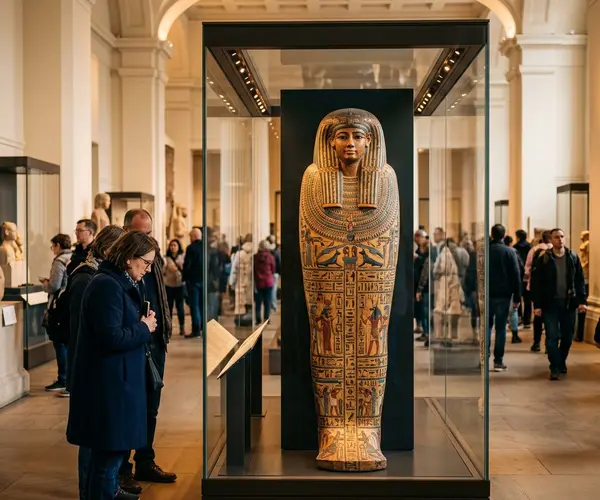
The most famous mummy in the collection is Katebet, who held the title of Chantress of Amun during the 18th Dynasty, around 1300 to 1280 BC. Her mummy is exceptionally well preserved and is displayed in a gilded cartonnage case. She is one of the most photographed objects in the museum.
Other notable mummies include Gebelein Man, one of the oldest mummies in the collection. This naturally mummified body dates from around 3400 BC, predating the formal embalming practices that most people associate with Egyptian mummies. The body was preserved by the hot, dry sand of the Egyptian desert rather than by any deliberate process.
The collection also includes animal mummies. Cats, ibises, crocodiles, fish and other creatures were mummified as religious offerings, and the museum holds a varied selection that illustrates this widespread practice.
What CT Scanning Has Revealed
One of the most significant developments in the study of the museum's mummies has been the use of CT scanning technology. Over 100 mummies in the collection have been scanned, allowing researchers to examine what lies beneath the wrappings without causing any damage.
These scans have revealed a wealth of information. Researchers have identified dental problems, healed fractures, signs of infectious disease and evidence of the embalming techniques used. In some cases, CT scanning has shown that the wrappings contain the remains of a different person than the coffin was made for, or that amulets and other objects were placed within the wrapping layers.
The Gebelein Man
CT scanning of Gebelein Man revealed a wound on the surface of his skin, likely caused by a copper blade, that penetrated to the shoulder blade beneath. This finding, made in 2012, suggests he may have been killed by a stabbing and offers a vivid connection to a life and death that occurred over 5,000 years ago.
Coffins and Funerary Art
The mummy galleries also contain an impressive collection of painted coffins and sarcophagi. Egyptian coffins evolved dramatically over the centuries, from simple rectangular wooden boxes to elaborately decorated anthropoid (human-shaped) cases covered in painted scenes of gods, protective spells and images of the afterlife.
The inner coffin of Henutmehyt, dating from around 1250 BC, is one of the finest examples. It is covered in gold leaf and features beautifully painted scenes from the Book of the Dead. These coffins are works of art in their own right and provide important evidence about Egyptian religious beliefs and artistic traditions.
Visiting the Galleries
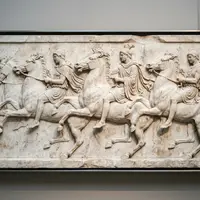
Rooms 62 and 63 are among the most popular galleries in the museum, rivalled only by Room 18 where the Parthenon sculptures, known as the Elgin Marbles, are displayed. The rooms can get very busy during peak times. Visiting early in the morning or later in the afternoon will give you more space to appreciate the displays. The galleries include detailed information panels and the museum's app provides additional context for many of the objects on show.