Biggin Hill Memorial Museum
RAF Battle of Britain museum at the historic Biggin Hill airfield — telling the stories of the pilots who defended London
RAF Battle of Britain museum at the historic Biggin Hill airfield — telling the stories of the pilots who defended London
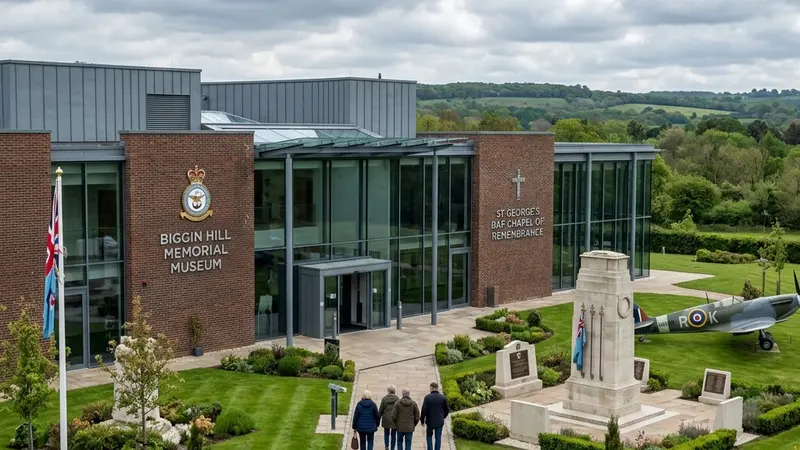
Winston Churchill called RAF Biggin Hill his "strongest link" in the chain of fighter stations defending London during the Battle of Britain. The airfield's squadrons flew 3,561 sorties between July and October 1940, claiming 396 enemy aircraft destroyed at the cost of 112 pilots killed. This museum, opened in 2019, stands on the very ground where those men and women served.
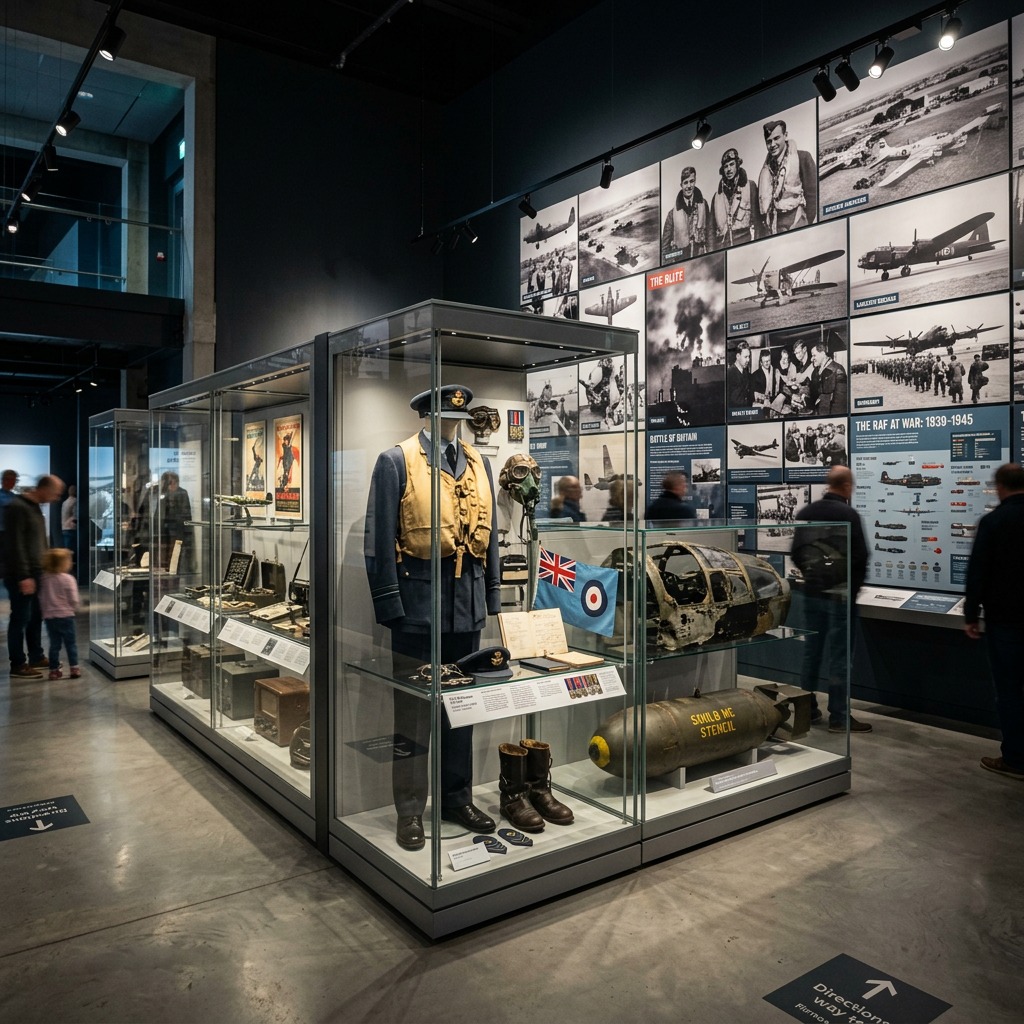
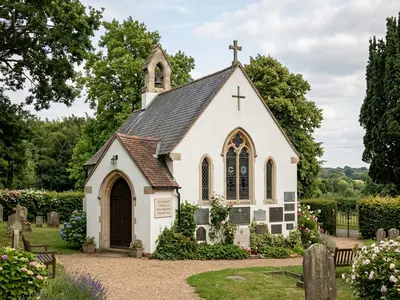
More than 80 original artefacts tell the story across four themes — Early Years, Station Life, Community Life and Remembering. You can see a 50kg Luftwaffe bomb, the station's Scramble and Victory bells, and a pub table carved with fighter pilots' names. Next door, the Grade II-listed St George's RAF Chapel of Remembrance has a floor made from sectioned propeller blades and 12 stained glass windows commissioned by Churchill himself.
Biggin Hill's aviation history began in 1917 when the Royal Flying Corps established a wireless testing station on the 600-foot plateau above the Leaves Green valley. By the 1930s, it had become a key sector station for RAF Fighter Command, responsible for coordinating the aerial defence of south-east London and the Home Counties. When war broke out in September 1939, Biggin Hill was at the heart of No. 11 Group, the formation tasked with defending London and the south-east from Luftwaffe attack.
During the Battle of Britain in the summer and autumn of 1940, the airfield's squadrons — including Nos. 32, 79 and 610 — scrambled Spitfires and Hurricanes to intercept German bomber formations heading for the capital. The station's pilots claimed 396 enemy aircraft destroyed in just four months. Notable pilots who served here included Adolph "Sailor" Malan, Alan Deere and Stanford Tuck, alongside Allied airmen from Poland, Belgium, Holland and the United States.
The museum is arranged across four themed galleries. Early Years covers the site's origins as a wireless station and its development between the wars. Station Life focuses on the Battle of Britain and daily operations, featuring the station's Scramble bell, used to launch pilots into the air, and the Victory bell rung when they returned safely. Community Life explores how the war affected local civilians and the Women's Auxiliary Air Force personnel who kept the station running. Remembering brings the story forward to the present day with accounts from veterans and their families.
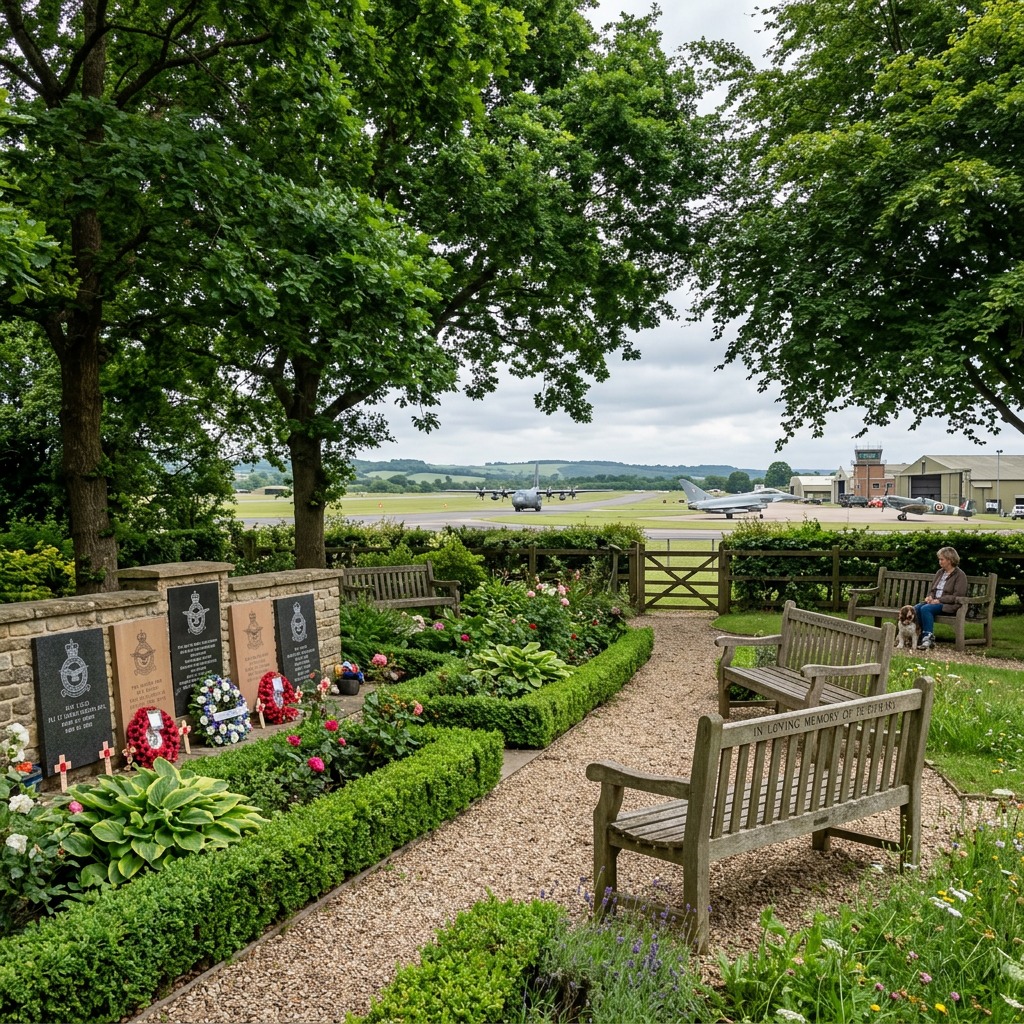
Beyond the galleries, the Grade II-listed St George's RAF Chapel of Remembrance is an essential part of any visit. Built in 1951 after Churchill championed its reconstruction, the chapel features 12 stained glass windows by Hugh Easton's studio and a floor made from propeller blades. The adjacent memorial garden provides a quiet space to reflect, with individual plaques commemorating the 453 aircrew lost from Biggin Hill during the war.
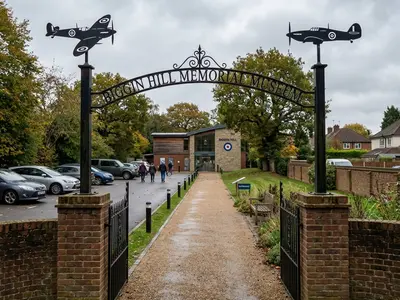
The museum sits on Main Road between Bromley and Westerham, with a free car park and a dedicated bus stop served by routes 320 and 246 from Bromley South. There is no need to book in advance — simply purchase your ticket at the door. The Nightingale Café on site serves tea, coffee, sandwiches and daily specials, with seating overlooking the runway of what is now London Biggin Hill Airport.
Allow 1.5 to 2 hours to see the museum, chapel, memorial garden and café. The VR Spitfire Experience is included with admission on the days it runs — check the museum's website for the schedule. The museum hosts regular events including Airfix model workshops, evening talks and Battle of Britain anniversary commemorations in September. For those wanting to explore further, the Kent countryside around Downe and Westerham is excellent for walking and cycling.
Gift Aid pricing available at the door — 10% discount for Defence Discount, Blue Light Card holders and TN16 residents with proof of address
The virtual reality Spitfire experience is included with your ticket but only runs on selected days. Check the museum website before visiting to avoid disappointment.
St George's RAF Chapel is a short walk from the museum and is free to enter. Allow an extra 20 minutes to appreciate the stained glass windows and propeller-blade floor.
The museum is rarely crowded, but arriving mid-morning gives you time to see the galleries, chapel and garden before lunch at the Nightingale Café at noon.
The museum sits near excellent walking routes around Downe and Westerham. Charles Darwin's Down House is a short drive away for a full day out.
Among the 80-plus artefacts, the table from a local pub with pilots' names scratched into the wood is easily missed but is one of the most poignant objects on display.

London Travel Writer · 12+ years covering UK attractions and tourism
Last reviewed: March 10, 2026