Amberley Museum and Heritage Centre
Open-air industrial heritage museum set within a former chalk quarry in the South Downs — spanning 36 acres of living history
Open-air industrial heritage museum set within a former chalk quarry in the South Downs — spanning 36 acres of living history
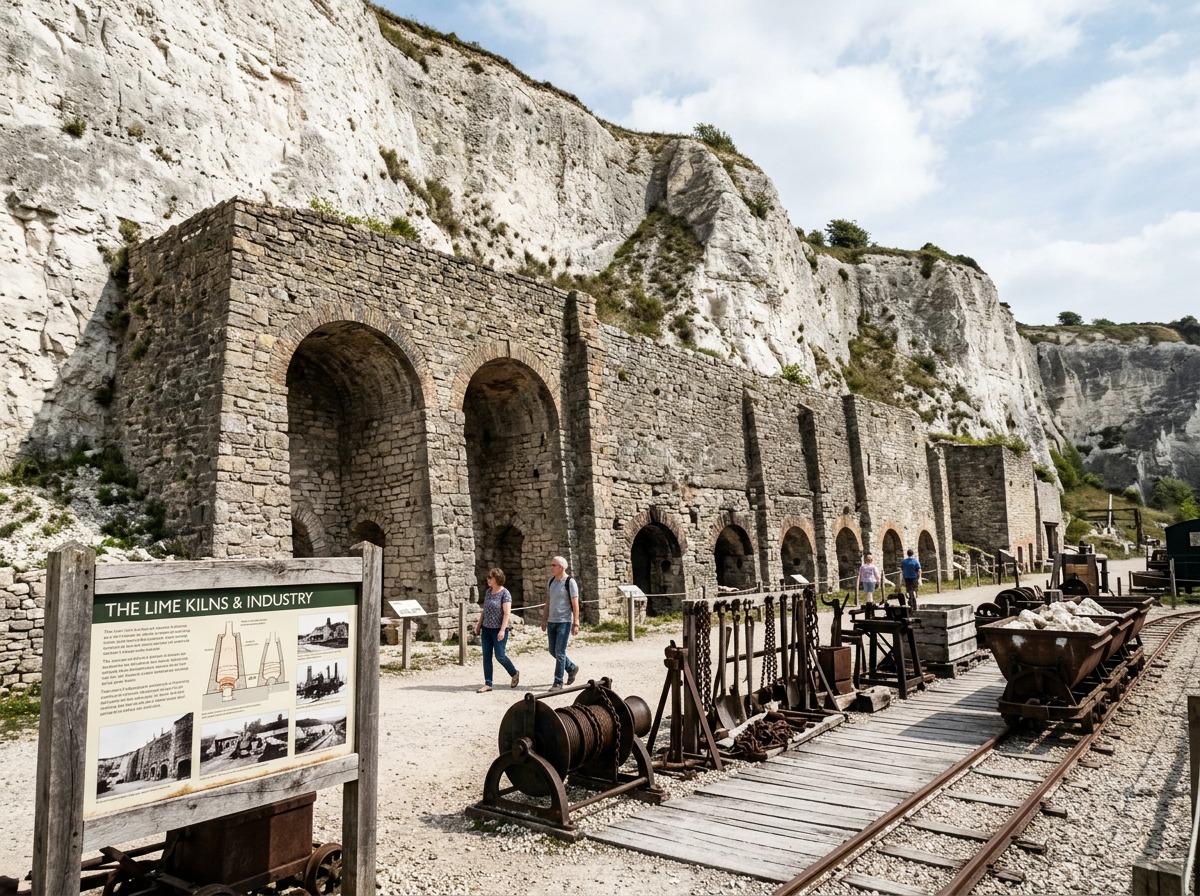
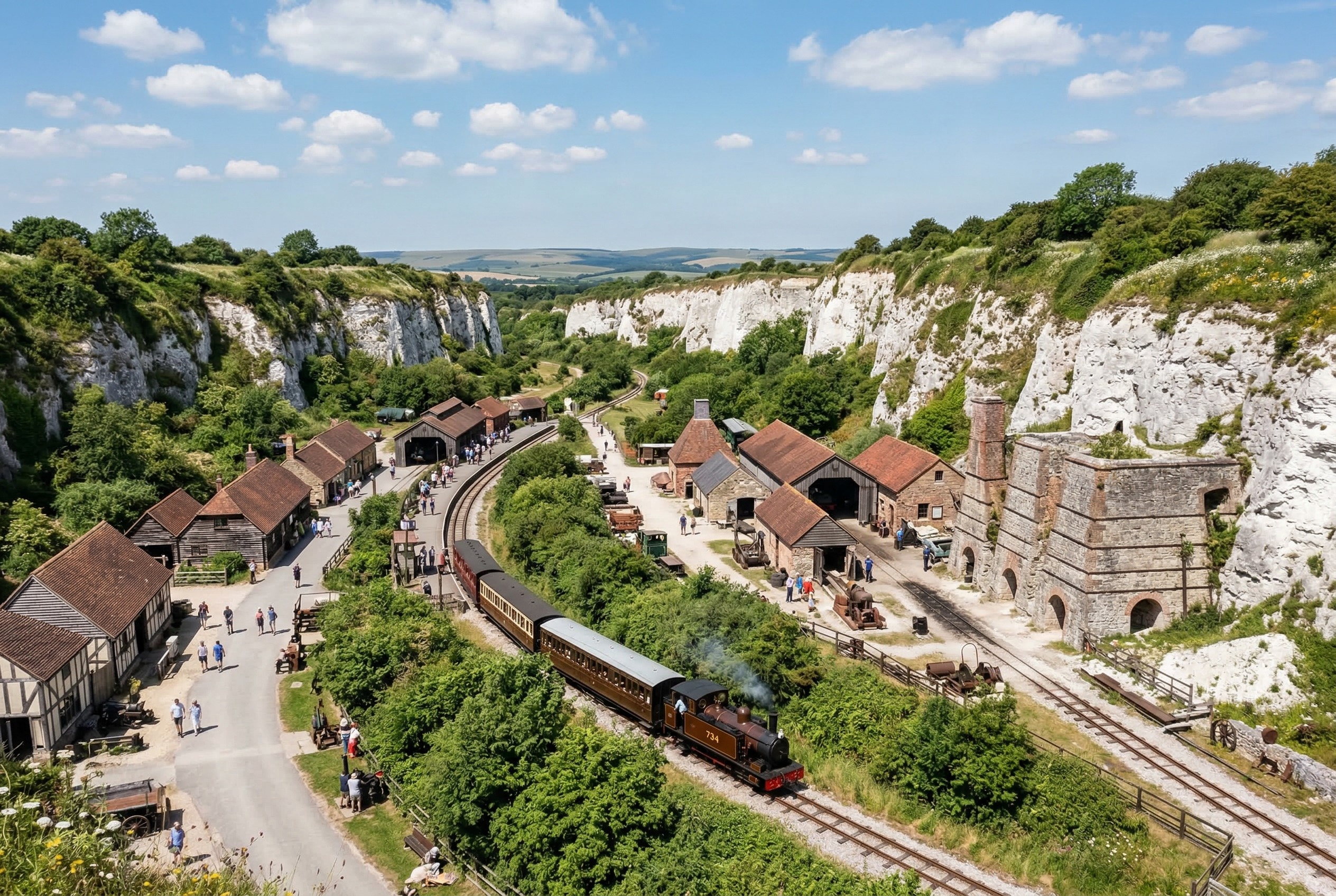
Set within a dramatic chalk quarry in the heart of the South Downs National Park, Amberley Museum and Heritage Centre preserves the industrial and rural heritage of south-east England across 36 acres of open-air exhibits. Founded in 1978, the site was a working chalk pit from the 1840s until the 1960s, and many original buildings and lime kilns remain.
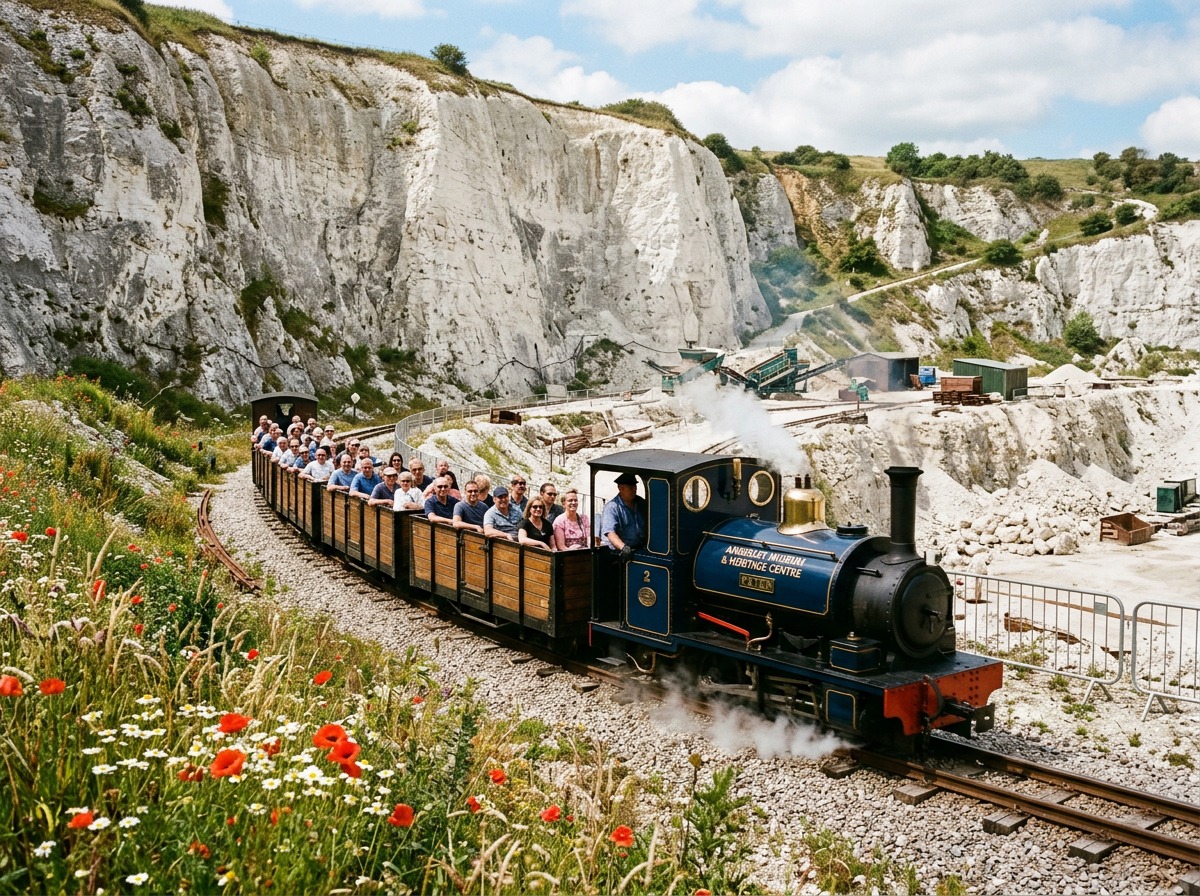
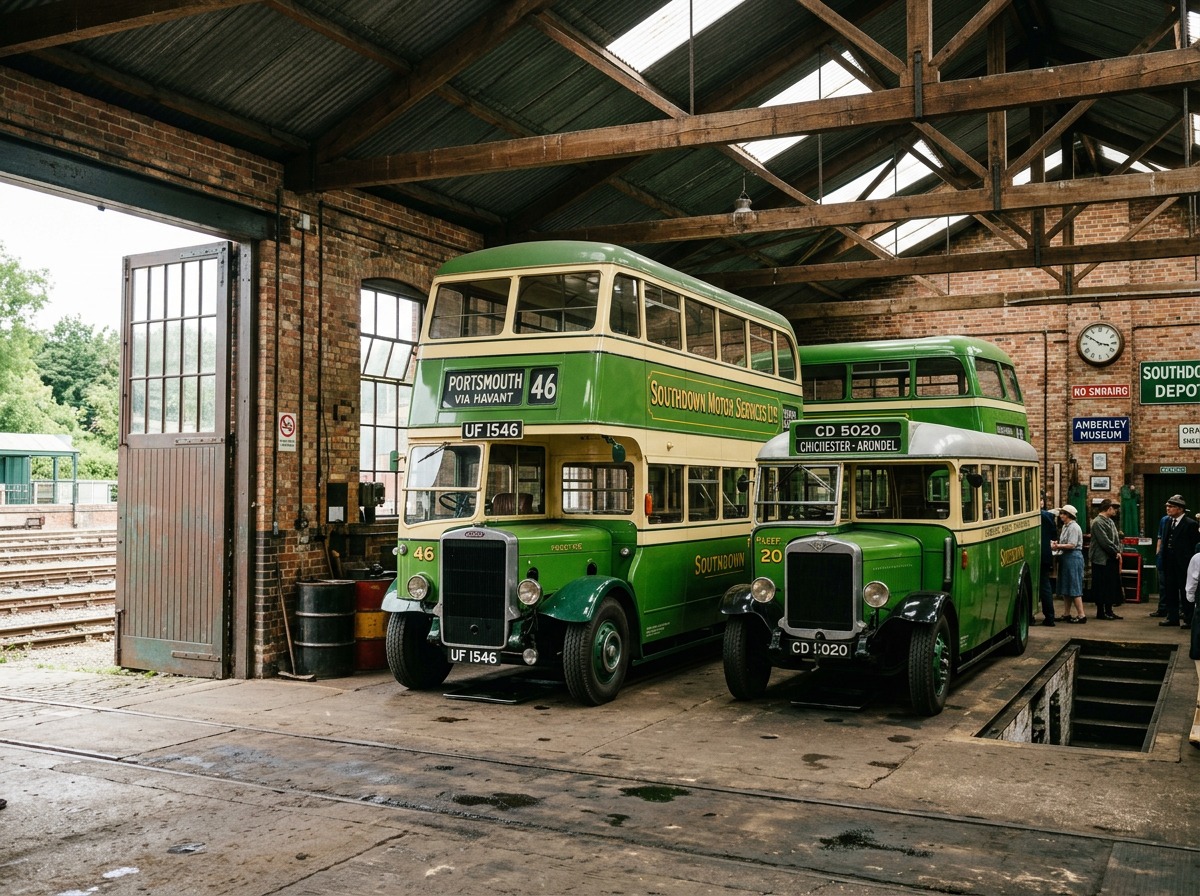
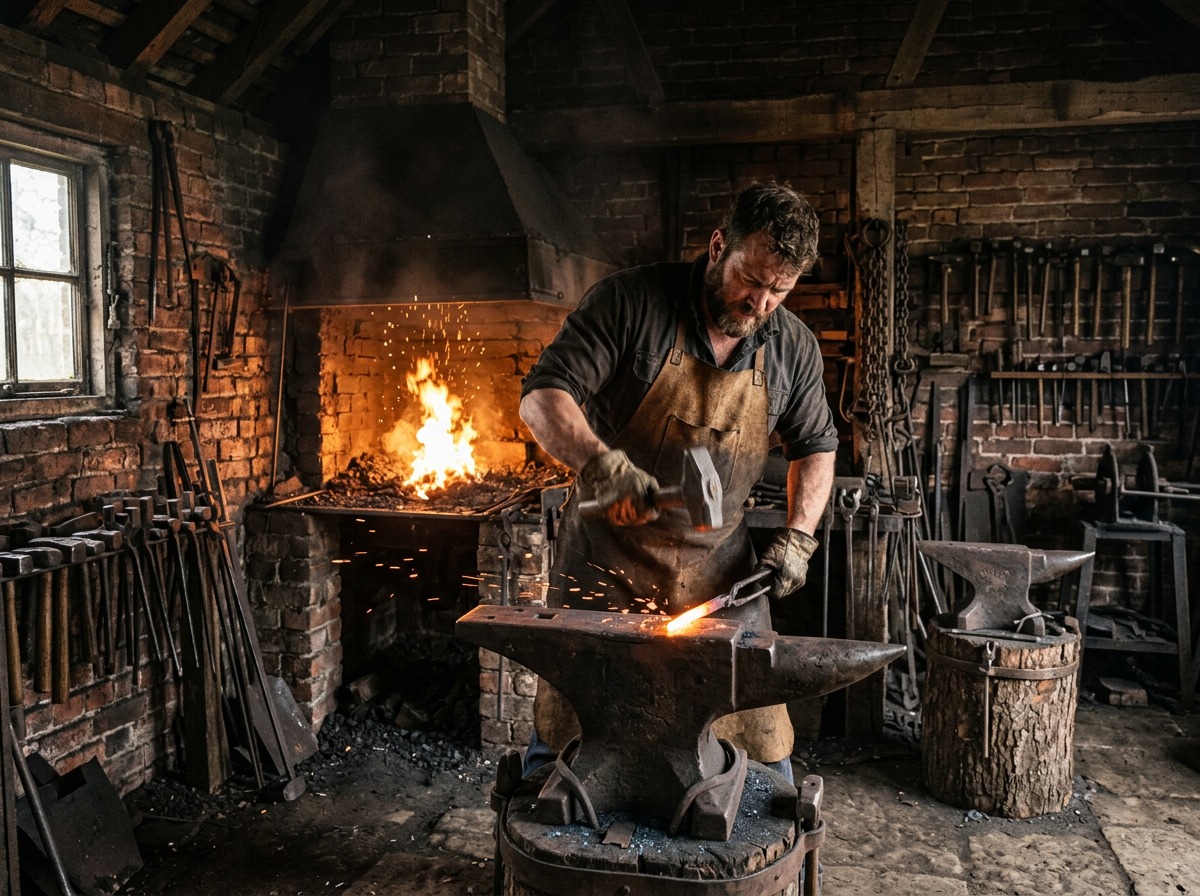
Visitors can ride a narrow-gauge railway hauled by steam and diesel locomotives, watch craftspeople at work in traditional workshops, explore a reconstructed 1920s bus garage housing vintage Southdown buses, and discover how electricity and communications shaped everyday life. It is one of the most varied heritage museums in the south of England.
Chalk has been extracted from the South Downs for centuries, and the quarry at Amberley was among the most productive in Sussex. Commercial extraction began in the 1840s, when the site supplied chalk and quicklime for agriculture, building and industrial processes across the region. At its peak, the quarry employed dozens of workers and operated a network of tramways to move material from the pit face to the lime kilns and loading points. The de Witt Kilns, with their 18 firing chambers, could burn huge quantities of chalk into lime for onward sale.
By the 1960s, demand for traditionally burned lime had fallen sharply and the quarry closed. The site lay derelict until 1978, when the Southern Industrial History Centre Trust acquired the land and established an open-air museum dedicated to preserving the industrial heritage of south-east England. Early exhibits were modest, but a major boost came in 1982 when the entire collection of the former Brockham Museum — including dozens of narrow-gauge locomotives and items of rolling stock — was relocated to Amberley. The museum has since grown steadily, and today more than 40 historic buildings, both original and relocated, house exhibits covering transport, communications, crafts and rural trades.
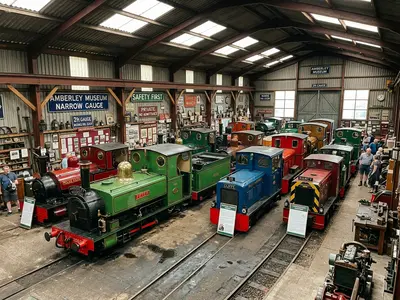
The narrow-gauge railway is the single most popular attraction. A 2ft-gauge line runs through the chalk pit, and visitors can ride in open carriages hauled by steam, diesel or battery-electric locomotives from the museum's collection of 45 engines. The railway exhibition hall displays a wider range of rolling stock and tells the story of the narrow-gauge lines that once served quarries, mines and factories across Britain.
The reconstructed Southdown bus garage brings a different era of transport to life. More than 25 vintage vehicles, including a bus over a century old, sit within a replica 1920s depot. On event days, several of these buses operate passenger rides around the grounds. Elsewhere, a working telecommunications exchange, electricity hall and radio collection chart the development of communications technology from the telegraph to the transistor.
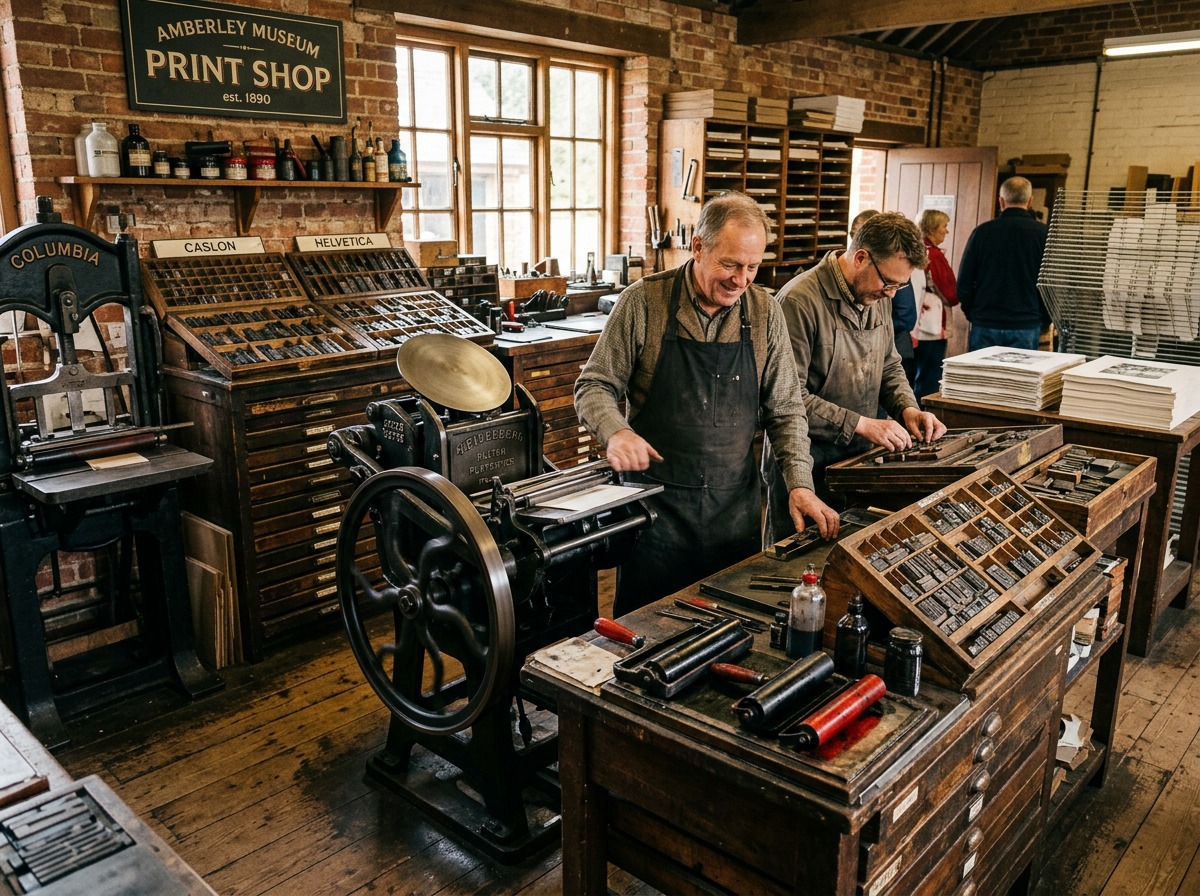
The craft workshops are a highlight for many visitors. Blacksmiths, potters, woodturners and broom-makers practise their trades in traditional workshops, and the letterpress print shop produces material using original presses. Children can try hands-on activities throughout the site, and the nature trail winds through the chalk pit, where rare orchids and chalk-loving wildflowers have colonised the quarry faces in the decades since extraction ceased.
Amberley Museum is open Wednesday to Sunday during the main season, from mid-February to early November. Winter opening is more limited, typically Wednesday, Saturday and Sunday. The museum sits directly beside Amberley station on the Arun Valley line, making it one of the most accessible heritage attractions in rural Sussex — trains from London Victoria take around 90 minutes. Drivers should follow signs from the A29 or A283 to the B2139; free parking is available on site.
Allow at least three to five hours to see the museum properly. Special event days throughout the year — including vintage vehicle rallies, craft fairs and steam galas — draw larger crowds, so booking online in advance is recommended for these dates. The museum has a cafe serving hot meals and refreshments, and picnic areas are available across the grounds. The South Downs Way long-distance footpath passes close by, and Arundel Castle is a short drive to the south, making it easy to combine Amberley with other attractions in the area.
Under 5s enter free — 2-for-1 entry available with a valid National Rail Days Out voucher
Amberley station is directly beside the museum entrance, and the train journey through the Arun Valley is scenic in its own right. You can also claim 2-for-1 entry with a valid National Rail Days Out voucher.
Special event days including steam galas, vintage bus running days and craft fairs offer extra activities but can be busier. Book online in advance for event weekends to guarantee entry.
The 36-acre site includes uneven ground, gravel paths and grassy areas that can be muddy after rain. Comfortable walking shoes or boots are strongly recommended, especially in spring and autumn.
With the railway, bus garage, craft workshops, exhibitions and nature trail, there is far more to see than most visitors expect. Three to five hours is realistic for a thorough visit.
Arundel Castle is a 10-minute drive south and makes an excellent pairing for a full day out. The castle grounds and town centre have plenty of options for lunch or afternoon tea.

London Travel Writer · 12+ years covering UK attractions and tourism
Last reviewed: June 2, 2026