Aldershot Military Museum
Free museum in Victorian barracks — charting Aldershot's role as the Home of the British Army since 1854


Free museum in Victorian barracks — charting Aldershot's role as the Home of the British Army since 1854
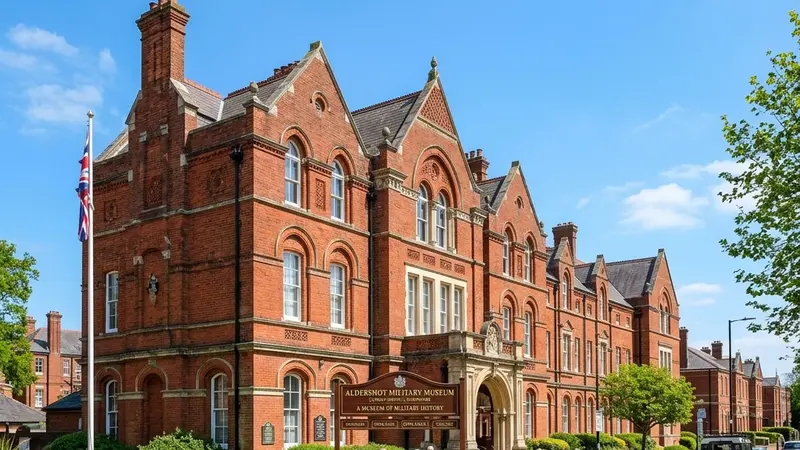
Aldershot has been the Home of the British Army since 1854, when the government bought heathland in northern Hampshire and established a permanent training camp. The Aldershot Military Museum, opened by the Duke of Gloucester in 1984, tells that story from the inside — housed in the last two surviving Victorian barrack buildings in the town.
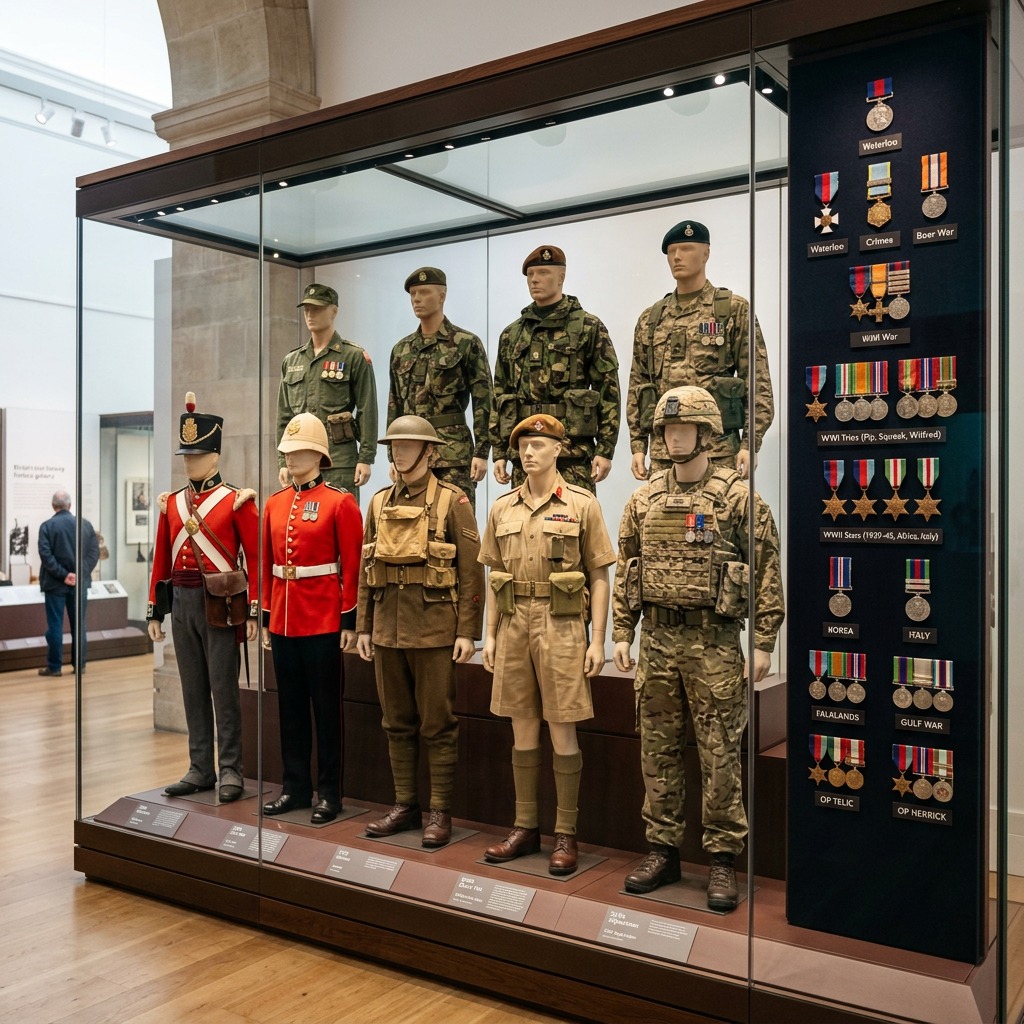
The museum spans four separate buildings covering military and civilian history alike. Galleries explore army life through recreated barrack rooms, uniforms, weapons and medals, while the Montgomery Gallery houses tanks, field guns and armoured vehicles. Admission is free, and the museum also serves as the local history museum for the Borough of Rushmoor.
In 1854, the British government purchased a large tract of open heathland in northern Hampshire and established a permanent military camp to train troops for the Crimean War. The small market town of Aldershot was transformed almost overnight. Within a few years it had become the largest military town in the British Isles, a distinction it would hold for well over a century. Thousands of soldiers passed through its barracks, parade grounds and training areas, and the town's civilian population grew rapidly to serve them.
The Aldershot Military Museum sits at the heart of this story. Housed in two Victorian barrack bungalows built in the 1890s — the only brick-built examples to survive in Aldershot — it was conceived by Brigadier John Reed, a former Garrison commander who feared that the town's military heritage was being lost to redevelopment. Reed founded the Aldershot Military Historical Trust to raise funds, and the museum opened its doors in 1984 when the Duke of Gloucester cut the ribbon.
The museum is spread across four separate buildings. The main barrack blocks contain galleries covering army life from the Victorian era through to the modern day. Recreated barrack rooms show how soldiers lived in the 1890s and 1950s, with iron beds, kit inspections and personal effects arranged as they would have been. A recreated married quarters living room from the 1960s offers a glimpse of family life on the garrison.
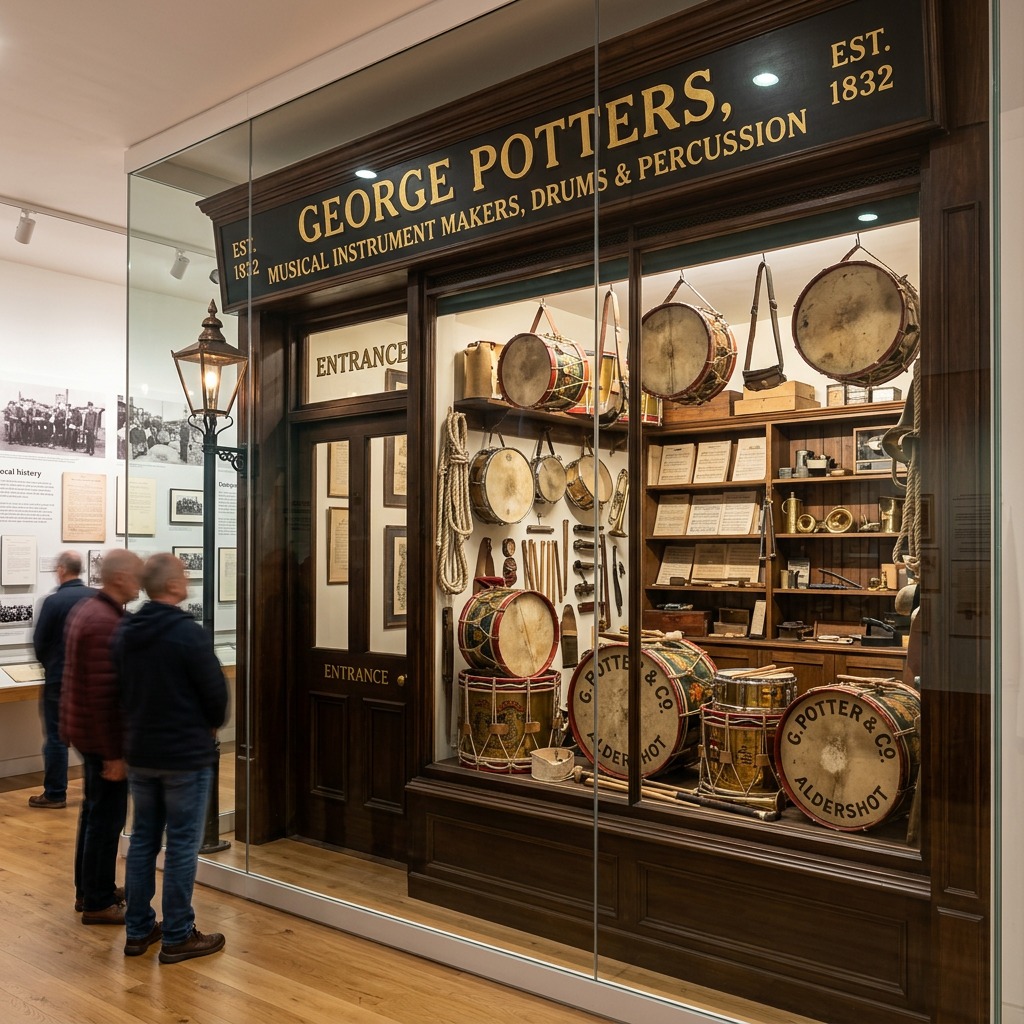
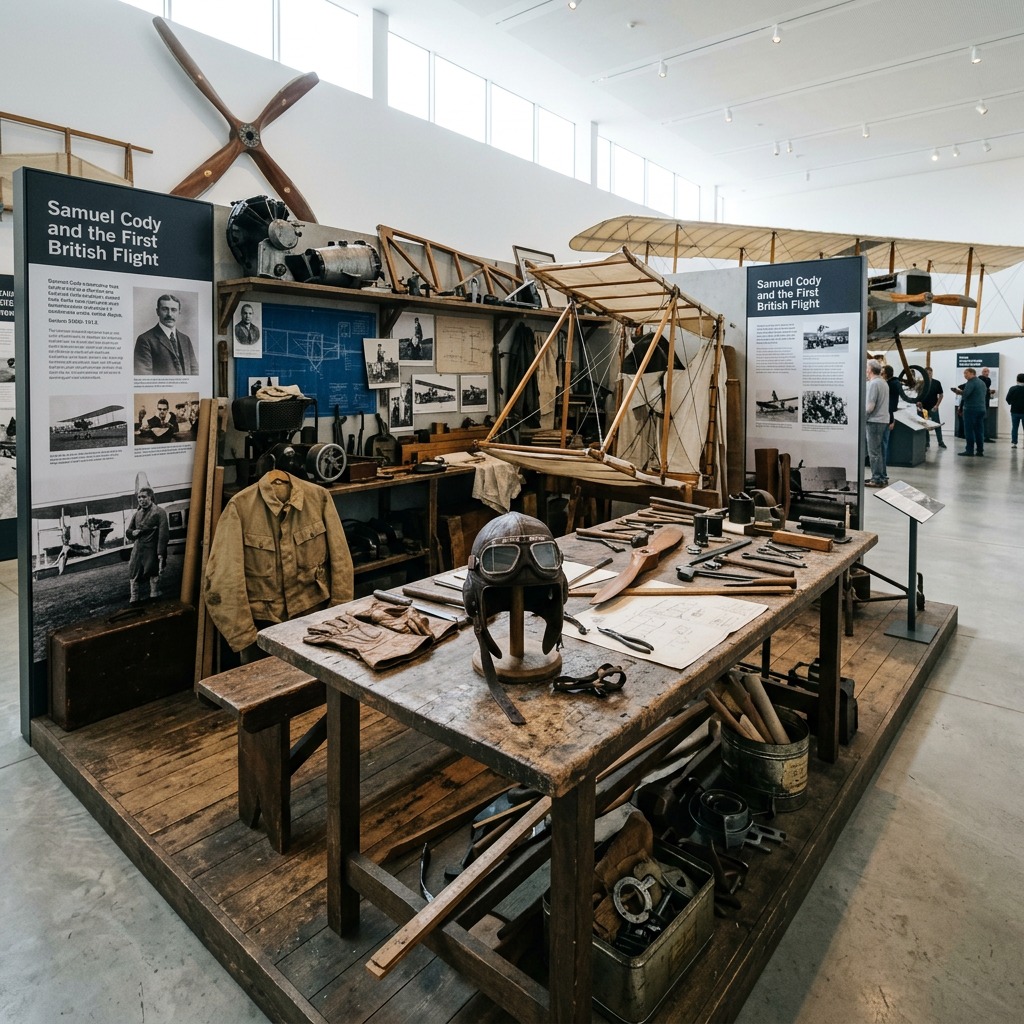
The Rushmoor Local History Gallery tells the civilian side of the story. Displays cover the growth of Aldershot and Farnborough from small settlements to a modern borough, including the local pottery industry, George Potters the drum makers, and the unexpected connection between Farnborough and the French imperial family who built Farnborough Abbey. The Cody Gallery commemorates Samuel Franklin Cody, the American showman who made Britain's first powered flight from Farnborough's army airfield on 16 October 1908, with a partial reconstruction of his workshop.
Outside, the Montgomery Gallery houses the museum's collection of military vehicles, field guns and armoured cars. The building itself has its own story — it was originally constructed in 1947 at Field Marshal Montgomery's home at Isington, near Alton, to house his wartime caravans, and was later dismantled and re-erected at the museum in 1995.
The museum is on Queens Avenue in the centre of Aldershot, a short walk from the railway station. Admission is entirely free. Allow between ninety minutes and two and a half hours to see everything at a comfortable pace, longer if you want to read every panel in the local history gallery. The museum is open Tuesday to Friday from 10am and at weekends from 11am. It is closed on Mondays and on certain bank holidays, so it is worth checking the Hampshire Cultural Trust website before you travel.
Admission to the Aldershot Military Museum is free. The museum is managed by Hampshire Cultural Trust. Check the official website for current opening hours before visiting, as times may vary on bank holidays and during special events.
The museum is closed on Mondays and may have reduced hours on bank holidays. Confirm times on the Hampshire Cultural Trust website before setting out.
The vehicle collection is housed in a separate building and is easy to overlook if you head straight to the main galleries. Walk through to see the tanks, field guns and armoured cars.
The museum sits within the wider garrison area. After your visit, walk along Queens Avenue to see the remaining Victorian and Edwardian military buildings that still line the road.
The recreated Victorian and 1950s barrack rooms are the most engaging displays for younger visitors, giving a tangible sense of what army life was really like.
Milestones Museum in Basingstoke, about 20 miles away, is run by the same trust and makes a good companion visit if you are exploring Hampshire's heritage.

London Travel Writer · 12+ years covering UK attractions and tourism
Last reviewed: March 10, 2026