The Monument
62-metre Doric column commemorating the Great Fire of 1666 with 311 steps to a panoramic viewing platform
62-metre Doric column commemorating the Great Fire of 1666 with 311 steps to a panoramic viewing platform
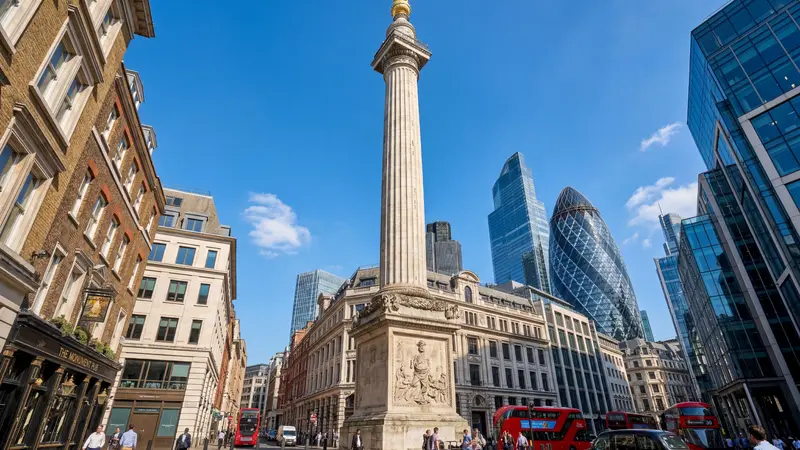
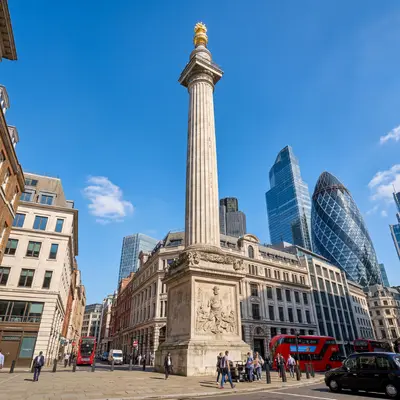
The Monument is the tallest isolated stone column in the world, built between 1671 and 1677 to mark the Great Fire of London. Standing 62 metres high at the junction of Monument Street and Fish Street Hill, it was designed by Sir Christopher Wren and Robert Hooke as both a memorial and a scientific instrument.
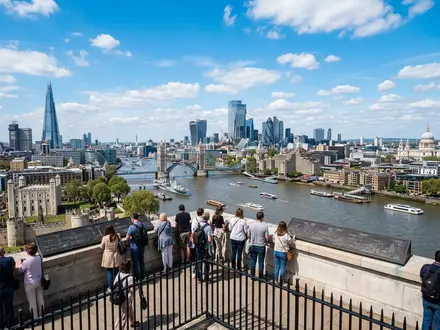
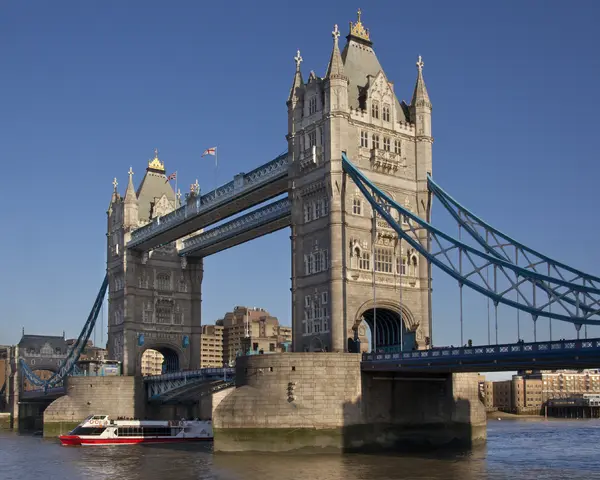
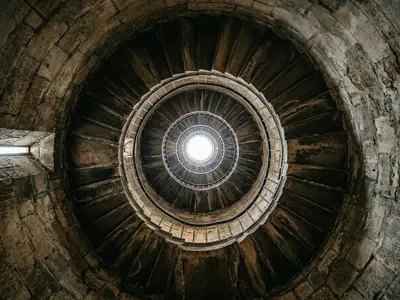
Climbing the 311 narrow spiral steps rewards you with a 360-degree viewing platform overlooking the Thames, Tower Bridge and the City skyline. A certificate is issued at the base to anyone who completes the ascent.
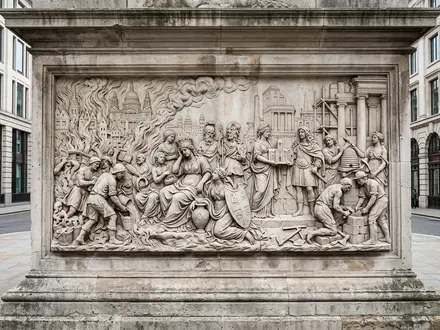
The Great Fire of London broke out in Thomas Farriner's bakery on Pudding Lane in the early hours of 2 September 1666. Over four days it destroyed 13,200 houses, 87 parish churches and the medieval St Paul's Cathedral, leaving an estimated 70,000 of the city's 80,000 residents homeless. Within five years, Parliament commissioned a permanent memorial.
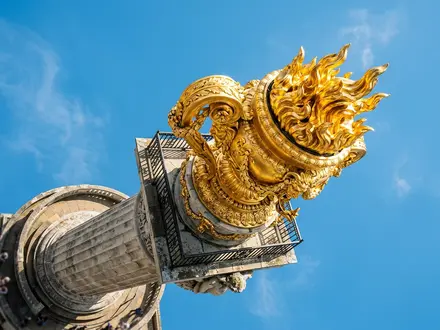
Sir Christopher Wren and Robert Hooke designed the column together, though Hooke is thought to have done most of the detailed work. Built from Portland stone between 1671 and 1677, the fluted Doric column rises from a square pedestal to a platform topped by a gilded bronze urn of fire. Its total height of 202 feet is no accident. The column stands precisely 202 feet from the Pudding Lane bakery site, so that if laid flat it would point directly at the origin of the blaze.
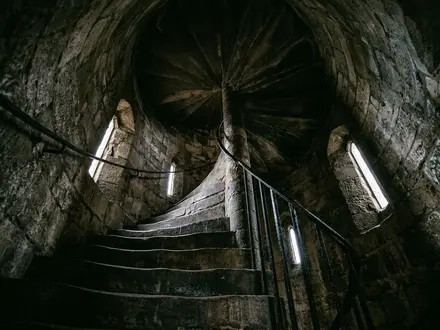
There is no lift. The only way up is the 311-step spiral staircase that winds through the interior of the hollow column. The steps are original 17th-century stone, worn smooth by millions of feet over three and a half centuries. The staircase is wide enough for one person in each direction, with occasional passing places cut into the wall.
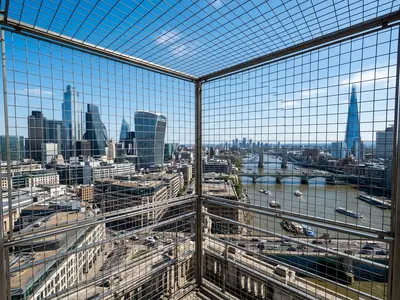
At the top, a mesh-enclosed gallery provides panoramic views. The Thames curves below, with Tower Bridge to the east and the Millennium Bridge to the west. The modern City skyline is immediately above you, with the Walkie Talkie, the Cheesegrater and the Gherkin all within a few hundred metres. On clear days, the view extends to the hills of Hampstead and the Surrey downs. Staff at the base issue a certificate of completion to every climber.
The column stands in one of the oldest parts of London, where medieval street patterns survived the postwar reconstruction. Pudding Lane, where the fire started, is a narrow lane just to the east, now marked by a small plaque. Fish Street Hill, running past the base of the Monument, was one of the principal routes onto old London Bridge.
Leadenhall Market, a covered Victorian market built on a site where Romans traded, is a five-minute walk north. The Tower of London and Tower Bridge are fifteen minutes east along the river, and a joint ticket covering both the Monument and Tower Bridge Exhibition offers good value.
Included with London Pass
Included with London Pass — save up to 50% across 80+ London attractions.
The Monument accepts cash payment only. Joint tickets with Tower Bridge Exhibition offer a significant saving over buying separately.
The staircase is narrow and one-way traffic builds quickly by mid-morning. Arriving at 9:30am means you can climb and descend before the queue develops. The City is also quieter on weekends.
The Monument only accepts cash payment. There is no card reader at the ticket desk. The nearest cash machines are on King William Street, a 2-minute walk north.
The combined ticket for the Monument and Tower Bridge Exhibition saves money compared to buying each separately. Visit the Monument first, then walk 15 minutes east along the river to Tower Bridge.
The 311 steps are not difficult but the spiral can be disorienting. Take it steady, pause at the window slits for a breather, and allow faster climbers to pass when you can. The descent uses the same staircase.
The lane where the Great Fire started is just east of the Monument, marked by a plaque on the wall. It takes less than a minute to reach and completes the story of the fire.

London Travel Writer · 12+ years covering UK attractions and tourism
Last reviewed: March 10, 2026