How It Started
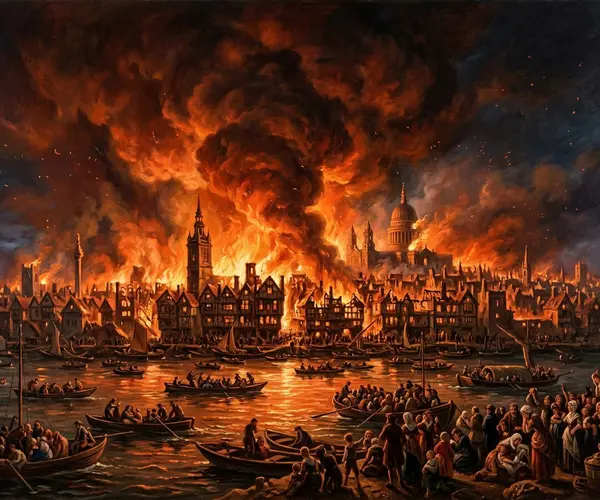
The fire broke out in the early hours of Sunday 2 September 1666 in the bakery of Thomas Farriner on Pudding Lane, close to London Bridge. The exact cause remains uncertain, but it is generally believed that an ember from the bakery's oven ignited nearby fuel. Farriner and his family escaped through an upstairs window, though a maid who was too frightened to climb out became one of the fire's first victims.
The fire spread rapidly. London in 1666 was a densely packed medieval city with narrow streets and buildings constructed largely of timber and pitch. A long, dry summer had left the wood tinder-dry, and a strong easterly wind fanned the flames from building to building.
The Spread
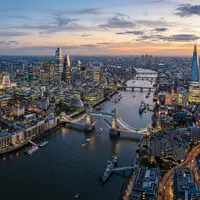
By Monday morning the fire had consumed much of the area around London Bridge and was advancing westward along the Thames waterfront, where warehouses full of oil, tallow, spirits and other combustible goods created enormous fireballs. The medieval St Paul's Cathedral, which stood on the same site as the current Wren cathedral, was engulfed on Tuesday. Lead from its roof reportedly ran through the streets in molten rivers.
The Lord Mayor, Sir Thomas Bloodworth, was criticised for his slow response. His famous dismissal that "a woman might piss it out" became one of the most quoted lines of the disaster. By the time organised firebreaks were ordered, using gunpowder to demolish buildings in the fire's path, much of the City within the old Roman walls had already been consumed.
The Scale of Destruction
Over four days, the fire destroyed an area of roughly 436 acres within the city walls and 63 acres outside them. The toll included 13,200 houses, 87 parish churches, most of the buildings of the City authorities, and the Royal Exchange. Around 70,000 of the City's 80,000 residents were left without homes.
The official death toll was recorded as just six, a figure that historians consider almost certainly too low. Many of the poorest residents lived in areas that burned hottest, and the intense temperatures would have left no identifiable remains. The true number of deaths is likely to remain unknown.
Rebuilding London
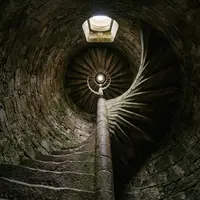
The fire, while devastating, created an opportunity to rebuild the city on more modern lines. Charles II appointed commissioners to oversee reconstruction, and new building regulations required brick and stone rather than timber. Streets were widened, and a system of 311 stone steps was built inside the commemorative column that now marks the disaster.
Christopher Wren was given the task of rebuilding St Paul's Cathedral and 51 of the city's parish churches. His designs transformed the London skyline and established the architectural character that defined the city for centuries. The rebuilding took decades; the new St Paul's was not completed until 1710.
Legacy
The Great Fire effectively ended the medieval period of London's architecture and accelerated the transformation of the city into a modern capital. It also, somewhat accidentally, helped bring an end to the plague that had killed roughly 100,000 Londoners the previous year, by destroying the densely packed housing where rats and fleas thrived.
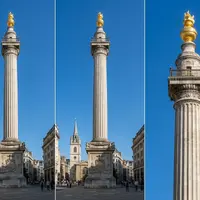
The Monument, completed in 1677, stands as the principal memorial to the fire and the resilience of the city that rebuilt itself from the ashes.