The View East
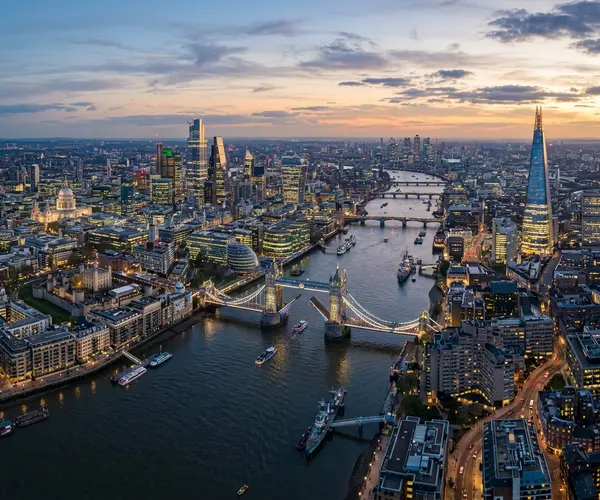
Looking east from the top of the Monument, Tower Bridge is the dominant landmark, its twin Gothic towers and suspension chains immediately recognisable. Beyond it you can see the glass and steel mass of the More London development, and on the south bank The Shard rises to a height of 310 metres, dwarfing everything around it.
Closer to hand, the Tower of London spreads along the north bank of the Thames, its White Tower and outer walls clearly visible. On clear days you can trace the river as it bends eastward past Canary Wharf, where the cluster of towers on the Isle of Dogs catches the light. The cranes of the Royal Docks are sometimes visible further out on the horizon.
The View West
Turning west, the dome of St Paul's Cathedral is the centrepiece of the view. Wren's masterpiece sits just over half a mile away and, despite being surrounded by modern buildings, still commands the skyline from this angle. The Millennium Bridge draws a thin line across the Thames below it, connecting the cathedral to the Tate Modern on the south bank.
Further west on a clear day you can pick out the London Eye on the South Bank and the rooftops of Westminster beyond. The Barbican Estate's brutalist towers are visible to the northwest, and the distinctive curved shape of 30 St Mary Axe, commonly known as the Gherkin, rises directly to the north.
The View North and South
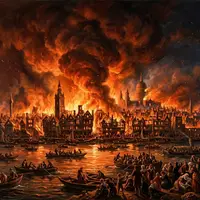
Looking north you are gazing into the heart of the City of London's financial district. The modern towers of Bishopsgate, including 22 Bishopsgate and the Leadenhall Building (the Cheesegrater), fill the immediate skyline. This view gives a striking sense of how dramatically the City's architecture has changed since the fire that the Monument commemorates.
To the south, the Thames dominates. You can see London Bridge immediately below, with Borough Market and Southwark Cathedral on the south bank. The jumble of rooftops around Borough High Street gives way to the residential areas of south London stretching to the horizon.
When to Visit for the Best Views
The viewing platform is open to the elements, so weather makes a significant difference. Clear mornings, particularly in autumn and winter when the air is crisp, tend to offer the sharpest visibility. Late afternoon light in summer can be particularly beautiful, casting warm tones across the stone and glass of the City.
Overcast days reduce the range of what you can see but can still be atmospheric, with the river and nearby buildings emerging from a grey backdrop. Rain and strong wind make the platform less pleasant, and on very windy days the exposed position at 62 metres can feel bracing.
How It Compares
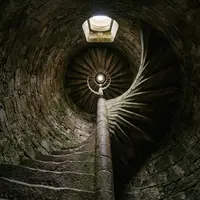
The Monument is not London's highest viewpoint. The Shard, the London Eye and the Sky Garden all offer views from greater heights. But the Monument has qualities that those modern attractions lack. The viewing platform is open-air rather than behind glass, giving an unfiltered connection to the city below. The scale is intimate rather than overwhelming, and the experience of emerging from the spiral staircase into daylight and open air has a drama that a lift ride cannot match.