A Column Built to Remember
The Monument stands on Fish Street Hill in the City of London, close to the northern end of London Bridge. It was built between 1671 and 1677 to mark the site near where the Great Fire of London broke out on 2 September 1666. The column is exactly 202 feet tall and stands exactly 202 feet from the bakery on Pudding Lane where the fire is believed to have started.
The design was the work of two of the most important scientific minds in 17th-century England. Sir Christopher Wren, who went on to rebuild St Paul's Cathedral, collaborated with Robert Hooke, a polymath known for his work in physics, biology and architecture. The two were friends and colleagues at the Royal Society, and their partnership on the Monument reflects a period when science and architecture were closely intertwined.
Why a Doric Column
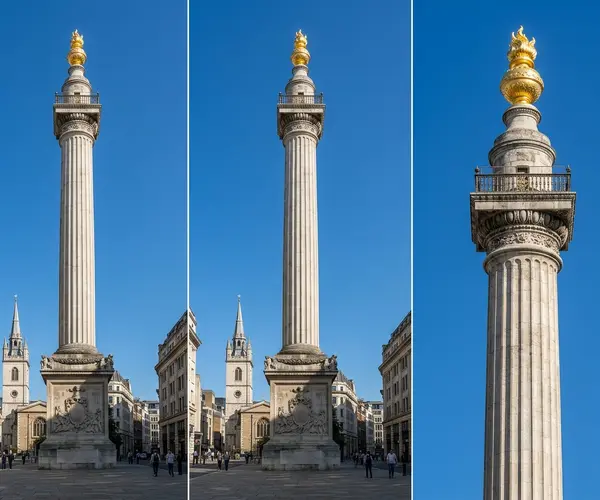
The Monument takes the form of a fluted Doric column, the simplest and sturdiest of the classical Greek orders. This was a deliberate choice. The Doric style was associated with strength and resilience, making it an appropriate symbol for a city that had survived and rebuilt after catastrophic destruction.
At the top of the column sits a gilded bronze urn of fire, symbolising the Great Fire itself. This was actually a compromise. Wren originally proposed a statue of Charles II or a golden phoenix rising from ashes, but the urn design was eventually chosen as a more restrained memorial. The base of the column features carved panels by the sculptor Caius Gabriel Cibber, depicting the destruction of the city and its rebuilding under Charles II.
Scientific Instrument as Well as Memorial
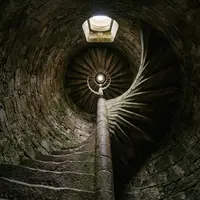
What many visitors do not realise is that the Monument was designed to double as a scientific instrument. The column is hollow, with a central shaft that Hooke intended to use as a zenith telescope for observing stellar parallax. The idea was that the height and stability of the structure would allow extremely precise astronomical measurements.
In practice, the vibrations from traffic on Fish Street Hill made the telescope unusable, and the experiment was abandoned. But the concept reveals something important about the Great Fire's aftermath. The rebuilding of London was not just about replacing what had been lost. It was about creating a modern, rational city, and the Monument embodies that ambition.
The Column Today
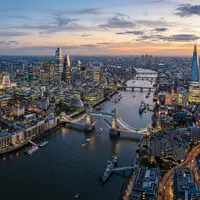
The Monument is now managed by the City of London Corporation and sits in a small paved square surrounded by modern office buildings. Despite the dramatically changed skyline around it, the column remains a striking presence. It is Grade I listed and continues to attract visitors who climb its 311 internal steps for panoramic views across the city.
Its position in the heart of the financial district means it is often overlooked by tourists heading to better-known landmarks nearby. But for anyone interested in the history of London, the architecture of the late Stuart period, or simply one of the most unusual structures in the capital, the Monument rewards a visit.