The Name Refers to the Bell
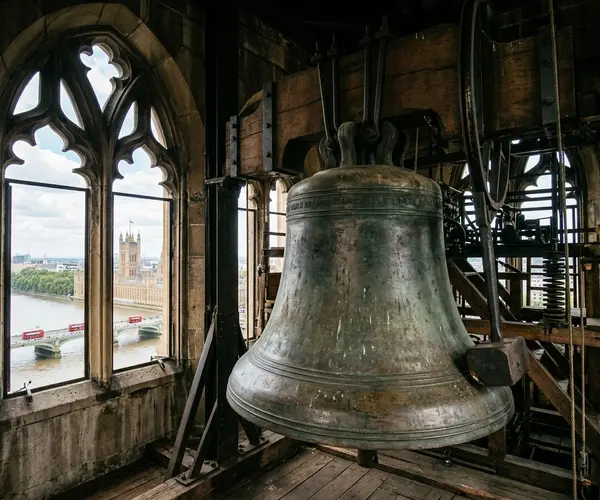
The first thing to understand about Big Ben is that the name does not refer to the tower or the clock. Big Ben is the nickname for the Great Bell, the largest of the five bells that hang in the belfry of the Elizabeth Tower at the Palace of Westminster. The bell weighs 13.7 tonnes and produces the famous deep strike that marks each hour.
Over the decades, the name has been adopted by the public to mean the entire structure, and even official tourism bodies now use Big Ben as a shorthand for the tower. But in strict historical terms, Big Ben is a bell and nothing more.
The Sir Benjamin Hall Theory
The most commonly cited explanation is that the bell was named after Sir Benjamin Hall, the First Commissioner of Works at the time the bell was installed. Hall was a large man, both tall and broad, and was known in Parliament by the nickname "Big Ben" long before the bell arrived.
During a parliamentary debate about what to officially name the new bell, a member is said to have shouted "Why not call it Big Ben?" referring to Hall. The comment drew laughter, the name stuck, and it was never replaced by anything more formal. Hall's name is inscribed on the bell itself, which supporters of this theory point to as further evidence.
The Ben Caunt Theory
A competing explanation credits the name to Benjamin Caunt, a bare-knuckle boxer who was the heavyweight champion of England in the 1840s and 1850s. Caunt stood over six feet tall and weighed around 16 stone, making him one of the largest public figures of his day. It was common practice in Victorian England to refer to anything particularly large as a "Big Ben" in his honour.
By this account, the bell earned the nickname simply because it was enormous and the phrase "Big Ben" was already in popular circulation. There is no direct documented link between Caunt and the bell, which makes this theory harder to prove than the Sir Benjamin Hall explanation, but it remains a credible alternative.
From Clock Tower to Elizabeth Tower
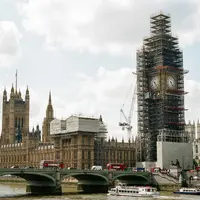
For most of its history, the tower housing Big Ben was known simply as the Clock Tower. It had no grander official name. In 2012, as part of the celebrations for Queen Elizabeth II's Diamond Jubilee, Parliament voted to rename the structure the Elizabeth Tower.
The renaming was not without controversy. Some felt it was unnecessary, and others argued that the public would continue to call the whole thing Big Ben regardless of what it was officially named. They were largely right. While Elizabeth Tower is now the correct term for the tower, the name Big Ben continues to dominate in everyday conversation and in tourism materials.
Why the Confusion Persists
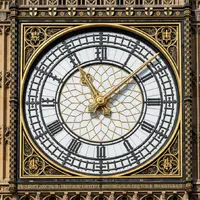
The reason people call the tower Big Ben is straightforward. The bell is hidden inside the tower and cannot be seen from the street. What visitors actually look at and photograph is the tower and its clock faces. Since the most famous thing about the structure is the sound of Big Ben striking the hour, it was inevitable that the name would transfer from the invisible bell to the visible tower.
This kind of naming drift is common with landmarks. The same process has happened with buildings around the world, where the most memorable feature lends its name to the whole structure. In Big Ben's case, the bell won the naming contest decisively, even though it lost the visibility one.