The Height of Elizabeth Tower
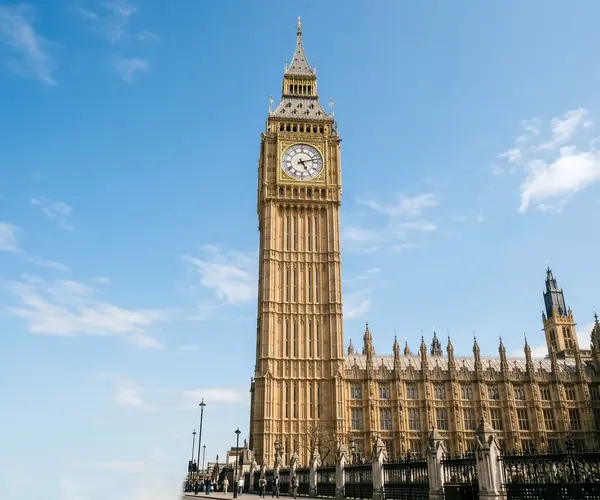
The tower that most people call Big Ben reaches 96 metres from ground level to the tip of its spire. To put that in perspective, it is roughly the same height as a 30-storey building. The structure has dominated the north end of the Palace of Westminster since its completion in 1859 and remains one of the most photographed buildings in London.
The tower itself is divided into several distinct sections. The base is a square shaft built from Anston limestone, which rises through the clock room and belfry before tapering into the ornate cast-iron spire at the top. The spire section alone adds around 16 metres to the overall height.
Big Ben Is Not the Tower
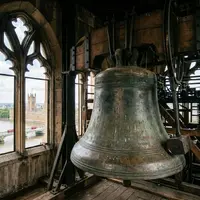
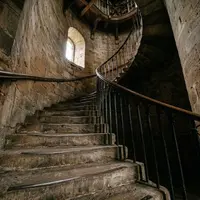
A common misunderstanding is that Big Ben refers to the tower itself. In reality, Big Ben is the name of the Great Bell that hangs in the belfry near the top of the tower. The bell weighs 13.7 tonnes and produces the deep, resonant bong that Londoners and visitors hear marking the hours. UK residents can climb the 334 steps to hear it up close. The tower was known simply as the Clock Tower for most of its history before being officially renamed the Elizabeth Tower in 2012 to mark Queen Elizabeth II's Diamond Jubilee.
How It Compares to Other London Landmarks
At 96 metres, the Elizabeth Tower holds its own among London's most famous buildings, though it is far from the city's tallest structure. The Shard, London's tallest building, reaches 310 metres. The BT Tower stands at 177 metres, and the dome of St Paul's Cathedral rises to 111 metres. Nelson's Column in Trafalgar Square is a more modest 51 metres.
What makes the Elizabeth Tower distinctive is not its raw height but its prominence. Standing at the edge of the Thames with no taller buildings immediately surrounding it, the tower commands attention in a way that taller but more distant structures do not. From Westminster Bridge, the tower fills the skyline in a way that gives the impression of greater height than the measurements suggest.
The Clock Faces
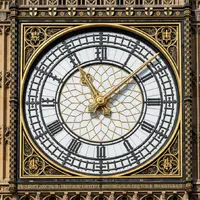
Four enormous clock faces sit at the 55-metre mark on each side of the tower. Each face measures 7 metres in diameter, and the minute hands are 4.3 metres long. The numerals are approximately 60 centimetres tall. At night, the clock faces are illuminated from behind, creating the glowing effect that has become a symbol of London after dark.
The clock mechanism itself sits in a room below the belfry. Despite its age, the Great Clock remains remarkably accurate, regulated by the addition or removal of old penny coins on the pendulum. Adding a single coin changes the clock's speed by 0.4 seconds per day.
A Slight Lean
Like many tall, old structures, the Elizabeth Tower does not stand perfectly straight. Over the years, it has developed a slight lean to the north-west, caused by ground conditions and the construction of the Jubilee line tunnel beneath it in the late 1990s. The lean is approximately 0.26 degrees, which translates to roughly 43 centimetres off true vertical at the top. While this is noticeable on precise measurements, it is not visible to the naked eye and poses no structural concern.