Three Things, Three Names
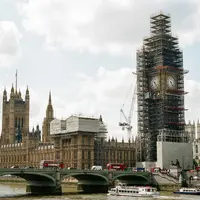
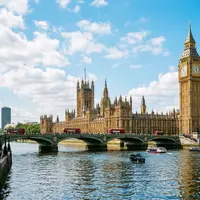
The structure that tourists photograph at the north end of the Palace of Westminster is actually three separate things, each with its own name. Understanding the distinction clears up one of London's most persistent misconceptions about Big Ben.
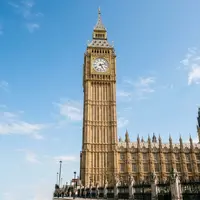
The tower is the Elizabeth Tower. It stands 96 metres tall and was completed in 1859. For most of its life it was called the Clock Tower, but it was renamed in 2012 to honour Queen Elizabeth II's Diamond Jubilee.
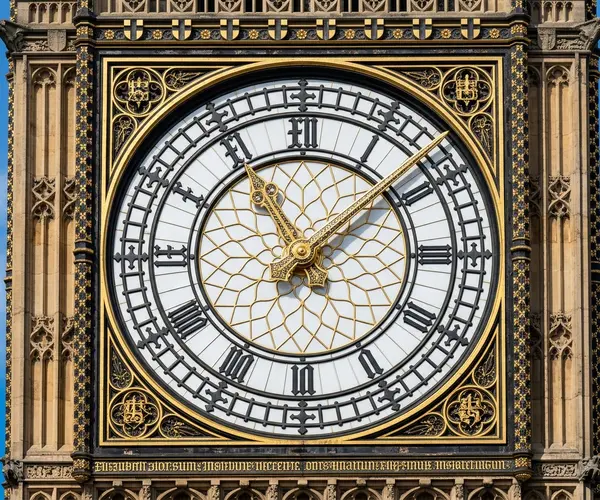
The clock is the Great Clock of Westminster. Its four faces, each 7 metres in diameter, are mounted at the 55-metre level of the tower. The Victorian mechanism behind the dials is one of the most reliable timepieces ever built, accurate to within a few seconds despite being over 160 years old.
The bell is Big Ben. Officially named the Great Bell, it weighs 13.7 tonnes and hangs in the belfry above the clock mechanism. How it got the nickname Big Ben is a story involving a politician and a bare-knuckle boxer. It is this bell that produces the famous single deep strike on the hour, the sound that has become synonymous with London itself.
Why the Confusion Exists
The mix-up is entirely understandable. When you stand on Westminster Bridge and look at the tower, what you see is a clock. Four massive illuminated dials dominate the upper section of the structure. You cannot see the bell from the outside. It sits behind louvred openings that allow sound to escape while keeping the bell hidden from view.
Since the most visible feature is the clock and the most famous name is Big Ben, it was inevitable that people would connect the two. The fact that the tower was literally called the Clock Tower until 2012 only reinforced the association.
The sound of Big Ben striking is broadcast worldwide. The BBC has used it as a time signal since 1924, and it marks midnight on New Year's Eve for millions of listeners. But the sound people hear is the bell, not the clock. The clock is silent. It simply moves its hands and triggers the striking mechanism that causes the bell to ring.
The Quarter Bells
Big Ben is not the only bell in the tower. Four smaller quarter bells hang alongside it, and these produce the famous Westminster Chimes that play before each hourly strike. The melody, which has been adapted for countless doorbells, clocks and musical boxes around the world, was composed specifically for this tower and is properly called the Westminster Quarters.
Each quarter bell weighs between 1 and 4 tonnes. Together with Big Ben, the five bells create the complete soundscape that people associate with the tower. The quarter bells chime at 15, 30 and 45 minutes past the hour, building to a full sequence before Big Ben delivers the hourly strike.
The Great Clock Mechanism
The clock mechanism itself is a masterpiece of Victorian engineering designed by Edmund Beckett Denison. It sits in a dedicated room below the belfry and drives all four clock faces simultaneously through a system of gears and shafts.
One of its most charming features is the method used to regulate its accuracy. Rather than complex mechanical adjustments, the clock's speed is fine-tuned by placing old pre-decimal penny coins on a tray attached to the pendulum. Adding a single penny alters the clock's rate by 0.4 seconds per day. This elegantly simple solution has been in use since the clock first started running and continues to work reliably.
Getting the Names Right
While almost everyone will continue to call the whole structure Big Ben, knowing the correct terminology adds a layer of appreciation for what is actually a sophisticated combination of architecture, engineering and bell-founding. The tower, the clock and the bell are each remarkable in their own right, and each has its own story to tell.