Two Zoos, One Organisation
Both London Zoo and Whipsnade Zoo are run by the Zoological Society of London (ZSL), and both contribute to the same conservation mission. However, they were designed for different purposes and offer distinctly different visitor experiences. London Zoo opened in 1828 as a scientific collection in the heart of the city. Whipsnade opened in 1931 as a countryside park where animals could be given significantly more space.
Understanding the differences helps you decide which to visit, or whether both are worth your time on separate occasions.
Size and Layout
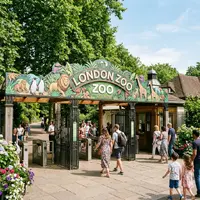
The most obvious difference is scale. London Zoo covers 36 acres within Regent's Park and is entirely walkable. You can see every exhibit in three to four hours without rushing. The paths are well-signed, the exhibits are close together, and the whole site has an intimate, enclosed feel.
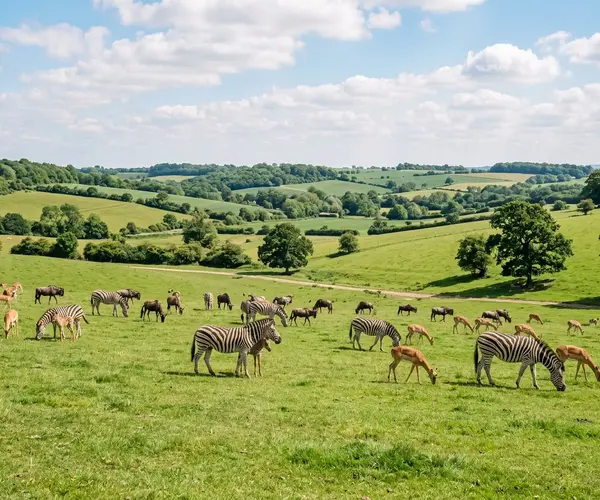
Whipsnade covers 600 acres of rolling Chiltern Hills countryside. It is genuinely large, and many visitors drive between sections rather than walking the entire site. There is a road loop through the park, and you can also use the free shuttle bus. Walking the whole park in a single day is possible but tiring. Most visitors allow five to six hours.
Animals
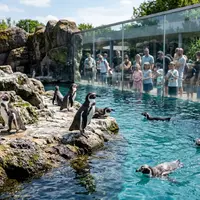
Both zoos have impressive collections, but they differ significantly in what they keep. London Zoo focuses on smaller and medium-sized animals suited to its compact site, along with a few larger species in purpose-built enclosures. This difference in scale is also central to the ethical debate about keeping animals in the urban zoo. Its highlights include western lowland gorillas, Sumatran tigers, Asiatic lions, Humboldt penguins and an extensive reptile collection.
Whipsnade has the space for animals that need room to roam. Its collection includes elephants, rhinos, hippos, cheetahs, brown bears, wolves and large herds of deer, antelope and bison. Many of these species would be impractical to keep in central London. Whipsnade's elephants, in particular, have one of the largest paddocks of any UK zoo.
| Feature | London Zoo | Whipsnade Zoo |
|---|---|---|
| Size | 36 acres | 600 acres |
| Location | Central London | Bedfordshire countryside |
| Getting there | Tube, bus, walk | Car recommended |
| Visit duration | 3-4 hours | 5-6 hours |
| Big cats | Tigers, lions | Cheetahs, lions |
| Elephants | No | Yes |
| Rhinos | No | Yes |
| Gorillas | Yes | No |
| Penguins | Yes | Yes |
| Drive-through | No | Yes |
Getting There
London Zoo is in Regent's Park and is accessible by Tube (Camden Town on the Northern Line), bus and on foot. No car is needed, and parking near the zoo is limited and expensive.
Whipsnade is about 30 miles north of London near Dunstable in Bedfordshire. It is best reached by car, taking around an hour from central London depending on traffic. There is free parking on site. Public transport options exist but are limited and involve a combination of train to Luton and then a bus or taxi.
Which Should You Choose?
For a day out in London without a car, London Zoo is the clear choice. It fits easily into a broader London itinerary, pairs well with a walk through Regent's Park, and gives you a solid three to four hours of animal viewing without logistical hassle.
For families with a car who want a full day out, Whipsnade offers more space, larger animals and a more relaxed pace. Children tend to love the drive-through sections and the sense of being in the countryside surrounded by animals. It also tends to feel less crowded than London Zoo, simply because there is so much more space.
If you are particularly interested in gorillas, tigers or the reptile collection, London Zoo is the one to visit. If elephants, rhinos or cheetahs are your priority, Whipsnade is the answer.
Both are excellent and genuinely different enough that visiting both on separate occasions is worthwhile rather than redundant.