Two Different Parks, Side by Side
Regent's Park and Primrose Hill are often mentioned together and some visitors assume they are the same place. While they physically adjoin at the northern end of Regent's Park, they are separate parks with different histories, characters and management. Understanding the distinction helps you plan your visit and decide how to divide your time between the two.
Regent's Park is one of London's Royal Parks, covering 395 acres of flat, landscaped ground designed by John Nash in 1811. It is a park of formal gardens, wide avenues, sports pitches and major attractions. Primrose Hill is a 78-acre park consisting primarily of a single grassy hill that rises to 256 feet, offering one of the most celebrated views in London.
Primrose Hill and Its Viewpoint
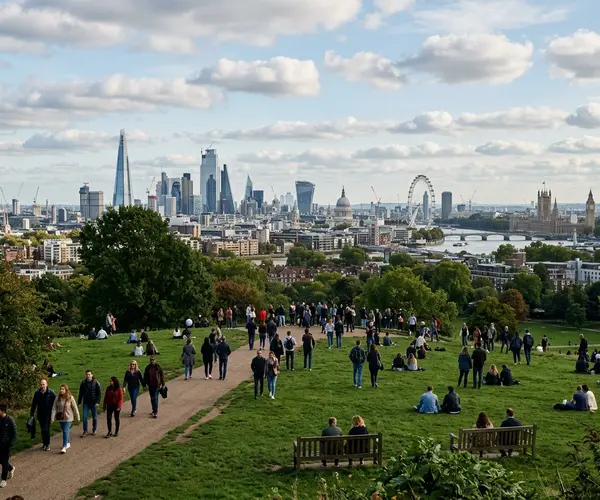
The main reason people visit Primrose Hill is the view from the top. On a clear day, you can see across the whole of central London, from the BT Tower and the Shard to the dome of St Paul's Cathedral and the towers of the City. A toposcope at the summit identifies the landmarks visible on the skyline, and on New Year's Eve the hill fills with people watching the fireworks display over the Thames.
The park itself is simple. There are no formal gardens, no playgrounds, no cafes and no buildings. It is essentially a large grassy hill with a few trees and benches, surrounded by some of London's most expensive residential streets. The appeal lies in the open space, the view and the feeling of being above the city. Dog walkers, joggers and families use the park throughout the year, and on sunny weekends the slopes fill with picnickers.
Regent's Park and Its Attractions
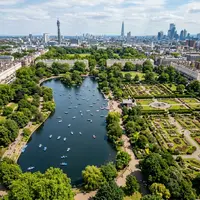
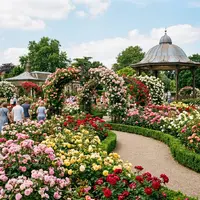
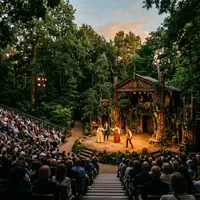
Regent's Park is a far more complex and varied space. The 395 acres include Queen Mary's Gardens with over 12,000 roses, the Open Air Theatre, a boating lake, London Zoo (which occupies the northern section), sports pitches for cricket, football and softball, tennis courts, running tracks and several playgrounds.
The park is designed for extended visits. You could spend a full day exploring its different areas, from the formal Avenue Gardens near the southern entrance to the wilder Wetland area near the canal. The park has multiple cafes and kiosks, making it easy to stop for refreshments, and the Outer Circle road provides a 2.7-mile walking or running route around the perimeter.
Visiting Both
Because the two parks adjoin, visiting both in a single trip is straightforward. A popular route is to enter Regent's Park from the south (Baker Street or Regent's Park tube), walk through the park and Queen Mary's Gardens, then continue north through the zoo boundary (on the public path, not through the zoo itself) and climb Primrose Hill for the view. The walk from the southern edge of Regent's Park to the top of Primrose Hill takes about 40 minutes at a relaxed pace.
Alternatively, you can start at Camden Town tube station, walk to the top of Primrose Hill for the view, then descend into Regent's Park and explore the gardens and lake. This route has the advantage of getting the uphill walk done first and then enjoying the flat, landscaped park at leisure.
Key Differences at a Glance
Regent's Park is flat, formal and full of activities. Primrose Hill is hilly, simple and all about the view. Regent's Park has cafes, gardens, theatres and a zoo. Primrose Hill has grass, trees and a panorama. Regent's Park rewards a long, varied visit. Primrose Hill can be enjoyed in 30 minutes. Both are free, both are beautiful, and both are worth your time.