The Monument and Its Dimensions
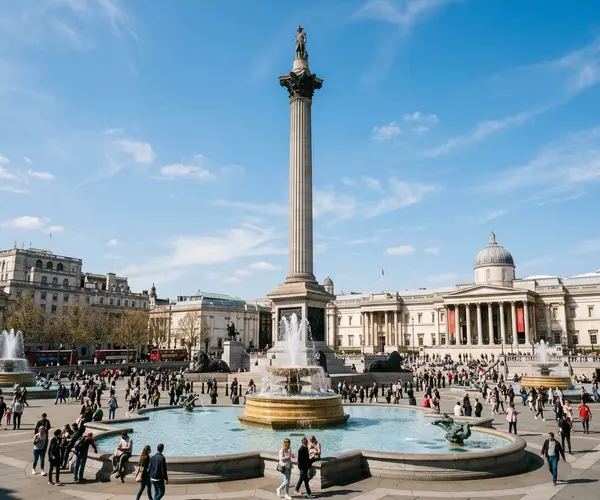
Nelson's Column is the defining feature of Trafalgar Square, rising 51.6 metres above the paving stones. The column itself is made from Dartmoor granite and stands on a pedestal decorated with four bronze relief panels. These panels were cast from captured French cannons and depict scenes from Nelson's greatest naval victories, including the battles of the Nile, Copenhagen, Cape St Vincent and Trafalgar.
The statue of Nelson at the summit was carved from Craigleith sandstone by Edward Hodges Baily. It depicts the Admiral in his naval uniform, looking south towards the Admiralty and the sea beyond. Although the statue appears small from ground level, it is actually 5.5 metres tall and weighs around 16 tonnes.
Why It Was Built
Admiral Horatio Nelson was killed at the Battle of Trafalgar on 21 October 1805, a naval engagement that saw the Royal Navy decisively defeat the combined fleets of France and Spain off the coast of southern Spain. Nelson's victory secured British naval dominance for over a century but cost him his life when he was shot by a French musketeer aboard HMS Victory.
Following Nelson's death, there were immediate calls for a fitting memorial. However, it took decades of debate, fundraising and design competitions before construction finally began in 1840. The architect William Railton won the commission with his design for a Corinthian column inspired by the columns of the Temple of Mars Ultor in Rome.
Construction Challenges
The building of Nelson's Column was not without controversy. The project ran significantly over budget, and there were heated arguments about the design, the materials and even whether a column was the right form of memorial at all. Some critics felt the column was too tall and would dominate the square, while others argued it was not grand enough for such a national hero.
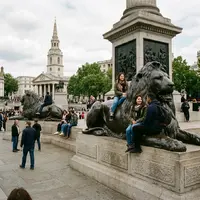
Construction took approximately three years, with the column erected first and the statue hoisted to the top in November 1843. The four bronze lions at the base, designed by Sir Edwin Landseer, were not added until 1867, more than two decades after the column was completed.
Scaling the Column
Over the years, Nelson's Column has attracted climbers and protestors. In 1979, anti-apartheid campaigners scaled the column to hang a banner. Greenpeace activists have also made the climb on several occasions to draw attention to environmental causes. The column has no internal staircase, so anyone who reaches the top must climb the exterior, which is both illegal and extremely dangerous.
Cleaning and Restoration
The column has been cleaned and restored several times since its construction. A major cleaning in 2006 revealed that the granite was in surprisingly good condition, though the bronze reliefs had developed the green patina typical of exposed bronze. The Trafalgar Square Conservation Area ensures that the column and its surroundings are maintained to a high standard, preserving this monument to one of Britain's most celebrated military figures.