An Accidental Art Platform
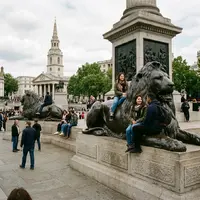
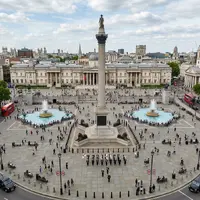
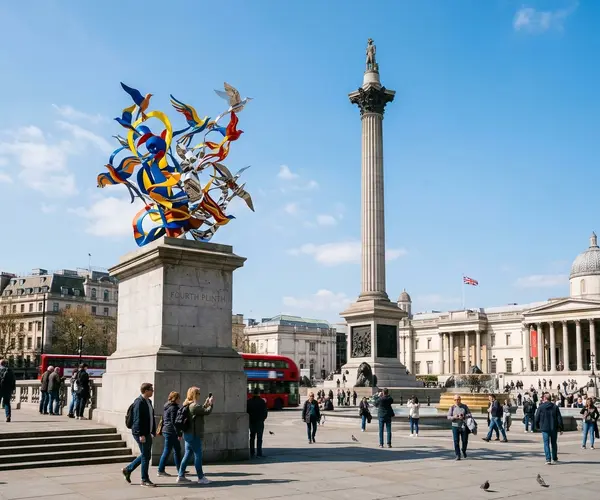
The Fourth Plinth sits in the northwest corner of Trafalgar Square, one of four plinths designed by Sir Charles Barry when the square was laid out in the 1840s. The other three plinths hold statues of military figures, including King George IV and Generals Havelock and Napier. The fourth was always intended for an equestrian statue, but the money never materialised, and so it remained empty.
For more than 150 years, the bare plinth was simply an oddity. Then in 1998, the Royal Society of Arts began a programme of temporary artworks, and the Fourth Plinth found a purpose that nobody had originally imagined.
How the Programme Works
Since 1999, the Fourth Plinth has hosted a series of specially commissioned contemporary artworks, each displayed for one to two years before being replaced. A panel of art experts and public representatives selects the works, and the programme is now managed by the Mayor of London's office through the Fourth Plinth Commissioning Group.
The commissions are deliberately varied in style and subject matter. Some are figurative, some abstract, some humorous and some politically charged. The only real requirement is that the work must be designed specifically for the plinth and must be able to withstand London's weather.
Notable Artworks
Some of the most memorable Fourth Plinth commissions have sparked widespread public debate. Marc Quinn's "Alison Lapper Pregnant" (2005) depicted a heavily pregnant woman born without arms, challenging conventional ideas about public monuments. Antony Gormley's "One and Other" (2009) placed a different member of the public on the plinth for one hour at a time over 100 consecutive days.
Katharina Fritsch's bright blue "Hahn/Cock" (2013) was a giant cockerel that became an instantly recognisable feature of the square. More recently, Samson Kambalu's "Antelope" (2022) depicted Baptist preacher John Chilembwe alongside a European missionary, highlighting an anti-colonial figure from Malawi's history.
Why It Matters
The Fourth Plinth programme has become something genuinely unusual in the art world. It places contemporary art in one of the most visited public spaces in the country, ensuring that millions of people encounter it whether or not they intended to visit a gallery. The rotating nature of the commissions means that the square is always changing, always prompting fresh conversation.
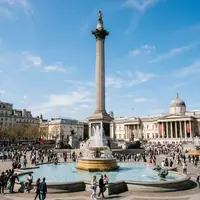
The programme also raises interesting questions about what belongs on public monuments. While the other three plinths celebrate 19th-century military and political figures, including Nelson's Column at the square's centre, the Fourth Plinth has hosted works about disability, colonialism, environmentalism and everyday life. It has become a space where the very idea of a public monument is questioned and reimagined.
Visiting the Fourth Plinth
The Fourth Plinth is freely accessible at all times, sitting at the edge of Trafalgar Square near the National Gallery. There is no barrier or fence around it, and visitors can walk right up to the base. Information panels nearby explain the current commission, and the Fourth Plinth website provides details of upcoming artworks and the selection process.