What Is a Clipper Ship?
A clipper was a type of sailing vessel designed primarily for speed. The name "clipper" is thought to derive from the word "clip," meaning to move swiftly. These ships featured narrow hulls, tall masts and a large spread of sail, all optimised to cut through the water as quickly as possible.
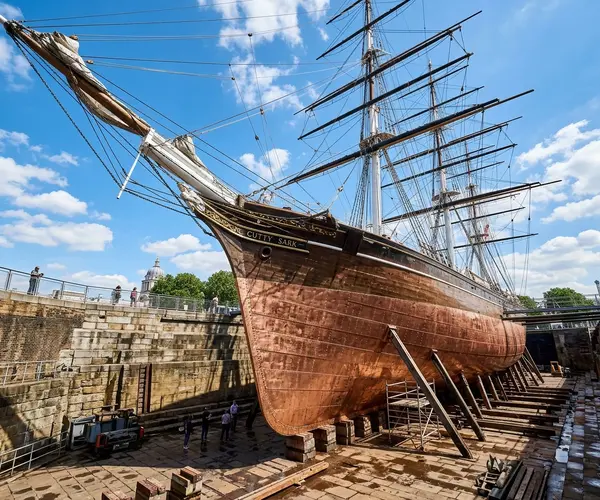
The Cutty Sark is one of the finest examples of this ship type ever built. She was constructed at the Scott and Linton shipyard in Dumbarton, Scotland, and launched on 22 November 1869. Her hull combined an iron frame with wooden planking, a composite construction method that offered both strength and the smooth finish needed for speed.
Built for the Tea Trade
The Cutty Sark was commissioned by shipping magnate John Willis specifically for the tea trade between China and Britain. In the mid-19th century, the first tea cargo of the season to arrive in London commanded a significant premium, creating intense commercial pressure to make the voyage as quickly as possible.
The annual tea races between clipper ships were followed with enormous public interest, much like major sporting events today. Ships would leave Chinese ports like Fuzhou at roughly the same time and race back to London, covering over 15,000 miles through some of the most challenging waters on earth.
The Cutty Sark was designed to win these races. Her hull shape, rigging plan and overall dimensions were all calculated to achieve maximum speed in the prevailing wind conditions of the tea trade route.
Speed and Performance
At her peak, the Cutty Sark was capable of speeds exceeding 17 knots under favourable conditions, which was extraordinary for a sailing vessel. Her best recorded day's run was 363 nautical miles in 24 hours, a performance that placed her among the fastest sailing ships ever to cross the oceans.
However, the Cutty Sark's career in the tea trade was relatively short. By the time she was launched in 1869, the Suez Canal had just opened, giving steam-powered ships a shorter route to China that sailing vessels could not use (the canal was too narrow for tacking under sail in the early years). Steam ships gradually took over the tea trade, and clippers were forced to find other work.
The Wool Trade
After her tea-trading years, the Cutty Sark found new life in the Australian wool trade during the 1880s and 1890s. On this route, she truly excelled. The longer voyage around the Cape of Good Hope suited her sailing capabilities perfectly, and she consistently made the passage faster than her rivals.
Her record wool passage from Sydney to London took just 67 days, a time that few sailing ships could match. During this period, the Cutty Sark earned her greatest reputation for speed and reliability.
The Last of Her Kind
The Cutty Sark represents the final generation of clipper ships. Steam power had already begun to dominate ocean transport by the time she was built, and within a few decades, commercial sailing vessels would be almost entirely replaced by steamships.
Today, the Cutty Sark is the last surviving tea clipper in the world, over 155 years old and meticulously restored after a devastating fire. Her preservation at Greenwich allows visitors to see firsthand the extraordinary craftsmanship and engineering that went into these remarkable vessels, and to understand the era when the speed of wind-powered ships was a matter of national pride and commercial fortune.