The Scots Language Origin
The name Cutty Sark comes from the Scots language. "Cutty" means short or shortened, and "sark" means a shirt or chemise. Together, "cutty sark" translates roughly as a short nightgown or short undergarment. The term was in common use in Scotland during the 18th and 19th centuries.
The phrase carries slightly mischievous connotations. A cutty sark was a garment shorter than was considered respectable, and referring to someone wearing one implied a degree of impropriety. This playful edge is entirely appropriate given the literary character from which the ship takes its name.
Tam o' Shanter
The name comes from Robert Burns' poem Tam o' Shanter, written in 1791. The poem is one of the most famous works in Scottish literature and tells the story of Tam, a farmer who rides home drunk one night through the village of Alloway in Ayrshire.
Passing the old Kirk of Alloway, Tam sees the church lit up and filled with witches and warlocks dancing to music played by the Devil himself. Among the dancers is a young witch called Nannie Dee, who is wearing nothing but a "cutty sark" - a short linen garment.
Tam, emboldened by drink, calls out in admiration. The witches immediately give chase, and Tam rides for his life towards the Bridge of Doon. According to folk tradition, witches cannot cross running water, so Tam's horse Meg gallops for the bridge.
Nannie is the fastest pursuer and reaches the horse just as it crosses the bridge. She grabs for Tam but manages to seize only Meg's tail, which comes off in her hand. Tam escapes, but the horse loses its tail forever.
The Ship's Figurehead
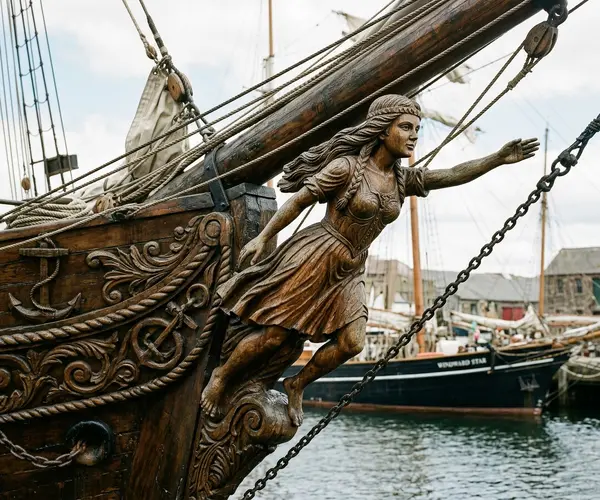
The connection between the poem and the ship is made physical in the figurehead at the bow. The Cutty Sark's figurehead depicts Nannie with her arm outstretched, reaching forward as if grasping for the tail of Tam's horse. She wears the famous cutty sark, the short garment that gives both the character and the ship their name.
The figurehead is one of the most distinctive features of the ship and has become an iconic symbol in its own right. Over the years, several different figureheads have been fitted. The ship now carries a replica, while original figureheads are preserved in the museum collection.
In a charming tradition, sailors would sometimes place a small horse tail in Nannie's outstretched hand for good luck. This custom reinforced the literary connection and gave the figurehead a sense of narrative that most ship figureheads lack.
Why John Willis Chose the Name
The ship was commissioned by John Willis, a Scottish shipowner based in London. Willis was known as "Old White Hat" because of the distinctive white top hat he always wore. As a Scotsman, he was well familiar with Burns' poetry, and the name Cutty Sark appealed to him on several levels.
The name suggested speed (Nannie was the fastest of the witches), determination (she chased Tam relentlessly) and a touch of Scottish character. For a ship designed to outrun every competitor in the tea trade, it was a fitting choice.
Willis was also naming the ship in the context of a fierce rivalry with the clipper Thermopylae, owned by a competitor. The Cutty Sark needed a name that conveyed ambition and confidence, and the image of the fastest witch in Burns' most famous poem delivered exactly that.
A Name That Endures
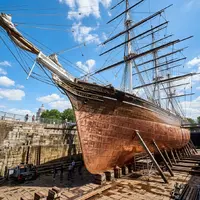
Today, the name Cutty Sark is far more widely known as a ship than as a Scots garment. But understanding the literary origin adds a layer of meaning to the vessel that enriches any visit. The story of Tam, Nannie and the lost horse tail is woven into the very identity of the ship, from her name to her figurehead to the spirit of speed and daring that defined her career on the oceans. Fittingly, her permanent home at Greenwich places her at the heart of Britain's maritime heritage.