Built in 1869
The Cutty Sark was launched on 22 November 1869 at the Scott and Linton shipyard in Dumbarton, Scotland. She was commissioned by the London shipping firm of John Willis and Son for the competitive tea trade between China and Britain.
At the time of her construction, she was one of the most advanced sailing vessels afloat. Her composite construction, combining an iron frame with timber planking sheathed in Muntz metal (a copper-zinc alloy), was state of the art. The ship measured 64.7 metres in length and could carry around 600 tonnes of cargo.
A Working Life Spanning Decades
The Cutty Sark had an active sailing career of approximately 53 years. After her years in the tea trade during the 1870s and her highly successful period carrying wool from Australia in the 1880s and 1890s, she was sold to a Portuguese company in 1895 and renamed Ferreira.
Under Portuguese ownership, she continued trading for another 27 years, sailing between Portugal, Africa and South America. She was re-rigged as a barquentine during this period, reducing her crew requirements but also diminishing the full clipper rig that had made her so fast.
In 1922, she was spotted in a Portuguese port by retired sea captain Wilfred Dowman, who recognised her as the famous Cutty Sark. He purchased her, restored her clipper rig and brought her back to Britain. She served as a training ship in Falmouth before being moved to the Thames Nautical Training College at Greenhithe.
Preservation at Greenwich
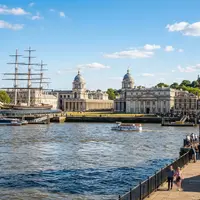
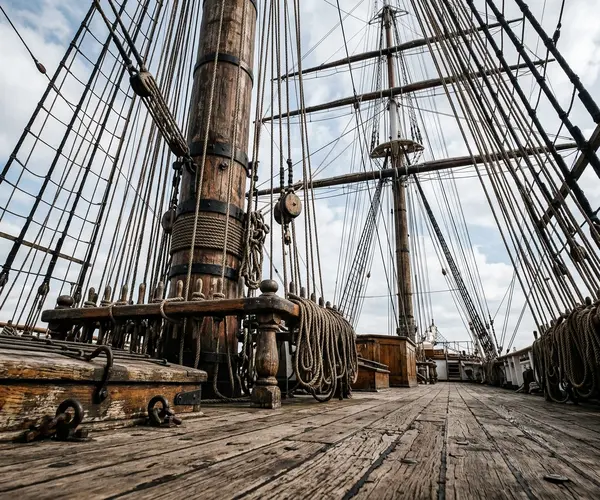
In 1954, the Cutty Sark was brought to Greenwich and placed in a specially constructed dry dock beside the Thames. She was opened to the public as a museum ship, allowing visitors to explore her decks and learn about the age of sail.
For over half a century, the ship sat in her dock as one of Greenwich's most recognisable landmarks. However, exposure to the elements and the passage of time took their toll on the vessel, and by the early 2000s a major conservation project was needed.
The 2007 Fire
On 21 May 2007, while undergoing conservation work, the Cutty Sark was severely damaged by fire. The blaze destroyed a significant portion of the ship's timber planking and caused extensive structural damage. The news shocked the nation, and there were genuine fears that the ship might be beyond saving.
Fortunately, much of the ship's ironwork survived the fire, and approximately 50% of the original timber planking had already been removed and stored off-site as part of the conservation project. This was a fortunate coincidence that made restoration possible.
The Restoration
The restoration project took five years and cost approximately £50 million. Conservation specialists painstakingly rebuilt the ship, using original timbers where they had survived and new materials crafted to match where they had not. The work combined traditional shipbuilding techniques with modern conservation science.
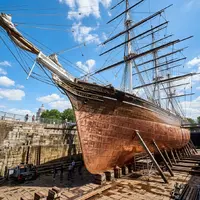
The restored Cutty Sark reopened to the public on 25 April 2012, with Queen Elizabeth II presiding over the ceremony. The new display raised the ship three metres above the floor of her dry dock, creating a dramatic glass-enclosed space beneath the hull where visitors can look up at the copper-sheathed bottom of the vessel.
A Survivor Against the Odds
The Cutty Sark's survival for over 155 years is remarkable. She outlasted every other tea clipper, survived a change of ownership and nationality, crossed the world's oceans for over five decades, endured a catastrophic fire, and emerged from a painstaking restoration to continue telling her story. Few ships in history have demonstrated such resilience. Even her name has an enduring story, drawn from Scots dialect and Robert Burns' poetry.