Buckingham House (1703)
The history of Buckingham Palace begins not as a palace at all but as a large townhouse. In 1703, the Duke of Buckingham commissioned a house on the site, designed by the architect William Winde. Buckingham House was a handsome but relatively modest building, set at the western end of St James's Park.
The site had been in various forms of use before the house was built. It had been a mulberry garden under James I, who planted the trees in a failed attempt to establish a silk industry in England. By the time the Duke of Buckingham arrived, the mulberry scheme was long forgotten, but the parkland setting remained appealing.
A Royal Purchase (1761)
In 1761, George III purchased Buckingham House as a private residence for his wife, Queen Charlotte. It became known as the Queen's House and served as a comfortable domestic retreat away from the formality of nearby St James's Palace, which remained the official seat of the court.
George III and Queen Charlotte had 15 children, and the Queen's House was a family home in the fullest sense. It was furnished comfortably rather than grandly and hosted intimate gatherings rather than state occasions. Fourteen of the couple's children were born either at the house or at St James's Palace.
George IV's Transformation (1820s)
Everything changed under George IV, who inherited the throne in 1820 with grand ambitions for his residences. He commissioned the architect John Nash to transform the modest Queen's House into a palace fit for a king.
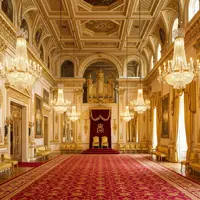
Nash's work was dramatic. He retained the shell of the original house but wrapped it in a new neoclassical exterior of Bath stone, added two projecting wings to create a courtyard, and decorated the interiors with lavish French-inspired rooms. The State Rooms that visitors see during the summer opening today are largely Nash's creation, with their ornate ceilings, gilded columns and rich colour schemes.
The project went wildly over budget. Parliament had approved funds for a renovation, not a near-complete rebuilding, and the escalating costs became a political scandal. Nash was eventually dismissed before the work was finished, and the architect Edward Blore was brought in to complete the project on a tighter budget.
Queen Victoria Moves In (1837)
George IV died in 1830 without ever living in his transformed palace. His successor, William IV, also chose not to move in. It was Queen Victoria who became the first monarch to use Buckingham Palace as her official London residence, moving in shortly after her accession in 1837. She also introduced the Changing of the Guard ceremony that continues to draw crowds to the forecourt today.
Victoria found the palace impressive but impractical. There were not enough bedrooms for guests, the kitchens were poorly connected to the dining rooms, and the drainage was unreliable. Over the following years, various improvements were made to address these shortcomings.
The East Front and the Balcony (1847)
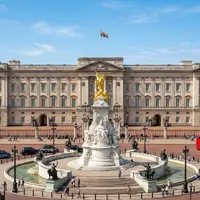
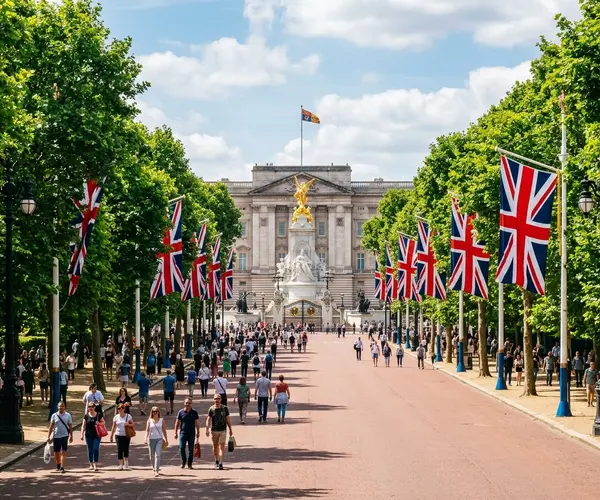
The most significant addition under Victoria was the east wing, added in 1847 by Edward Blore. This enclosed the courtyard created by Nash, forming the familiar four-sided structure that exists today. The east front is the face of the palace that the public sees from The Mall, and it includes the balcony where the royal family appears during state occasions.
The current appearance of the east front dates not from 1847 but from 1913, when the original soft stone facade was refaced in harder Portland stone by the architect Aston Webb. Webb's clean, symmetrical design is what visitors see today and is the version that appears on postcards, souvenirs and currency.
A Building That Keeps Changing
Buckingham Palace has never truly stopped evolving. Bomb damage during the Second World War required repairs. The swimming pool was added in 1938. The Queen's Gallery was created in 1962 from the ruins of the palace chapel, which was destroyed in a 1940 air raid. A major programme of infrastructure renewal has been underway since 2017, replacing ageing pipes, wiring and heating systems throughout the building.