When It Happens
The Changing of the Guard at Buckingham Palace takes place at 11am. The ceremony is not held every day during the quieter months. From August through to March, the schedule is typically Monday, Wednesday, Friday and Sunday. During the busier summer months, roughly April through July, the ceremony happens every day.
The schedule is not fixed in stone. Ceremonial events, state visits, extreme weather and security considerations can all cause changes or cancellations at short notice. The official schedule is published on the Household Division's website, and it is worth checking on the morning of your visit to confirm the ceremony is going ahead.
What Happens During the Ceremony
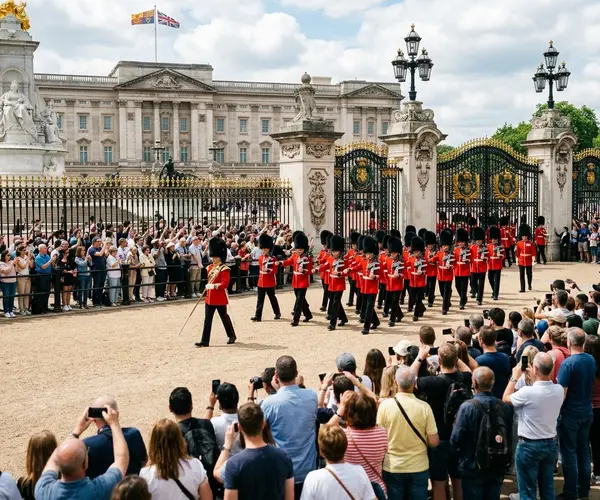
The Changing of the Guard is a formal handover of responsibility from the Old Guard, who have completed their duty, to the New Guard, who are taking over. The ceremony follows a structured sequence that has remained broadly the same for centuries.
The New Guard assembles at Wellington Barracks on Birdcage Walk and marches to Buckingham Palace accompanied by a military band. They enter through the palace gates and line up in the forecourt opposite the Old Guard. A series of orders are given, the guards exchange positions, and the ceremonial keys to the palace are symbolically handed over. The Old Guard then marches back to barracks while the New Guard takes up sentry positions.
The military band plays throughout, performing a mix of traditional marches and sometimes more contemporary pieces. It is not unusual to hear arrangements of pop songs or film themes alongside regimental standards.
Where to Watch
The forecourt of Buckingham Palace is the main location, and it is where the formal handover takes place. However, the forecourt is behind the palace railings and the view from the front gates can be obstructed by the density of the crowd, particularly during peak summer months.
Several alternative viewing spots offer a better experience. The Victoria Memorial, the large monument directly in front of the palace, provides an elevated position with good sightlines over the forecourt. Arriving 30 to 45 minutes before the 11am start gives you the best chance of securing a good spot here.
Spur Road, the street between St James's Park and the palace, is another option. You can watch the New Guard march past on their way from Wellington Barracks. This gives you a close-up view of the soldiers and the band as they pass within a few metres.
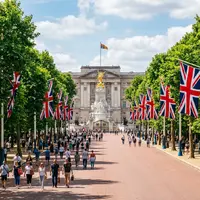
The Mall offers a wide viewing area and is the route the guards take to and from the palace. It is usually less crowded than the area directly in front of the gates and allows you to see the procession in motion rather than just the static ceremony.
Which Regiments Take Part
The guards on duty rotate between the five regiments of Foot Guards. These are the Grenadier Guards, the Coldstream Guards, the Scots Guards, the Irish Guards and the Welsh Guards. Each regiment has slightly different uniform details, particularly the spacing and arrangement of the buttons on their tunics and the plume on their bearskin hats.
The Grenadier Guards wear evenly spaced buttons and a white plume on the left side. The Coldstream Guards have paired buttons and a red plume on the right. Spotting these differences is a good way to identify which regiment is on duty.
Tips for the Best Experience
Weekdays outside school holidays tend to be quieter. The Sunday slot during winter months is often the least crowded option. Standing to the side of the main gates rather than directly in front provides a better angle, as the ceremony takes place across the full width of the forecourt.
The ceremony runs regardless of light rain, but heavy downpours or high winds can lead to cancellation. If the ceremony is cancelled, the guards still change over, but they do so without the full ceremonial display and music. If you are visiting during the summer months, you can also go inside Buckingham Palace to see the State Rooms, which open from late July to September.