The Official London Residence
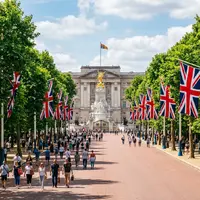
Buckingham Palace has served as the official London residence of the British monarch since 1837, when Queen Victoria became the first sovereign to live there. Every monarch since has used the palace as their base for carrying out official duties in the capital.
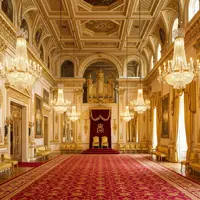
King Charles III uses the palace as his working headquarters. It is where he holds audiences with the Prime Minister, receives foreign ambassadors, hosts state banquets and conducts investitures. The administrative machinery of the monarchy, from private secretaries to press officers, operates from offices within the palace.
The Royal Standard Flag
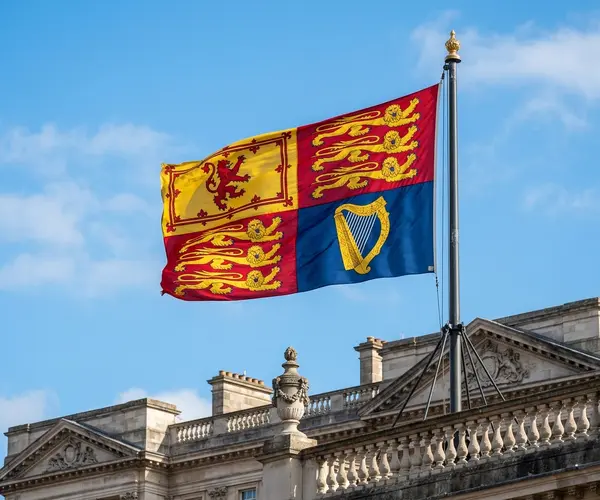
The simplest way to know whether the King is at Buckingham Palace is to look at the flagpole on the roof. When the Royal Standard is flying, the monarch is in residence. The Royal Standard is a colourful flag divided into four quadrants displaying the heraldic arms of England, Scotland and Ireland.
When the monarch is not at the palace, the Union Flag (commonly known as the Union Jack) flies instead. This practice has been in place since 1997, when the protocol was changed following public reaction during the week after Princess Diana's death. Before that change, no flag flew when the monarch was absent.
The Royal Standard is never flown at half-mast, even when a monarch dies. It transfers immediately to the new sovereign, symbolising the continuity of the institution.
Windsor Castle and Other Residences
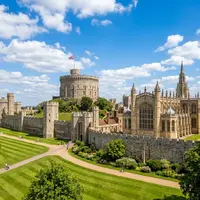
While Buckingham Palace is the official residence, King Charles III is known to spend significant time at Windsor Castle in Berkshire, roughly 35 kilometres west of London. Queen Elizabeth II increasingly used Windsor as her primary home in her later years, and Charles has continued to spend weekends and extended periods there.
Our detailed Buckingham Palace vs Windsor Castle comparison explores how the two residences differ in history, scale and visitor experience. Windsor Castle offers a different character to Buckingham Palace. It is the oldest and largest occupied castle in the world, set in extensive grounds with more privacy and space than the central London location allows. The King also uses Sandringham House in Norfolk and Balmoral Castle in Scotland at various times of the year, following a pattern established over generations.
Highgrove House in Gloucestershire is the King's private estate, purchased in 1980. Unlike the official residences, which are held in trust for the nation, Highgrove is a personal property where the King has spent decades developing the gardens according to his interest in organic farming and sustainability.
A Working Building, Not Just a Home
It is worth understanding that Buckingham Palace is much more than a residence. It is the administrative centre of the monarchy and the venue for a relentless schedule of official functions. The palace hosts approximately 50,000 guests each year across state banquets, receptions, investitures, garden parties and diplomatic events.
Around 800 people work at the palace in various roles. The building contains 92 offices, and on any given day there are meetings, briefings, rehearsals and logistical preparations happening throughout the building. The domestic side of the palace, with its kitchens, laundry, housekeeping and maintenance teams, operates on an almost industrial scale.
The Balcony Appearances
The most visible sign that the King is at Buckingham Palace comes during the handful of occasions each year when the royal family appears on the famous front balcony. Trooping the Colour in June and the aftermath of a coronation or royal wedding are the most common occasions for a balcony appearance.
These moments draw enormous crowds to The Mall and the area around the Victoria Memorial. The balcony itself is relatively small, just a narrow ledge on the first floor of the east wing, but it has become one of the most recognisable settings in British public life.