The Numbers
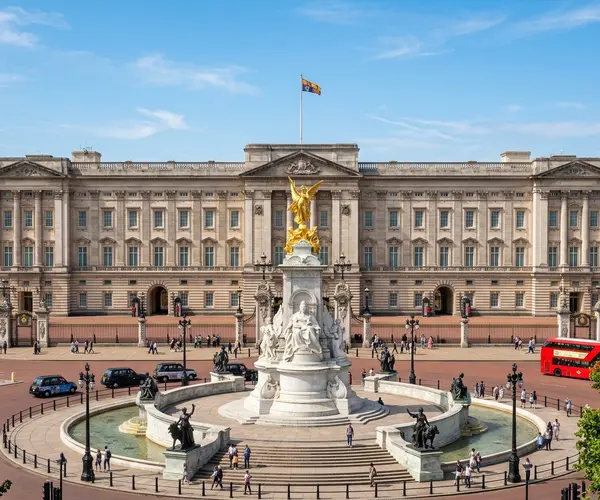
Buckingham Palace contains 775 rooms spread across four wings built around a central quadrangle. The breakdown is notable for how much of the palace is dedicated to staff and operations rather than royal living.
The 19 State Rooms are the most famous. These grand ceremonial spaces are used for state banquets, investitures, diplomatic receptions and official entertaining. They include the Throne Room, the Ballroom, the Picture Gallery and the State Dining Room.
Beyond the State Rooms, there are 52 royal and guest bedrooms. These are the private rooms used by the royal family and their guests during stays at the palace. Not all 52 are in regular use, as the number of permanent residents has varied considerably over the years.
The 78 bathrooms service both the royal apartments and guest rooms. The 188 staff bedrooms house the live-in domestic staff who keep the palace running. The 92 offices provide workspace for the administrative functions of the monarchy, from correspondence secretaries to press officers.
Why So Many Rooms?
The sheer number of rooms reflects the palace's evolution from a modest townhouse into the administrative and ceremonial headquarters of the British monarchy. The original Buckingham House, built in 1703, was a relatively compact residence. When George IV commissioned John Nash to transform it into a palace in the 1820s, the building was dramatically expanded.
Queen Victoria made it the official royal residence in 1837, and further expansions followed to accommodate the growing demands of a modern court. The east wing, which includes the famous balcony where the royal family appears during public events, was added in 1847. Additional modifications continued well into the 20th century.
Each expansion added rooms not just for grandeur but for function. A working palace needs kitchens, pantries, laundry rooms, workshops, storage spaces and accommodation for the hundreds of staff required to maintain it. The 775-room total includes all of these practical spaces alongside the ceremonial ones.
The Ballroom
The largest single room in the palace is the Ballroom, measuring 36 metres long, 18 metres wide and 13.5 metres high. It was completed in 1855 and was originally used for balls and dances during the social season. Today it serves as the venue for state banquets and investitures, where the King formally bestows honours and decorations.
A state banquet in the Ballroom seats up to 170 guests at a single horseshoe-shaped table. Each place setting requires around 14 pieces of cutlery, six glasses and a specific arrangement of plates and decorative items from the Royal Collection.
The Working Palace
What the room count does not immediately convey is how much of Buckingham Palace functions as a workplace. Around 800 members of staff work at the palace in various capacities, from footmen and housekeepers to gardeners, chefs and administrative personnel. This workforce supports the palace's role as the King's official London residence. The 92 offices handle everything from the King's official correspondence to the planning of state visits and the management of the Royal Collection.
The palace also contains a post office, a swimming pool, a cinema, a doctor's surgery and a chapel. The chapel was originally much larger but was destroyed during a German bombing raid in 1940. It was rebuilt on a smaller scale and is now known as the Queen's Gallery, which hosts public exhibitions.
How It Compares
At 775 rooms, Buckingham Palace is one of the largest working royal residences in the world, but it is not the biggest. The Palace of Versailles outside Paris has over 2,300 rooms. The Apostolic Palace in the Vatican contains around 1,000 rooms. Windsor Castle, the other primary British royal residence, has approximately 1,000 rooms of its own.
What sets Buckingham Palace apart is not size but function. It remains the administrative headquarters of the British monarchy and a fully operational residence, hosting approximately 50,000 guests each year at garden parties, state banquets, investitures and receptions.