Pendon Museum
Extraordinarily detailed 1930s miniature landscapes — the Vale of White Horse and Dartmoor in breathtaking 4mm scale
Extraordinarily detailed 1930s miniature landscapes — the Vale of White Horse and Dartmoor in breathtaking 4mm scale
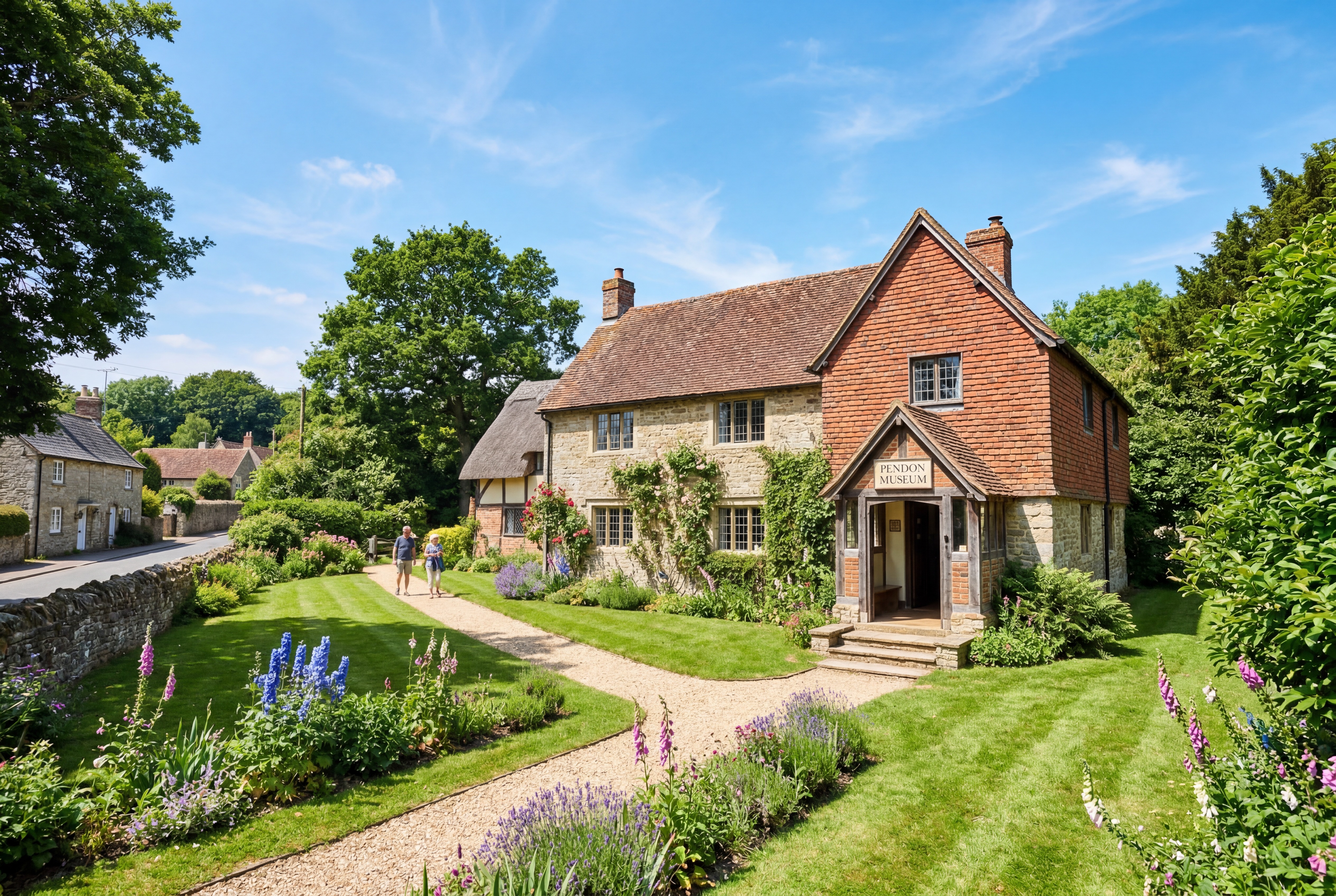
Roye England was a young Australian who stepped off a ship in 1925 and fell hopelessly in love with the English countryside. Over the following decades he devoted his life to preserving what he saw vanishing, building extraordinarily detailed miniature models of the thatched cottages, stone farmhouses and quiet lanes of the Vale of White Horse as they appeared in the 1930s.
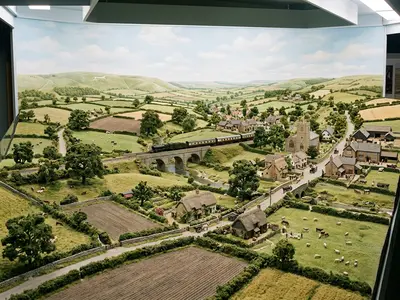
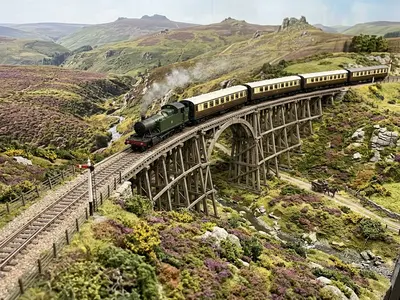
Today his life's work fills a small museum in the Oxfordshire village of Long Wittenham, where volunteers continue building and refining scenes that have been under construction since the 1950s. The Vale Scene is probably the largest diorama of accurately reproduced real buildings anywhere in the world, complemented by a working Dartmoor railway scene and the famous Madder Valley layout by John Ahern. Every building is modelled from a real structure, many now demolished, making Pendon the sole surviving record of a vanished landscape.
Pendon Museum exists because a teenage Australian fell in love with the English countryside. Roye England arrived in Britain in 1925, aged 19, and was captivated by the thatched cottages, stone walls and quiet lanes of the Vale of White Horse in Oxfordshire. Alarmed that modernisation was sweeping these scenes away, he began building miniature replicas of the buildings he most admired, working at a scale of 4mm to the foot.
In 1954 he moved to Long Wittenham and converted the abandoned Three Poplars pub into a youth hostel, using the income and volunteer labour from visitors to fund his modelling work. The hostel became a workshop, the workshop became a museum, and the project grew into one of the most ambitious model-making endeavours ever attempted. Roye England died in 1995, but his volunteers have continued building ever since, adding new buildings and refining the landscape with the same obsessive attention to detail.
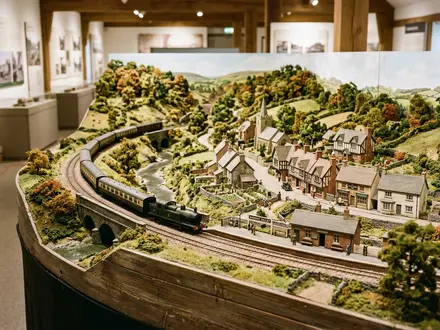
The Vale Scene dominates the upper floor of the museum, a vast diorama depicting the Vale of White Horse as it appeared in the 1930s. Every building is an exact replica of a real structure, researched from photographs, sketches and measured drawings. The topography and village layout are fictional, but the buildings themselves are not — many of the originals have since been demolished or altered beyond recognition, leaving Pendon as the sole surviving record.
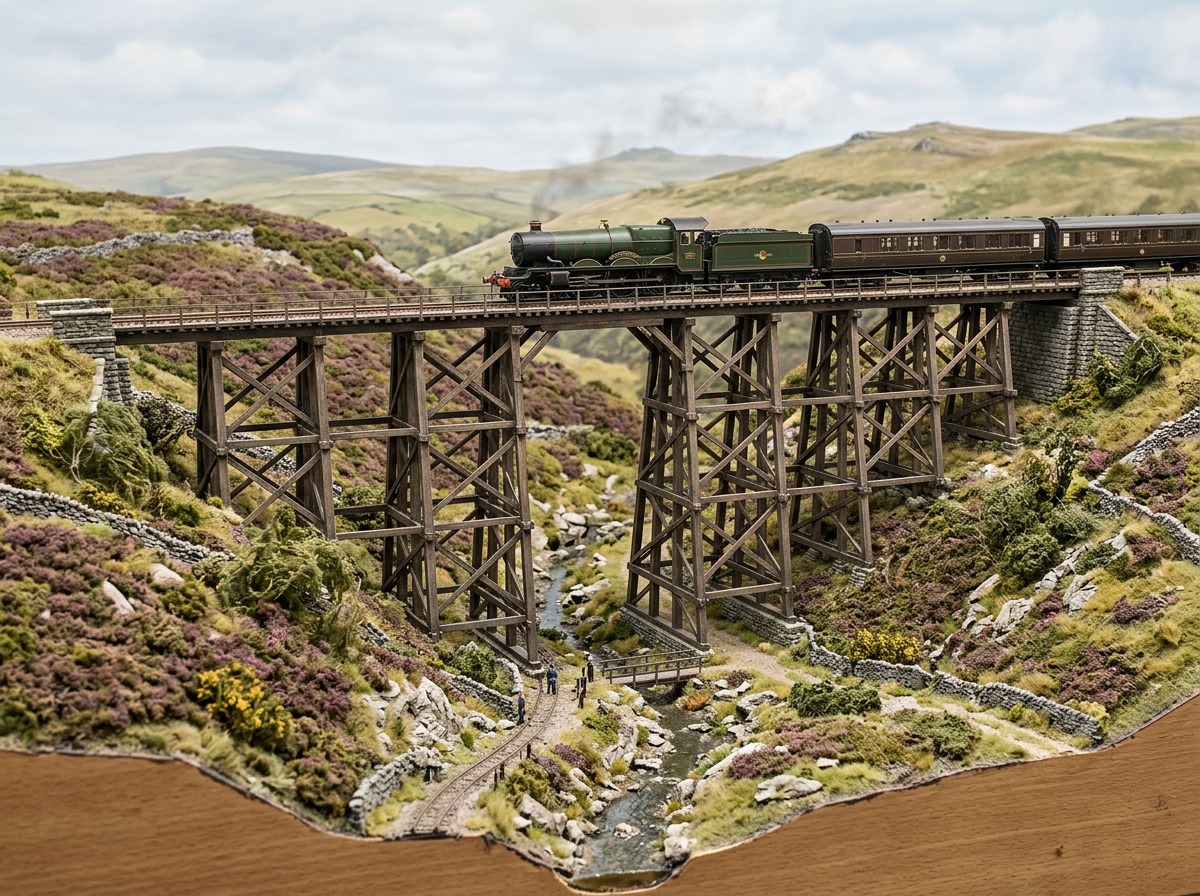
Working Great Western Railway locomotives thread through the landscape, stopping at stations and crossing bridges through a countryside of hedgerows, haystacks and ploughed fields. On the ground floor, the Dartmoor Scene presents an imaginary GWR branch line crossing the southern edge of Dartmoor, centred on a model of one of Brunel's timber viaducts. The famous Madder Valley Railway by John Ahern, one of the most influential model railways ever built, operates on select days.
A small museum shop sells railway books, models and 1930s-themed merchandise. The on-site cafe serves light refreshments including tea, coffee and biscuits, while The Plough pub is a five-minute walk away for hot meals.
Pendon opens on weekends and bank holidays from February to November, 11am to 4pm with last entry at 3.15pm. Additional Wednesday openings run during school holidays, and the first Thursday of each month from June to October. The museum is fully air-conditioned and offers free Wi-Fi throughout. Photography is welcome for personal use.
Didcot Parkway is the nearest mainline station, about four miles away, with services from London Paddington in around 45 minutes. The 95 bus from Didcot towards Wallingford stops in Long Wittenham. Drivers will find a small free car park at the museum. Allow two to three hours for a thorough visit — the detail in the models rewards slow, close inspection. Didcot Railway Centre is just four miles away and makes an excellent pairing for railway enthusiasts.
Tickets purchased on arrival at the museum. Entry includes access to all scenes and exhibits
Pendon only opens on weekends and bank holidays from February to November, plus select Wednesdays and Thursdays. Always check the website calendar before visiting to avoid a wasted journey.
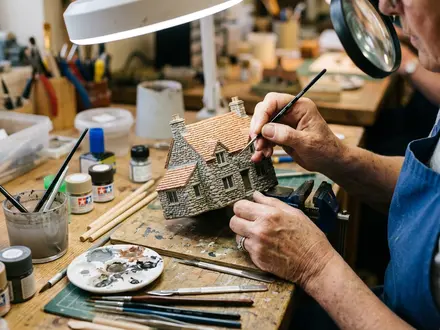
The detail in these models is extraordinary and rewards slow, careful looking. Bring reading glasses if you use them — tiny roof tiles and hand-painted signs are easy to miss from a distance.
Didcot Railway Centre is just four miles away and preserves full-size GWR locomotives and rolling stock. The two museums make a superb day out for railway enthusiasts of any age.
The museum opens on Wednesdays during school holidays and tends to be quieter than weekends. Families with children will find more space to explore the layouts without crowds.
The museum cafe serves light refreshments only. The Plough pub on the village High Street is a five-minute walk and serves proper hot meals, making it an ideal lunch stop during your visit.

London Travel Writer · 12+ years covering UK attractions and tourism
Last reviewed: March 10, 2026