Marwell Zoo
A 140-acre conservation zoo near Winchester — over 1,200 animals across 149 species, set around a 14th-century manor house
A 140-acre conservation zoo near Winchester — over 1,200 animals across 149 species, set around a 14th-century manor house
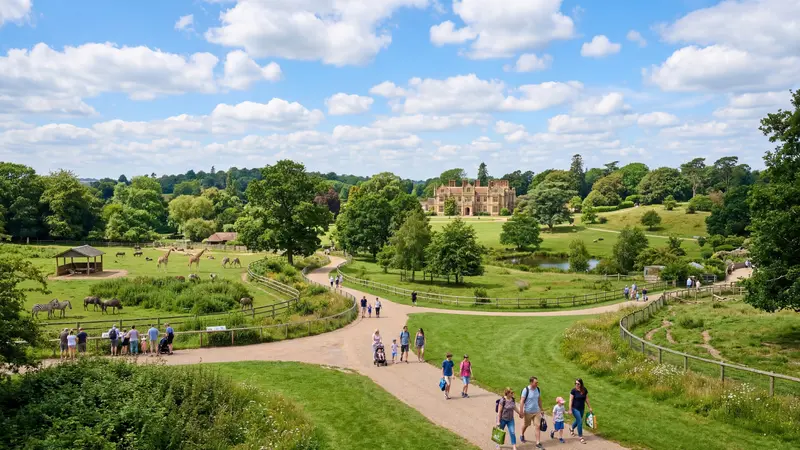
Marwell Zoo began in 1972 when Dr John Knowles sold his Rolls-Royce to buy zebras, founding one of the first conservation-focused zoos in Europe. Spread across 140 acres of Hampshire parkland around the 14th-century Marwell Hall, the zoo is now home to over 1,200 animals representing 149 species, from Amur tigers and snow leopards to Humboldt penguins and two-toed sloths.
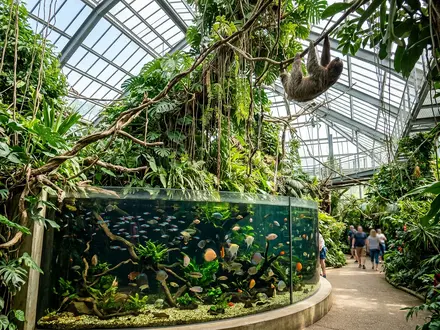
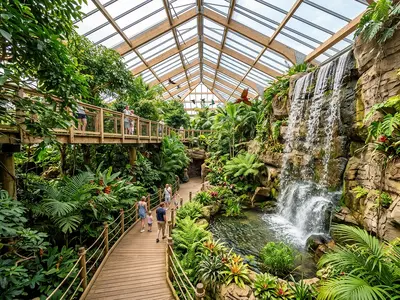
Visitors follow themed trails through areas including Wild Explorers, Roof of the World and the two-storey Tropical House, where a 70,000-litre aquarium sits beneath forest canopy. Five adventure playgrounds, a miniature railway and daily keeper talks keep families occupied for a full day out, roughly an hour south of London by car.
Dr John Knowles opened Marwell Zoological Park in 1972 on the grounds of Marwell Hall, a manor house dating to approximately 1320. A vet by training, Knowles had a vision for a zoo focused on breeding endangered species rather than simply displaying animals. He famously funded his first acquisitions by selling his Rolls-Royce to buy zebras, setting a tone for the pragmatic conservation ethos that still defines the organisation.
The zoo was among the first in Europe to prioritise captive breeding programmes for threatened species. Its work with scimitar-horned oryx proved particularly significant — over 200 calves have been bred at Marwell since 1972, with animals released into the Sahara alongside stock from Whipsnade and Edinburgh zoos to restore a species declared extinct in the wild. Mongolian wild horses, golden lion tamarins and roan antelopes have also been bred and reintroduced through Marwell's programmes. In 2009, the organisation rebranded as Marwell Wildlife to reflect its broader conservation mission, which now spans field projects across Africa and the United Kingdom.
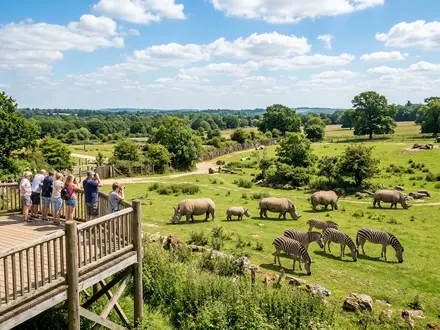
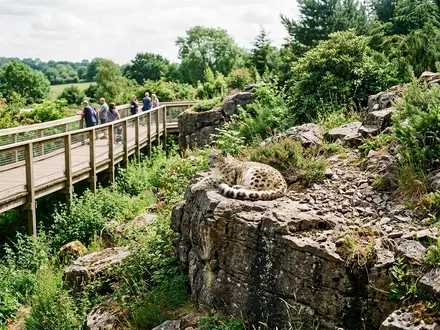
The 140-acre site is divided into themed zones connected by walking trails that loop through Hampshire parkland. Wild Explorers, a 3.6-million-pound development opened in 2015, houses southern white rhinos, Grevy's zebras and scimitar-horned oryx in spacious paddocks. Roof of the World focuses on Himalayan species including snow leopards, red pandas and Amur leopards, while World of Lemurs and the Australian Bush Walk offer close encounters with ring-tailed lemurs and wallabies.
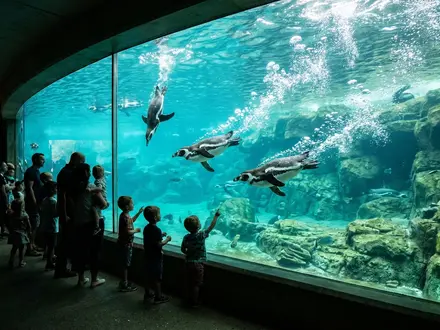
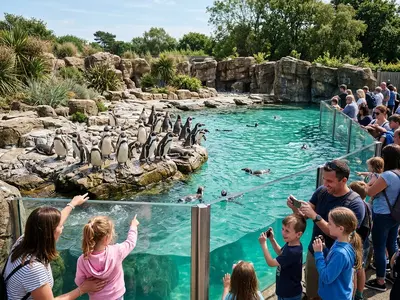
The two-storey Energy for Life Tropical House, opened in 2018, is the standout indoor attraction. A 70,000-litre aquarium holds over 2,500 fish beneath a forest canopy where two-toed sloths and free-flying birds move overhead. Penguin Cove provides above and below water viewing of Humboldt penguins. Daily keeper talks and feeding sessions run throughout the zoo, and a miniature railway has operated since 1987, carrying visitors between enclosures. Five adventure playgrounds are spread across the site for children of different ages.
Marwell Zoo is open daily from 10am, closing at 5pm in summer and 4pm in winter, with last entry 90 minutes before closing. The zoo closes only on Christmas Day and Boxing Day. Animal houses begin closing 30 minutes before the park shuts, so arriving early is advisable to see the indoor exhibits. Weekday mornings outside school holidays offer the quietest experience and the best chance of seeing active animals.
The site is largely accessible by wheelchair and pushchair, though some paths are on slopes and can be uneven. A land train runs a circuit for those who find the full walking route too demanding. Several cafes and kiosks serve hot meals, sandwiches and snacks, and picnics can be brought in and eaten at designated areas. The adjacent Marwell Hotel offers overnight stays for those wanting a two-day visit.
Book online in advance and save up to £4 per ticket versus buying on the day. Peak season prices (late March to November) are higher than off-peak rates
Advance tickets are up to £4 cheaper per person than buying on the day. Peak season runs from late March to November with higher prices, so visit off-peak for the best value.
Most animals are liveliest in the morning, particularly the big cats and penguins. Aim to arrive at opening time and head straight to Roof of the World before the crowds build up.
Keeper talks and feeding sessions run throughout the day at set times. Pick up a schedule at the entrance or check the Marwell app to plan your route around the talks you want to see.
The Tropical House is heated to rainforest temperatures so wear layers you can remove. The contrast with outdoor temperatures in winter makes this especially important.
Five adventure playgrounds are spread across the site, each designed for different ages. Build in time between animal zones so children can burn off energy without rushing the visit.

London Travel Writer · 12+ years covering UK attractions and tourism
Last reviewed: June 2, 2026