32 Capsules, Numbered 1 to 33
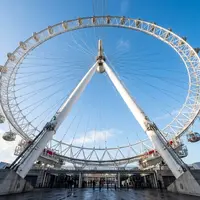
The London Eye carries 32 sealed glass capsules around its 135-metre circumference. Despite having 32 physical pods, the numbering runs from 1 to 33. Number 13 was intentionally skipped when the wheel was designed in the late 1990s.
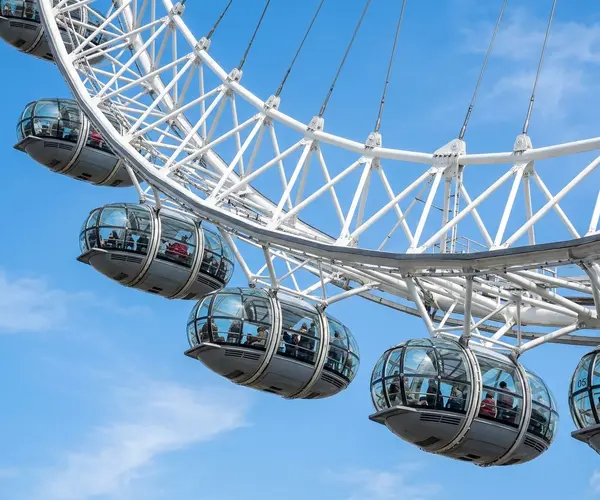
The capsules are evenly spaced around the outer rim of the wheel, each mounted on a motorised platform that allows it to rotate independently. This is what keeps the capsules level throughout the full rotation, so passengers are always standing upright rather than tilting as the wheel turns.
Why There Is No Capsule 13
The missing number 13 is down to triskaidekaphobia, the long-standing superstition that the number 13 is unlucky. This practice is common in British architecture and engineering. Many hotels skip the 13th floor, airlines often omit row 13, and some streets have no number 13.
When the London Eye was being planned by architects David Marks and Julia Barfield, the decision to skip 13 was made early in the design process. It was a nod to tradition rather than any structural or engineering reason. The capsule that would have been number 13 simply became number 14, and the sequence continues to 33.
Each capsule is also said to represent one of the 32 London boroughs, though there is no official assignment linking specific capsule numbers to specific boroughs.
Inside a Capsule
Each capsule is an oval-shaped pod made from glass and steel, roughly 4 metres long and 2 metres wide. The glass panels extend from the floor to the curved ceiling, giving unobstructed 360-degree views. A low wooden bench runs along the centre, and there is enough floor space for up to 25 people to stand comfortably around the perimeter.
Weight and Engineering
A single capsule weighs approximately 10 tonnes. That figure includes the glass pod itself, the steel frame, the motorised gimbal mounting that keeps it level, and the internal fittings. With 25 passengers on board, the total loaded weight rises to around 12 tonnes per capsule.
The entire wheel, including all 32 capsules, the hub, spokes and A-frame support structure, weighs over 2,100 tonnes. The capsules alone account for roughly 320 tonnes of that total.
Climate Control and Accessibility
All capsules are climate-controlled with heating and cooling systems, which means you can ride the London Eye in the rain without getting wet. They are also fully accessible, with step-free entry at ground level. The wheel rotates slowly enough that passengers can board and exit without the capsule stopping, though it can be paused for wheelchair users or anyone who needs extra time.
How the Capsules Compare to Other Observation Wheels
The London Eye's capsule design was groundbreaking when it opened in 2000. Unlike traditional Ferris wheel gondolas, which hang from the rim and swing freely, the London Eye's capsules are mounted on the outside of the wheel on motorised platforms. This external mounting is what allows the unobstructed views, as passengers can look in every direction including through the wheel structure itself.
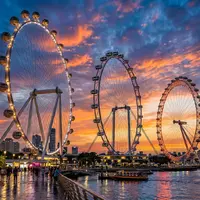
This design influenced later observation wheels around the world. The Singapore Flyer (2008), the High Roller in Las Vegas (2014) and the Ain Dubai (2021) all adopted variations of the enclosed, externally mounted capsule concept that the London Eye pioneered.
| Feature | London Eye | Singapore Flyer | High Roller | Ain Dubai |
|---|---|---|---|---|
| Capsules | 32 | 28 | 28 | 48 |
| Capacity per capsule | 25 | 28 | 40 | 40 |
| Total passenger capacity | 800 | 784 | 1,120 | 1,920 |
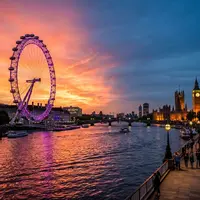
The London Eye's 32-capsule layout remains one of the most recognisable silhouettes in London. The evenly spaced pods give the wheel its distinctive appearance against the skyline, especially when lit up at night in rotating colour schemes.