The Capsules Keep You Dry
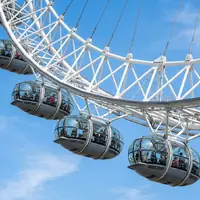
Each of the 32 capsules on the London Eye is a fully enclosed, egg-shaped glass pod. They are sealed units with no open windows or gaps, which means rain, wind and cold stay outside. This fully enclosed design is also one of the reasons the London Eye is not scary for most visitors, even those with moderate height anxiety. The glass panels run from floor to ceiling and are curved to maximise the panoramic view, but they also function as a complete weather barrier.
Inside, the capsules are climate-controlled. In winter they are heated, and in summer the system prevents them from overheating. Even on a cold, wet January afternoon, the interior remains comfortable for the full 30-minute rotation. There is no need to bring an umbrella on board, though you will want one for the walk along the South Bank to reach the entrance.
When Does the London Eye Actually Close?
The London Eye very rarely shuts down due to weather. It is engineered to operate in rain, sleet, fog and moderate wind. The primary reason for a weather-related closure is sustained high winds, typically above 40mph. This is a safety precaution related to the boarding and disembarkation process rather than the structural integrity of the wheel itself.
Closures for wind happen only a handful of times each year, usually during named storms between October and March. Snow and ice do not typically cause closures either, as the wheel's mechanisms are designed for the full range of British weather conditions.
If you are concerned about a closure on your visit date, the official London Eye social media channels post real-time updates. You can also call ahead on the morning of your visit for a status check.
What Do Views Look Like in the Rain?
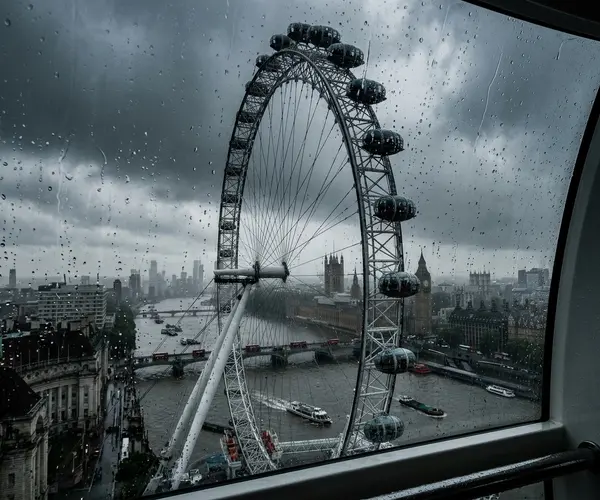
This is the honest trade-off. Rain does reduce what you can see from the top of the wheel. On a clear day, visibility from the London Eye extends up to 40km, reaching as far as Windsor Castle. In steady rain, that drops significantly, sometimes to just a few kilometres.
However, the closest landmarks remain perfectly visible in all but the heaviest downpours. The Houses of Parliament sit directly below, and you will always be able to see Big Ben, Westminster Bridge, St Paul's Cathedral, The Shard and the Thames winding through the city centre. These are all within 2km of the wheel.
Light Rain vs Heavy Rain
In light drizzle or passing showers, the impact on views is minimal. London's skyline can actually look atmospheric with low cloud and soft light, and many photographers prefer these conditions for moodier shots.
Heavy, sustained rain is a different story. Thick cloud cover flattens the light, and rain on the outer glass can blur more distant views. You will still enjoy the experience and see the major sights, but the sweeping 40km panoramas are off the table.
Fog Is the Bigger Issue
Rain is manageable. Fog is the condition that genuinely limits the experience. Dense fog can reduce visibility to a few hundred metres, meaning you lose most of the skyline before your capsule even reaches the top. The wheel still operates in fog, so the decision to ride or wait is yours to make.
Is It Worth Riding in the Rain?
For most visitors, yes. If rain is the only window you have available during a London trip, the experience inside the capsule is still comfortable and the closest landmarks remain clear. You are sheltered, warm and elevated above the city, which is more than can be said for most London sightseeing options in the rain.
The main reason to consider rescheduling is if you specifically want long-distance panoramic views or sunset photography. In those cases, waiting for a clearer forecast will give you a noticeably better result. But if your schedule is tight and the rain is light to moderate, the ride is still well worth your time.