Hitchin Lavender
Pick-your-own lavender fields across 30 acres of Hertfordshire hillside — seasonal opening from mid-June to mid-September

Pick-your-own lavender fields across 30 acres of Hertfordshire hillside — seasonal opening from mid-June to mid-September
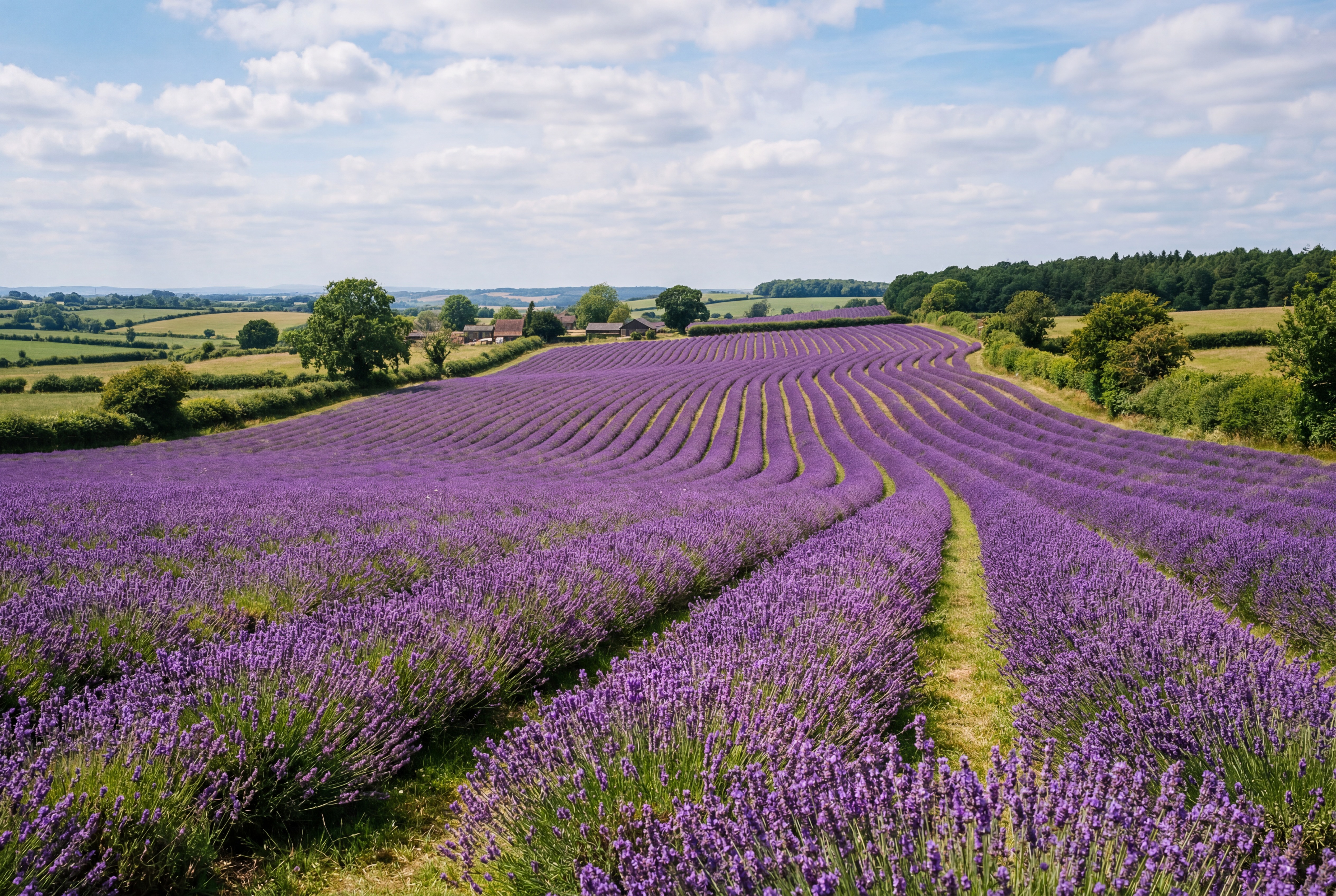
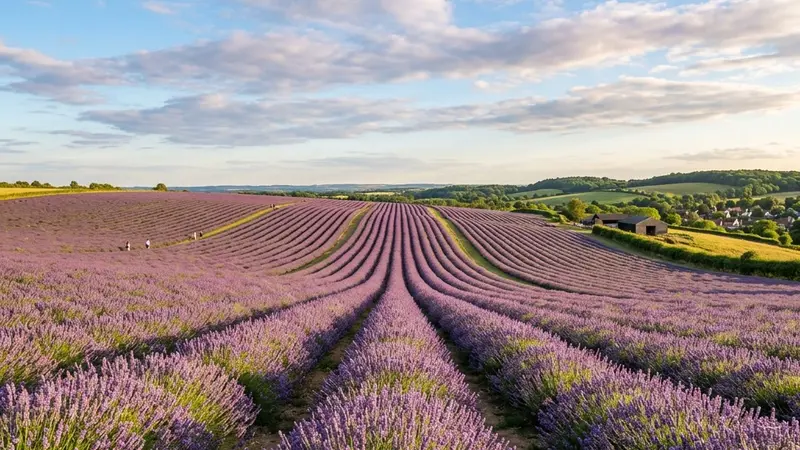
Hitchin Lavender opened at Cadwell Farm in Ickleford in 2000, offering visitors the chance to walk through and pick from 30 acres of lavender on a south-facing Hertfordshire hillside. It has since become one of the most visited lavender farms in England, drawing tens of thousands each summer season.
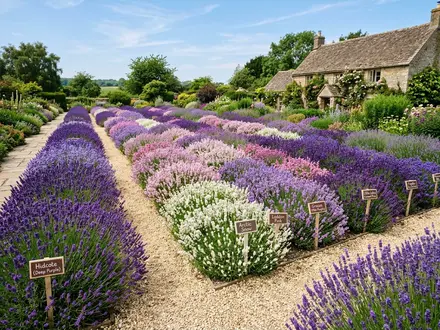
Beyond the main lavender field, the farm grows sunflowers and wildflowers, runs a free display garden with around 60 different lavender varieties, and houses a museum charting Hitchin's long association with lavender cultivation stretching back to the 1500s. The Old Barn Tea House serves lavender-infused cakes alongside farmhouse lunches.
Hitchin's connection to lavender runs far deeper than most visitors realise. The chalky, free-draining soils of north Hertfordshire have supported lavender cultivation since the 1500s, when the plant was grown commercially for its essential oil. By the Victorian era, Hitchin lavender oil was being supplied to London perfumers and apothecaries, and the surrounding fields were a sea of purple each summer. The industry declined in the twentieth century as cheaper imports arrived, but the heritage was revived in 2000 when Cadwell Farm began planting lavender on its south-facing hillside above the village of Ickleford.
Today, the farm covers 30 acres with both English lavender (Lavandula angustifolia) and French lavandin varieties, making it the largest pick-your-own lavender operation in the country. The season runs from mid-June to mid-September, though peak bloom typically falls between late June and mid-July when the fields are at their most photogenic. The farm marks its 25th anniversary in 2025, a milestone that underlines its place as one of Hertfordshire's most popular summer attractions.
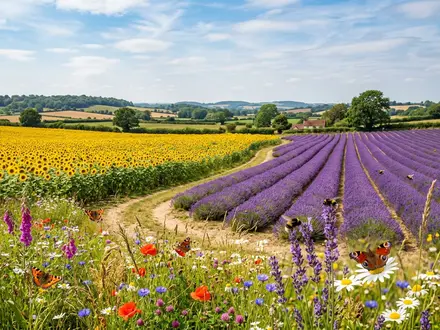
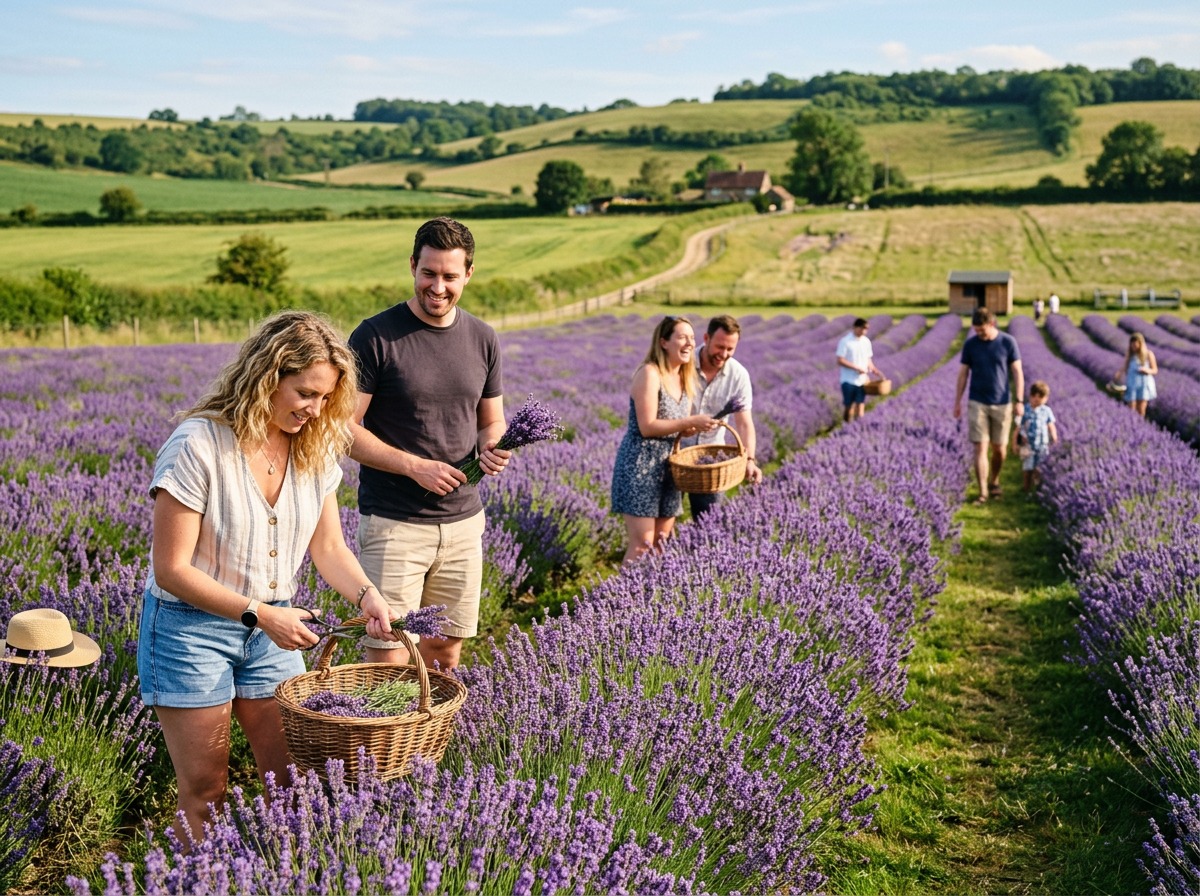
The main field is the centrepiece. Visitors collect scissors and a picking bag at the entrance, then walk between long rows of lavender, cutting their own bunches to take home. The experience is unhurried and the scale of the planting — visible from the car park as a purple stripe across the hillside — is genuinely impressive. Sunflowers grow alongside the lavender in the right-hand section of the field, available for picking by the stem at an additional charge. Two wildflower meadows within the field boundary attract clouds of bees, butterflies and hoverflies, and are worth seeking out for the variety of native species on show.
Outside the main field, the two-acre Display Garden is free to enter and showcases around 60 named lavender cultivars. Varieties range from the deep purple Hidcote Giant to pale pink Rosea and white-flowered Nana Alba, all labelled with notes on fragrance, growth habit and traditional uses. The small museum next to the Old Barn documents Hitchin's lavender heritage through photographs, distillation equipment and Victorian-era product labels. A children's play area with wooden climbing frames sits near the tea house, giving families a reason to linger after visiting the field.
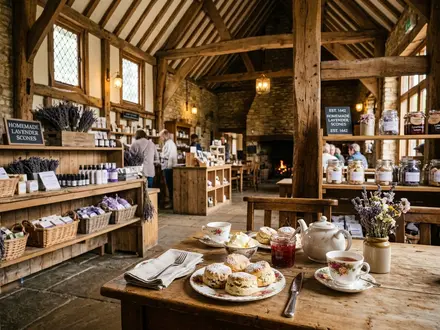
The Old Barn Lavender Tea House occupies a restored 17th-century barn and serves lavender scones, cream teas, floral cakes and farmhouse lunch boards. Drinks include lavender lemonade, lavender-infused coffee and a straightforward selection of teas. Evening visitors on Tuesday and Thursday late nights can enjoy the fields as the sun drops low across the Hertfordshire countryside — the golden-hour light across the purple rows is the reason many photographers time their visit for these sessions.
Hitchin Lavender is a seasonal attraction, open only from mid-June to mid-September. The exact opening and closing dates shift each year depending on weather and bloom timing, so check the website before travelling. Within the season, the farm opens Monday, Wednesday and Friday from 9am to 6pm, Saturday and Sunday from 9am to 8pm, and offers late visits on Tuesday and Thursday evenings with last entry at 8:30pm and closing at 10pm. Weekday mornings are the quietest times; weekends in late June and early July draw the largest crowds.
The farm is located at Cadwell Farm in Ickleford, two miles north of Hitchin town centre. By car, it is around 50 minutes from north London via the A1(M), exiting at junction 9. Free parking is available in the farm field. By train, Hitchin station is 35 minutes from Kings Cross on Great Northern services, with a 2-mile taxi ride or 40-minute walk to the farm from there. Paths through the field are on natural ground and can be uneven, so flat shoes or trainers are advisable. Dogs are welcome on leads. There is no charge to visit the Display Garden, Tea House, museum or play area — only the main picking field requires a ticket.
Entry covers access to the main lavender field, sunflower rows and wildflower meadows. The Display Garden, Tea House, museum and play area are free to visit without a field ticket. Lavender picking bags and sunflower stems are charged separately. Book online to guarantee entry on busy weekends
The lavender is at its most vivid and fragrant from late June to mid-July. After that, the fields begin to fade. Check the farm's social media for bloom updates before you go.
The farm provides scissors but quantities are limited and you may queue on busy days. Bringing a sharp pair of your own means you can start picking straight away.
Saturday and Sunday mornings before 11am are noticeably quieter. The car park can fill up by midday during peak bloom weeks, and entry may be delayed at the busiest times.
Evening sessions run until 10pm and attract fewer visitors than daytime slots. The low sunlight across the purple rows makes these the best sessions for photography.
Opening and closing dates vary each year depending on weather and bloom timing. The farm is closed entirely outside the mid-June to mid-September window, so always check online.

London Travel Writer · 12+ years covering UK attractions and tourism
Last reviewed: March 10, 2026