Cotswold Farm Park
Adam Henson's rare breeds farm in the Gloucestershire hills — over 50 heritage breeds, lambing season and hands-on animal encounters

Adam Henson's rare breeds farm in the Gloucestershire hills — over 50 heritage breeds, lambing season and hands-on animal encounters
Joe Henson founded Cotswold Farm Park on his 400-acre Bemborough Farm in 1971, making it the first farm in Britain to open specifically for rare breed conservation. Two years later, he co-founded the Rare Breeds Survival Trust, and since that organisation began its work no further British rare breeds have been lost.
His son Adam, now a familiar face from BBC Countryfile, runs the park today alongside a working farm with over 50 rare and traditional breeds. Set in the rolling hills above Guiting Power near Cheltenham, the park combines genuine agricultural heritage with family-friendly activities including seasonal lambing, a farm safari and hands-on animal encounters.
Cotswold Farm Park owes its existence to Joe Henson, a Gloucestershire farmer who recognised in the late 1960s that Britain's traditional livestock breeds were vanishing. Post-war agriculture had pushed farmers towards high-yielding commercial breeds, and ancient varieties like the Cotswold Lion sheep and Gloucestershire Old Spots pig were sliding towards extinction. In 1971, Henson opened the gates of his 400-acre Bemborough Farm near Guiting Power, creating the first farm park in Britain dedicated to conserving rare breeds for the public to see.
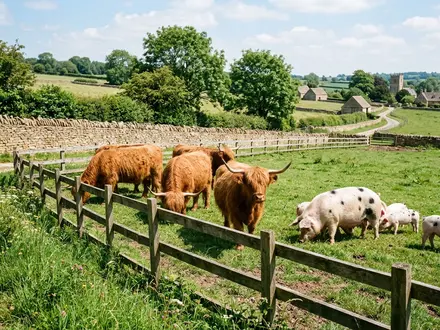
Two years later, Henson co-founded the Rare Breeds Survival Trust alongside Lawrence Alderson and Christopher Dadd, establishing a national framework for heritage livestock conservation. The work proved effective — since the Trust began, no further British rare breed has been lost. When Joe died in 2015, his son Adam, already well known as a presenter on BBC Countryfile since 2001, took the reins. Today the park holds over 50 rare and traditional breeds across seven species, from Bagot goats and Berkshire pigs to White Park cattle and Norfolk Horn sheep, and remains a working farm alongside its visitor operation.
The Rare Breeds Trail forms the backbone of a visit, winding through paddocks where visitors walk among the animals rather than viewing them from behind fences. Each breed has interpretive signage explaining its history, characteristics and conservation status. The Cotswold Lion sheep — the breed that once made the region wealthy enough to build its famous stone churches — are a particular highlight, their heavy fleeces a reminder of the medieval wool trade.
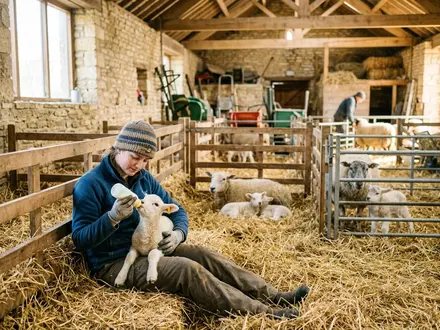
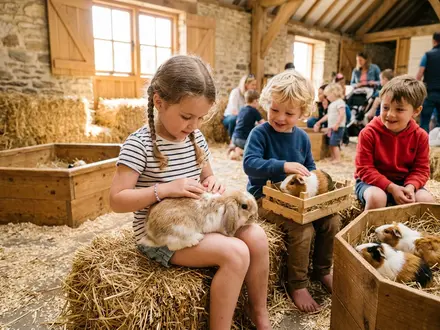
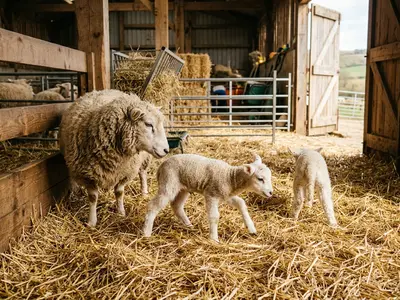
Seasonal events add considerably to the experience. Lambing Live runs from mid-February to early April and is included in standard admission. Visitors watch ewes giving birth in the lambing barn, see newborn lambs being bottle-fed, and hear daily talks from the farm team explaining the process. Over 800 lambs arrive each spring across both rare and commercial flocks. Later in the season, shearing demonstrations and sheepdog displays take over. The Touch Barn offers year-round animal handling, letting children hold rabbits, guinea pigs and chicks under staff supervision, while the Discovery Zone provides sensory play and interactive farming activities for younger visitors.
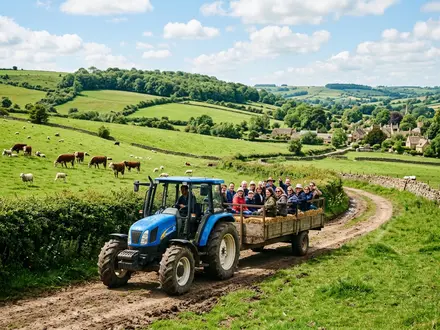
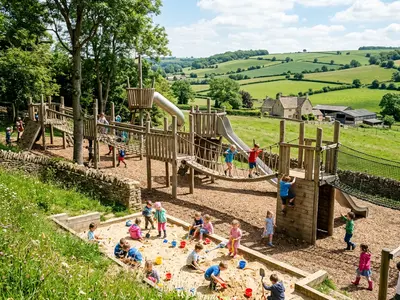
The Farm Safari takes visitors by tractor-drawn trailer across parts of the working farm not accessible on foot, passing through cattle herds and sheep flocks with commentary from farm staff. An adventure playground with climbing frames, a sandpit, soft play and ride-on tractors gives children a break between animal encounters.
Cotswold Farm Park opens daily from 9:30am during its main season, which runs from February half-term through to the end of October. Last entry is typically at 4pm. Winter opening is limited to weekends and school holidays — check the website before travelling between November and January, as the park closes entirely for parts of the off-season. Lambing season in March and April is the busiest period, so arriving early on a weekday is advisable if you want a quieter experience.
The park sits in a rural location above Guiting Power, signposted from the B4068 between Stow-on-the-Wold and Naunton. Driving is the most practical option, with free parking on site. From London, the journey takes around 90 minutes via the M40. The nearest railway stations at Kingham and Moreton-in-Marsh are each about 20 minutes away by taxi. Paths across the park are largely pushchair and wheelchair accessible, though some paddock areas can be muddy after rain — sturdy footwear is recommended. A cafe serves hot meals, sandwiches and cakes, and there are picnic areas if you prefer to bring your own food. Allow three to five hours for a thorough visit, longer during lambing season when the barn alone can absorb an hour or more.
Book online in advance to save on gate prices. Lambing season events are included in standard admission. Annual memberships offer unlimited visits and are good value if you plan to return more than twice
Mid-March to early April is the peak period for births in the lambing barn. Arrive early on a weekday morning to avoid the biggest crowds and catch the daily talks.
Online tickets are cheaper than buying on the gate and guarantee entry on busy days during school holidays and lambing season. Check the website for seasonal offers.
This is a working farm and paths between paddocks can be muddy after rain. Wellies or walking boots are ideal, especially during spring when the ground is softest.
The tractor-drawn trailer ride runs at set times and covers parts of the farm not accessible on foot. Check the schedule on arrival so you do not miss it.
Designated picnic areas are available across the park. Bringing your own food keeps costs down for families, though the cafe serves good hot meals and local cakes.

London Travel Writer · 12+ years covering UK attractions and tourism
Last reviewed: June 2, 2026