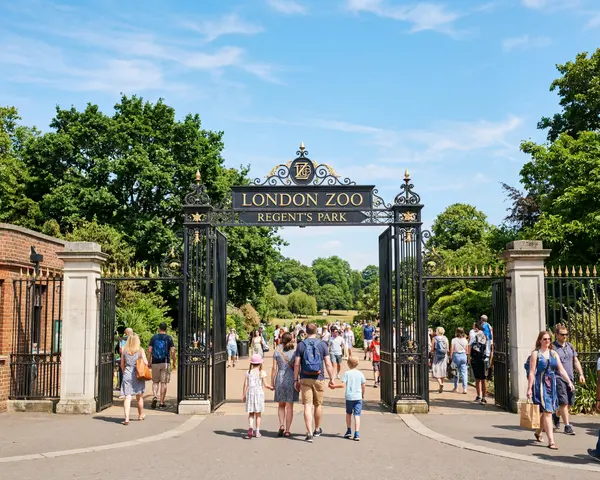
Battersea Park Children's Zoo
A compact family zoo in the heart of Battersea Park — home to lemurs, monkeys, meerkats, otters and a brilliant adventure playground
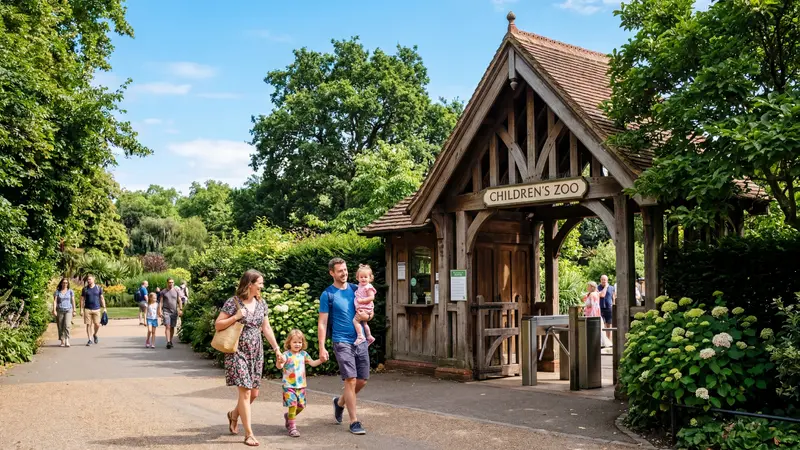
A compact family zoo in the heart of Battersea Park — home to lemurs, monkeys, meerkats, otters and a brilliant adventure playground
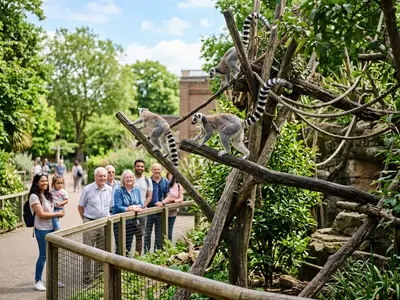
Tucked inside one of south London's finest Victorian parks, Battersea Park Children's Zoo has been introducing young visitors to the animal kingdom since the Festival of Britain in 1951. More than 100 animals — from ring-tailed lemurs and capuchin monkeys to Asian short-clawed otters and meerkats — live across its compact, walkable grounds.
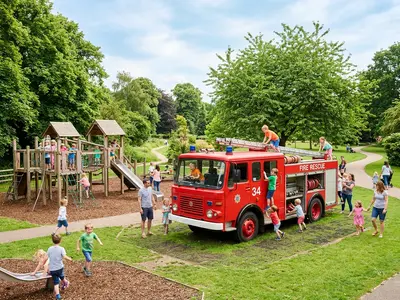
Daily keeper talks bring visitors face to face with the residents, while an adventure playground featuring a real tractor, fire engine and helicopter keeps children busy between enclosures. It is deliberately small enough for little legs to manage in a single visit.
Battersea Park Children's Zoo traces its origins to 1951, when a small animal collection was established in the park as part of the Festival of Britain celebrations. For decades it operated under Wandsworth Council, becoming a much-loved fixture of south London family life. When council budget cuts threatened closure in 2003, the Heap family took over the lease and set about transforming the site into a modern, conservation-minded zoo.
Today the zoo is a member of BIAZA (the British and Irish Association of Zoos and Aquariums) and participates in international breeding programmes for endangered species. Its compact size — roughly two acres — belies the variety of animals within, from South American primates and African meerkats to native British species like the critically endangered Scottish wildcat.
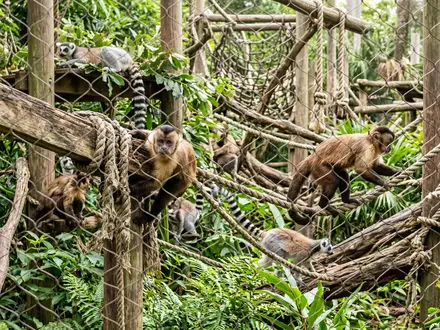
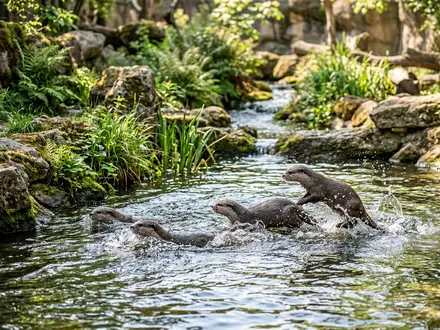
The zoo is laid out in a series of small enclosures connected by winding paths, making it easy to navigate with pushchairs and young children. Highlights include the ring-tailed lemur walk-through, where the animals roam freely around visitors, and the otter pool, where Asian short-clawed otters can be watched diving and foraging at close range. Capuchin and squirrel monkeys occupy a large enclosure near the centre of the site.
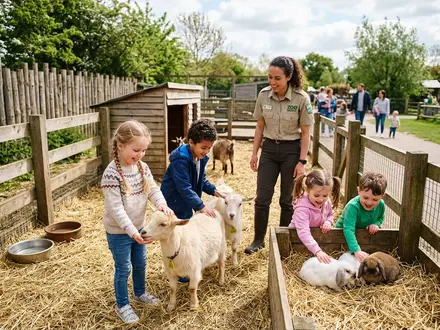
Daily keeper talks and feeding sessions run throughout the day, offering a chance to learn about each species' natural habitat and the conservation challenges it faces. The farmyard area lets children interact with goats, rabbits and pigs, while bookable keeper experiences provide more in-depth encounters with selected animals. The adventure playground — complete with a decommissioned tractor, fire engine and helicopter — gives children somewhere to burn off energy between animal visits.
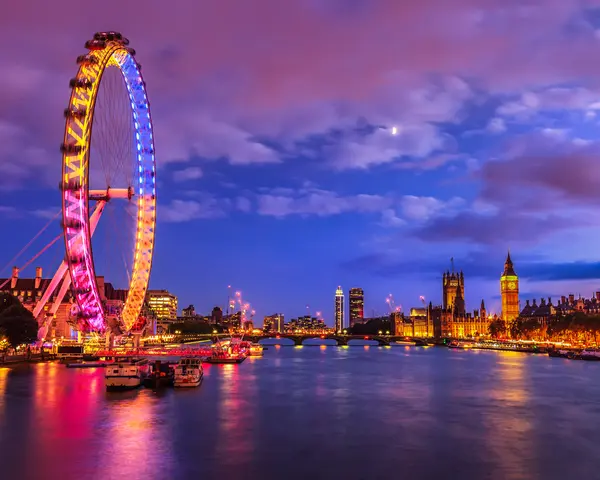
The zoo sits within the 200-acre Battersea Park, so a visit can easily be combined with a walk along the Thames, a lap of the boating lake or time on the park's other playgrounds. The park's sub-tropical gardens are worth a detour in spring and summer. Battersea Power Station, with its shops and restaurants, is a 15-minute walk east along the river. Chelsea Bridge and the Royal Hospital Chelsea are a short stroll north across the Thames.
Under 2s enter free. Tickets are valid for one visit within 30 days of purchase. Registered disabled visitors receive a discounted rate plus one free carer ticket
The zoo opens at 10am and is at its quietest in the first hour. Popular animals like the otters and lemurs are most active in the morning, making this the best time to visit.
Feeding times and keeper talks run throughout the day on a published schedule. Check the board near the entrance when you arrive so you can plan your route around the talks.
The zoo is inside a 200-acre park with playgrounds, a boating lake and riverside walks. Allow extra time to explore the park before or after your zoo visit.
While the zoo has a cafe selling snacks and drinks, the park itself has plenty of picnic spots. Pick up supplies beforehand and eat by the lake or on the riverside benches.
The zoo offers bookable one-to-one encounters with selected animals including otters and reptiles. These sell out quickly during school holidays, so book online ahead.

London Travel Writer · 12+ years covering UK attractions and tourism
Last reviewed: March 9, 2026