Layer Marney Tower
The tallest Tudor gatehouse in Britain — 80 feet of red brick and Italianate terracotta rising above the Essex countryside
The tallest Tudor gatehouse in Britain — 80 feet of red brick and Italianate terracotta rising above the Essex countryside
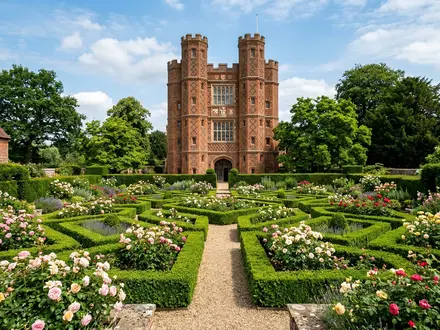
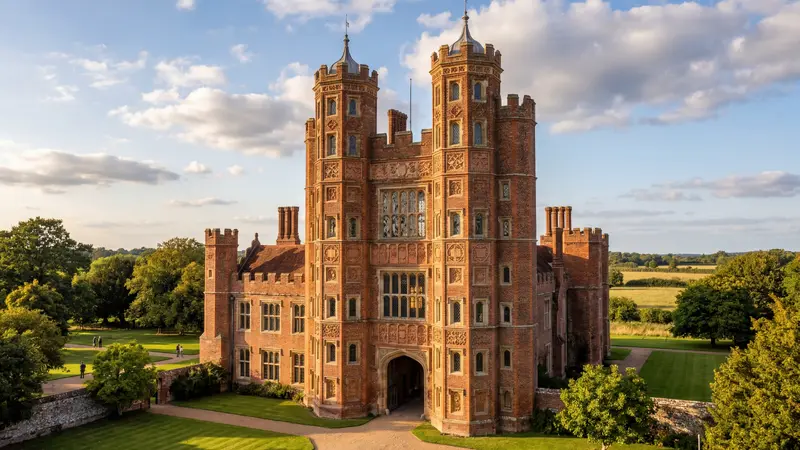
At 80 feet tall, Layer Marney Tower is the tallest Tudor gatehouse in Britain. Built in the 1520s by Henry, 1st Lord Marney, Lord Privy Seal to Henry VIII, the eight-storey gatehouse was intended as the entrance to a palace rivalling Hampton Court. Lord Marney died in 1523, his son John just two years later, and the grand courtyard house was never completed.
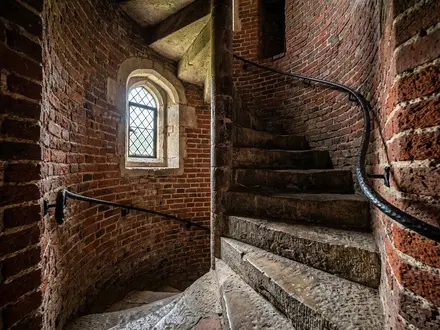
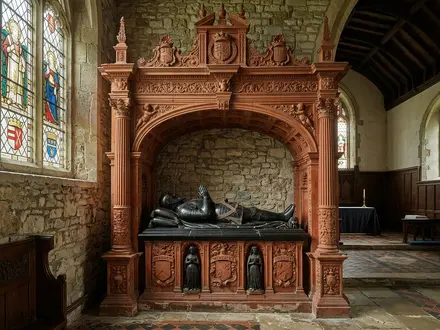
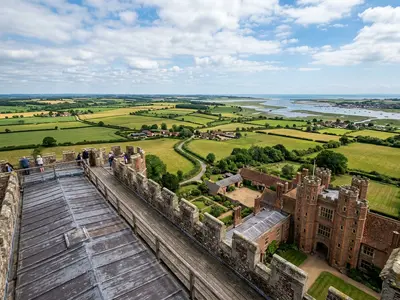
What survives is remarkable. Visitors can climb the spiral staircase to the top of the gatehouse for views across the Essex countryside to the Blackwater estuary, explore the medieval church with its terracotta and black marble Marney tombs, and wander formal gardens laid out around a Tudor-style knot garden.
Layer Marney Tower is the surviving fragment of an extraordinary ambition. Henry, 1st Lord Marney, rose through the Tudor court to become Lord Privy Seal, Chancellor of the Duchy of Lancaster and Sheriff of Essex. By the 1520s he had amassed enough wealth and influence to commission a palatial courtyard residence in the Essex countryside, designed to rival the great houses of his contemporaries. The gatehouse, at 80 feet the tallest Tudor example in Britain, was to be merely the entrance.
Construction began around 1520, using rich red brick decorated with Italianate terracotta of a sophistication rarely seen in England at the time. The architect is believed to have been Guiliamo de Travizi, who also worked for Henry VIII. The king himself visited in 1522, staying in the royal apartments on the gatehouse's first floor. But Lord Marney died in 1523, and his son John survived him by only two years, leaving no male heir. The palace was never finished, and what stands today is the gatehouse, a long gallery range, outbuildings, a medieval barn and the church.
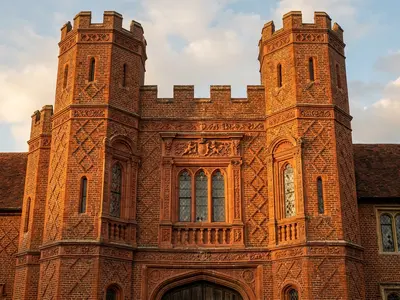
The gatehouse dominates any visit. Its twin semi-octagonal turrets rise eight storeys on the south face, with seven-storey square turrets to the north. A spiral staircase in the west turret leads to the roof, where views extend across the Essex countryside to the Blackwater estuary. The terracotta window surrounds, with their classical mouldings and Italianate detailing, reward close inspection.
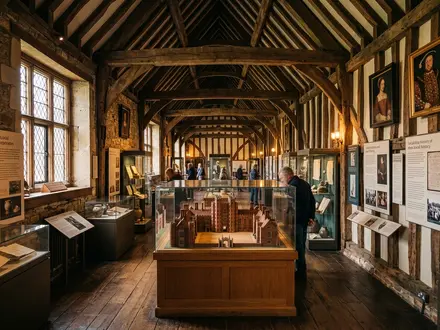
The adjacent Church of St Mary the Virgin is equally compelling. The Marney family tombs are masterpieces of early Tudor funerary art. Lord Henry's effigy in black marble lies beneath a terracotta canopy decorated with classical pilasters, while Lord John's matching effigy rests on a carved terracotta table tomb. An earlier ancestor, Sir William Marney, is also memorialised here. The long gallery in the converted Tudor stables houses exhibitions, and the medieval barn preserves 13th-century stonework. Outside, the formal gardens include a Tudor knot garden, old roses and specimen trees, with open parkland stretching toward the estuary.
Layer Marney Tower sits in rural Essex, 6 miles south of Colchester, and is best reached by car. The A12 from London brings you within reach in around 90 minutes, with clear signposting from the B1022. Free parking is available on site. For those without a car, the nearest railway station is Kelvedon, 6 miles away by taxi, or Colchester at 8 miles. There is no regular bus service directly to the tower.
The tearoom in the converted Edwardian stables serves light lunches, cakes and locally sourced produce, with outdoor seating in warm weather. A children's play area and small collection of farm animals make the grounds suitable for families. The gardens, church, tearoom and shop are wheelchair accessible, though the gatehouse tower itself has no lift. Opening is seasonal — Wednesdays and Sundays from April to September, with extended days in August — so check the website before travelling.
Historic Houses members receive free entry. Children under 16 must be accompanied by a paying adult. Event days may have different pricing
Layer Marney Tower opens only on specific days between April and September. Wednesdays and Sundays are the standard days, with more availability in August. Always check the website first.
The Marney tombs in St Mary's Church are exceptional examples of Tudor funerary art. The terracotta canopy over Lord Henry's tomb alone is worth the visit. Do not rush past.
The spiral staircase to the top of the gatehouse is narrow and steep with uneven stone steps. Sturdy footwear with good grip is essential, especially in damp weather.
The Wilkin and Sons jam factory and tea room in Tiptree is just 4 miles away on the B1022. It makes a natural pairing for a full day out in Essex.
The tearoom serves light meals but the parkland grounds with estuary views are ideal for a picnic. Several designated areas are dotted around the gardens with benches and shade.

London Travel Writer · 12+ years covering UK attractions and tourism
Last reviewed: June 2, 2026