13th-Century Origins
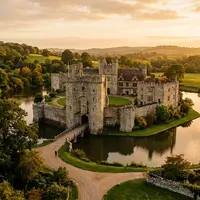
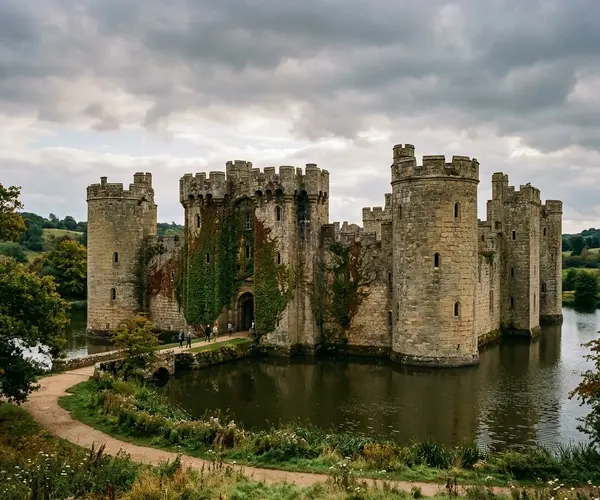
Hever Castle was first built around 1270 as a fortified farmhouse, part of the wave of defensive building that took place across England during the reign of Henry III and his son Edward I. The original structure included a stone gatehouse with a portcullis and a defensive curtain wall surrounded by a moat, features designed to protect the occupants from the local unrest and banditry that were common in medieval Kent.
The gatehouse is the oldest surviving part of the castle and remains remarkably intact. Visitors approaching Hever today enter through the same stone archway that people have used for over seven centuries. The thick walls, arrow slits and defensive features are still clearly visible, providing a tangible connection to the castle's earliest days.
The Boleyn Family Transformation
The castle's character changed significantly in the late 15th century when Geoffrey Boleyn, a wealthy London merchant and Lord Mayor, purchased the property. It was in this family home that Anne Boleyn grew up before her life became entangled with the English crown. The Boleyn family added a comfortable Tudor dwelling within the existing medieval walls, creating the timber-framed interior that gives the castle much of its charm today.
Sir Thomas Boleyn, Anne's father, continued to improve the castle during his ownership. He added panelled rooms, fireplaces and domestic comforts that reflected his status as a rising courtier in the Tudor court. The result was a building that combined the defensive exterior of a 13th-century fortification with the domestic warmth of a 15th-century manor house.
Centuries of Decline
After the Boleyn family lost the castle following Anne's execution and Sir Thomas's death, Hever passed through various owners. None invested significantly in the property, and by the 19th century the castle had fallen into considerable disrepair. The moat was partially silted up, the interiors were deteriorating, and the building risked becoming a picturesque ruin rather than a functioning house.
Several of the outer buildings had been lost entirely, and the remaining structure was being used primarily as a farmhouse. The medieval and Tudor features survived largely because no one had bothered to demolish or modernise them, a fortunate neglect that preserved the castle's historical character.
Astor's Restoration
The turning point came in 1903 when William Waldorf Astor, an American-born businessman who had become a British citizen, purchased Hever Castle. Astor was enormously wealthy and passionate about English history, and he embarked on a restoration project that was both ambitious and sympathetic to the building's original character.
Astor restored the medieval and Tudor elements of the castle while adding modern amenities. He also built a Tudor-style village alongside the castle to house his guests, as the castle itself was too small for large house parties. The village was constructed using reclaimed Tudor materials and blends so naturally with the original building that many visitors assume it is part of the medieval structure.
Layers of History
What makes Hever Castle architecturally interesting is the way its different periods are visible within a single compact building. The 13th-century gatehouse and walls, the 15th-century Boleyn interiors, and the early 20th-century Astor restoration all coexist, creating a castle that tells the story of over 750 years of English history through its very fabric.