Astor's Grand Vision
The gardens at Hever Castle were created almost entirely by William Waldorf Astor after he purchased the castle in 1903. Before Astor's arrival, the grounds were unremarkable farmland and neglected parkland. Within a few years, he had transformed 125 acres into one of the most impressive garden landscapes in England, employing over 800 workers at the height of construction.
Astor's vision was ambitious. He wanted gardens that would rival the great estates of the English aristocracy while also reflecting his personal passion for Italian art and culture. The result is a landscape that moves between distinctly English garden traditions and Continental influences, with each area having its own character and mood.
The Italian Garden
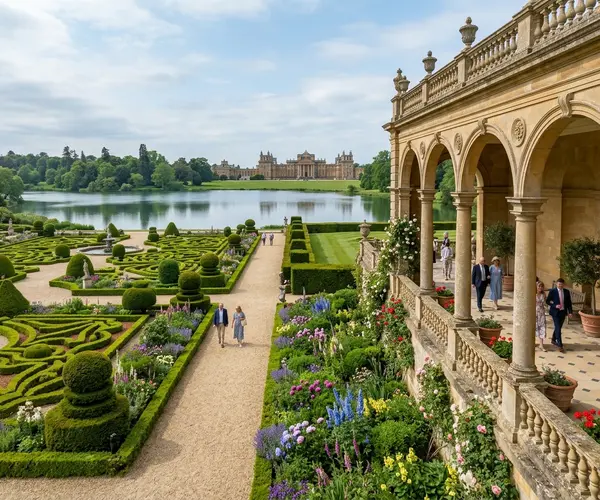
The jewel of the Hever gardens is the Italian Garden, a walled enclosure filled with classical statuary, columns and sculpture that Astor collected during his years as American ambassador to Italy. Many of the pieces are genuinely ancient, with some dating back over 1,000 years. Roman sarcophagi, medieval well-heads and Renaissance fountains are arranged along a pergola walk that stretches for several hundred metres.
The effect is extraordinary. Walking through the Italian Garden feels like visiting a private outdoor museum, with sculptures framed by climbing roses, wisteria and carefully clipped hedges. The garden is laid out on a gentle slope, with a loggia at one end providing views across the entire composition.
The 38-Acre Lake
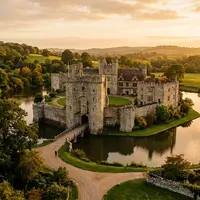
One of Astor's most dramatic interventions was the creation of a 38-acre lake by damming a stream that ran through the estate. The lake was dug by hand by a workforce of 800 men and took two years to complete. It provides a dramatic backdrop to the castle and creates a sense of scale that the relatively compact building might otherwise lack.
The lake is home to waterfowl and is bordered by mature trees and meadow planting. Walking paths circle the water, offering changing views of the castle and gardens from different angles. If you are planning a visit, our guide on how to get to Hever Castle from London covers train and driving options. In summer, rowing boats are available for visitors who want to see the estate from the water.
Tudor Garden and Rose Garden
Closer to the castle, a Tudor Garden has been planted in a style appropriate to the building's 15th and 16th-century heritage. Herbs, medicinal plants and flowers that would have been familiar to the Boleyn family are grown in formal beds, providing a historical contrast to the more elaborate Italian Garden.
The rose garden contains over 4,000 rose bushes, arranged in formal beds and climbing over arches and pergolas. At peak bloom in June and July, the scent and colour are remarkable. The roses are a mixture of heritage varieties and modern cultivars, selected for their fragrance, colour and ability to thrive in the Kent climate.
Topiary and Water Features
Throughout the gardens, topiary displays add structure and formality. Yew and box hedges have been clipped into geometric shapes, chess pieces and other decorative forms, providing year-round interest even when the flowering plants are dormant.
Water features are another recurring element, from formal fountains to naturalistic streams and cascades. The gardens make excellent use of the natural water sources on the estate, channelling them through planted areas to create movement and sound throughout the landscape.