The Boleyn Family Home
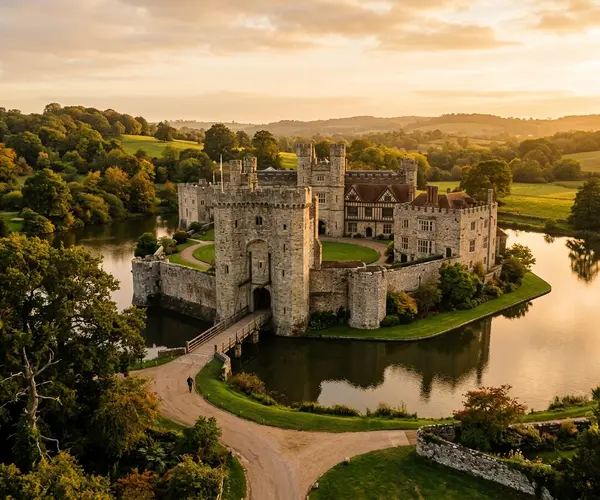
Hever Castle was the Boleyn family seat from the late 15th century, when Anne's grandfather, Geoffrey Boleyn, a wealthy merchant and Lord Mayor of London, purchased the property. The castle passed to his son, Sir Thomas Boleyn, who became one of the most prominent courtiers of his generation. It was in this small moated castle in the Kent countryside that Anne Boleyn spent much of her childhood before her life became entangled with the English crown.
Anne was born sometime between 1501 and 1507, and though she spent several years being educated at the courts of the Netherlands and France, Hever remained the family home. Her sister Mary Boleyn also grew up here, and the castle served as the base from which the ambitious Boleyn family launched their extraordinary rise through Tudor society.
Henry VIII at Hever
The most dramatic chapter in the castle's history began in the mid-1520s when Henry VIII started courting Anne Boleyn. The King made multiple visits to Hever, riding from London to the Kent countryside to pursue the woman who would eventually become his second wife. Several of Henry's love letters to Anne survive and reference his visits to the castle.
The courtship was prolonged and politically charged. Anne refused to become Henry's mistress, as her sister Mary had been, and instead held out for marriage. This refusal set in motion the English Reformation, as Henry broke with the Roman Catholic Church in order to annul his marriage to Catherine of Aragon and marry Anne. The consequences of those visits to a small castle in Kent reshaped English history.
What Visitors Can See
Today, Hever Castle preserves several rooms and artefacts connected to the Boleyn family. Anne's bedroom has been maintained, and visitors can see the space where she slept as a young woman. The castle also holds two Books of Hours that belonged to Anne, one of which contains an inscription in her own handwriting.
Family portraits of the Boleyns hang throughout the castle, alongside other Tudor artwork and artefacts. The Long Gallery contains a collection of Tudor portraits that helps visitors understand the world Anne inhabited, from the opulence of the court to the political dangers that surrounded it.
After the Boleyns
Anne Boleyn was executed at the Tower of London on 19 May 1536, convicted of charges that most historians now consider fabricated. Her father, Sir Thomas Boleyn, died in 1539, and the castle was seized by the Crown. Henry VIII gave Hever to his fourth wife, Anne of Cleves, as part of her annulment settlement.
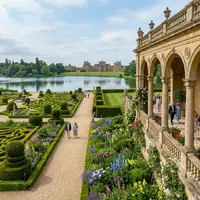
The castle subsequently passed through various owners and fell into decline before being purchased and extensively restored by William Waldorf Astor in 1903. Astor spent a fortune restoring the castle and creating the magnificent gardens that surround it today, ensuring that the Boleyn family home survived into the modern era as one of the most visited historic houses in England.
Why the Connection Matters
The Boleyn connection gives Hever Castle a human dimension that many historic properties lack. This is not an abstract monument to power or architecture. It is the place where a real woman grew up, fell in love, and set in motion events that changed the course of English history. That personal connection is what draws many visitors to Hever above all other Tudor sites.