London's best attractions at the best prices

Hertford Castle

A 900-year-old castle gatehouse in the heart of Hertford — public gardens, Norman motte and centuries of royal history
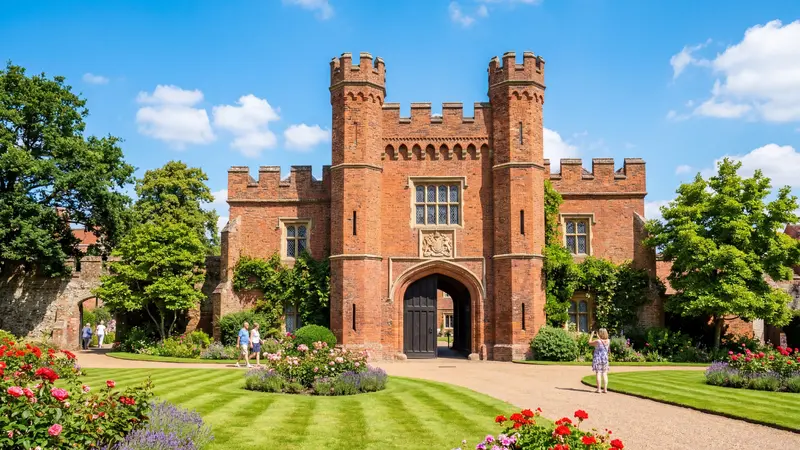
Founded by Edward the Elder in 912 to defend against the Danes, Hertford Castle has witnessed over a thousand years of English history. The young Elizabeth I spent much of her childhood here under the care of her governess, and the French King John II was held prisoner within its walls after his capture during the Hundred Years' War.

Today the Grade I listed Tudor gatehouse serves as Hertford Town Council offices, but the surrounding grounds are open daily as a free public garden. Visitors can explore the Norman motte, the 18th-century moat garden with its brick ice house, and the peaceful riverside setting along the River Lea.

Area Hertford, Hertfordshire
Price Free
Duration 1–2 hours
Best Time Summer afternoons for the gardens

Highlights

The Tudor Gatehouse

The Tudor Gatehouse

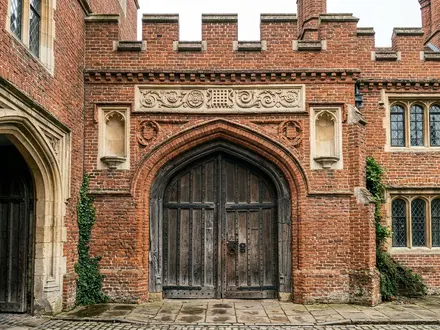
Built between 1463 and 1465 during the reign of Edward IV, the brick gatehouse is the castle's most prominent surviving structure. Now Grade I listed and home to Hertford Town Council, its crenellated facade and Tudor brickwork have stood for over 550 years. The interior opens to visitors on scheduled open days throughout the year.

The Norman Motte

The Norman Motte

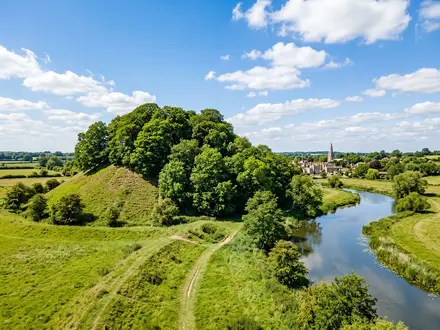
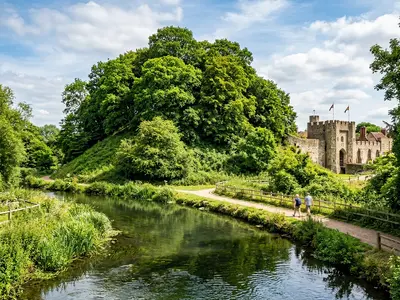
In the north-east corner of the grounds, a tree-covered mound rises beside the River Lea. This is the original Norman motte, roughly 30 metres in diameter and 6.5 metres high, built after the Conquest in 1066. It is the oldest surviving part of the castle and a scheduled ancient monument.

The Moat Garden and Ice House

The Moat Garden and Ice House

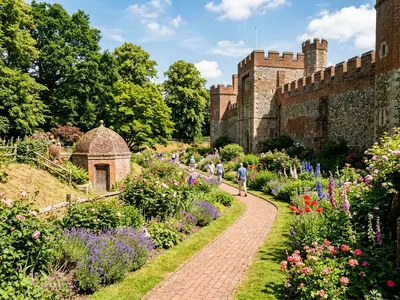
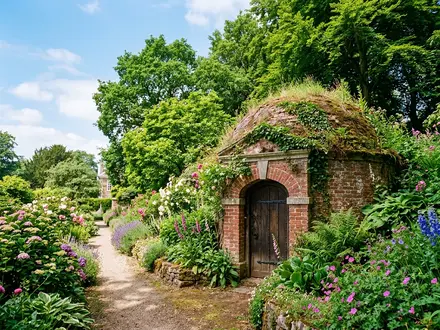
The castle's wide medieval moat is now dry, but a section was transformed into a sunken garden in 1951. Within it sits an 18th-century brick ice house, built when the Marquis of Downshire used the gatehouse as a private mansion. The garden is planted with seasonal flowers and bordered by mature trees.

Castle Grounds and River Lea

Castle Grounds and River Lea

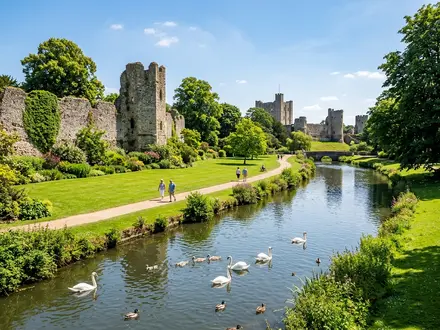
The castle grounds serve as Hertford's principal public garden, with sweeping lawns, mature trees and benches overlooking the River Lea. Ducks and swans frequent the riverbank, and the remains of the medieval curtain wall with a narrow 14th-century octagonal tower can still be traced along the southern boundary.

A Thousand Years of History

Hertford Castle's story begins in 912, when Edward the Elder — son of Alfred the Great — built a fortified earthwork beside the River Lea to defend against Danish raids. After the Norman Conquest in 1066, William the Conqueror granted the site to Peter de Valognes, who constructed a motte-and-bailey castle on the Saxon foundations. Henry II transformed it between 1170 and 1174, adding a massive flint-and-stone curtain wall seven feet thick, drawbridges, gatehouses and a great hall.

The castle's royal connections run deep. Edward III granted it to his mother, Queen Isabella, in 1327. His fourth son, John of Gaunt, received the castle in 1360, incorporating it into the Duchy of Lancaster and marrying the Spanish Princess Constanza of Castile within its walls. During the Hundred Years' War, the French King John II was held here as a prisoner in considerable luxury.

What to See

The Tudor gatehouse, built by Edward IV between 1463 and 1465, dominates the site. Its crenellated brick facade is remarkably well preserved and now houses Hertford Town Council offices. While the interior is only accessible during scheduled open days and events, the exterior alone merits the visit. In the north-east corner, the Norman motte still rises 6.5 metres above the grounds — the oldest surviving feature, dating to just after the Conquest.

The castle grounds are the real draw for a casual visit. The moat garden, opened in 1951 in the dry medieval moat, features an 18th-century brick ice house built during the Marquis of Downshire's tenure. Seasonal planting, mature trees and the peaceful River Lea, busy with ducks and swans, make the gardens a pleasant spot to spend an hour. Fragments of the medieval curtain wall and a narrow 14th-century octagonal tower can be traced along the southern boundary.

Getting There and Around

Hertford is a straightforward day trip from London. Trains from Liverpool Street to Hertford East take around 50 minutes, with a half-hourly service, and the castle is a 10-minute walk from the station through the town centre. Hertford North station, served from Moorgate and Kings Cross, is an alternative at around 40 minutes but involves a slightly longer walk.

The town itself is worth exploring alongside the castle. The centre has a good mix of independent shops, cafes and pubs along the River Lea. St Andrew's car park, less than a minute from the castle gate, provides convenient parking for those arriving by car. Check the Hertford Town Council website for upcoming gatehouse open days if you want to see inside the building — they are scheduled throughout the year but are not a daily occurrence.

Did You Know?

  • King John II of France spent four months imprisoned at Hertford Castle in 1359, reportedly spending around 3,850 pounds during his stay — at a time when a labourer earned roughly three pounds a year
  • Elizabeth I spent much of her childhood at Hertford Castle and at the age of twelve in 1545 wrote a prayer book within its walls, years before she became queen
  • Parliament relocated to Hertford Castle on three separate occasions in 1564, 1582 and 1592 when plague outbreaks forced its members to flee London
  • The castle's medieval curtain wall, built by Henry II between 1170 and 1174, was seven feet thick and constructed from flint and stone to form part of London's outer defensive ring

Pricing

  • Castle grounds Free
  • Gatehouse open days Free
  • Venue hire (per hour) From £40

The castle grounds and gardens are completely free to enter. The gatehouse interior is open free of charge during scheduled open days and events throughout the year

Getting There

The Castle, Castle Street, Hertford, Hertfordshire SG14 1HR

Train: Greater Anglia from London Liverpool Street to Hertford East (~50 min, half-hourly). From the station, walk through the town centre to Castle Street — around 10 minutes. Alternatively, Great Northern from London Moorgate or Kings Cross to Hertford North (~40 min), then a 15-minute walk

Driving: Around 1 hour from central London via the A10. Take the Hertford exit and follow signs to the town centre. St Andrew's car park on St Andrew Street has 103 pay-and-display spaces less than one minute's walk from the castle

Bus: Regular bus services to The Wash and Hertford Bus Station from surrounding towns. From the bus station, the castle is a 5-minute walk along Castle Street

Visitor Tips

Check open days before you travel

The gatehouse interior is only open during scheduled events and open days. Check the Hertford Town Council website for upcoming dates before planning your visit.

Arrive by train from Liverpool Street

Hertford East station has the most frequent service from London and is closer to the castle than Hertford North. Trains run every 30 minutes and take around 50 minutes.

Walk the full grounds including the motte

The Norman motte in the north-east corner is easy to miss if you stick to the main lawns. Walk the full perimeter to see the motte, moat garden and curtain wall remains.

Bring a picnic for the riverside gardens

There is no cafe on site, but the grounds are ideal for a picnic beside the River Lea. Alternatively, Hertford town centre has plenty of cafes and pubs within five minutes.

Use St Andrew's car park for easy access

The pay-and-display car park on St Andrew Street has 103 spaces and is less than a minute's walk from the castle entrance. It fills on weekends, so arrive early.

Common Questions About Hertford Castle

Yes. The castle grounds and gardens are completely free to enter every day of the week. Gatehouse open days and events are also free of charge.

Take a Greater Anglia train from London Liverpool Street to Hertford East, which takes around 50 minutes with a half-hourly service. The castle is a 10-minute walk from the station through the town centre.

The gatehouse is used as council offices and is not routinely open to the public. However, it opens during scheduled open days and events throughout the year — check the council website for dates.

Allow 1 to 2 hours to explore the grounds, walk the Norman motte, visit the moat garden and enjoy the riverside setting. A quick visit can be done in 30 minutes.
James Whitfield

James Whitfield

EDITORIAL REVIEW

London Travel Writer · 12+ years covering UK attractions and tourism

Last reviewed: March 9, 2026

Visit

  • The Castle, Castle Street, Hertford, Hertfordshire SG14 1HR
  • +44 1992 552885
  • Mon–Thu 07:30–17:00
    Fri 07:30–16:30
    Sat, Sun 07:30–17:00
  • www.hertford.gov.uk

Discover More

Discover more attractions and things to do in London.

Browse All Attractions

Day Trips

More Day Trips

All Day Trips
Stonehenge Save 20%

Stonehenge

Prehistoric stone circle and UNESCO World Heritage Site on Salisbury Plain — Britain's most iconic ancient monument

££ Salisbury Plain, Wiltshire